


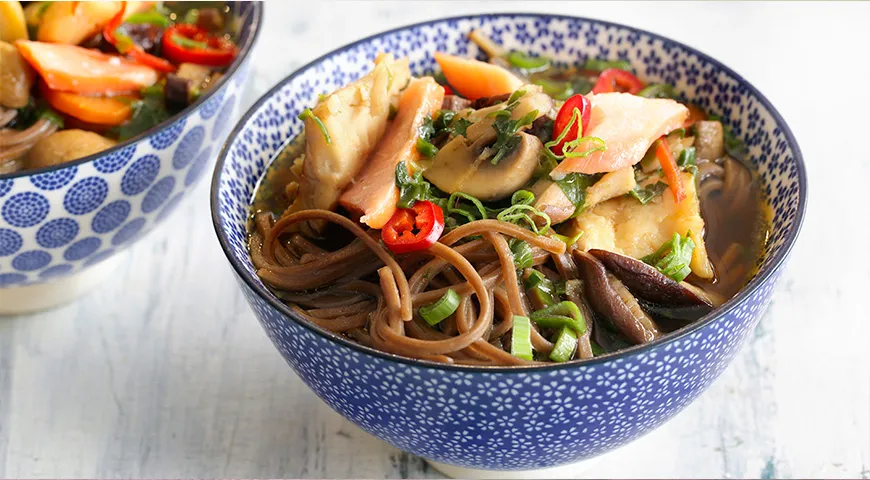
Imagine a bowl that holds the soul of Asian comfort—a symphony of smoky, savory, and umami-rich flavors, each spoonful deeper and more satisfying than the last. This Smoked Fish and Soba Noodle Soup, inspired by rustic Japanese broths and elevated with a touch of Russian hospitality, is a complete meal in itself. It’s the kind of dish that warms you from the inside out on a cold day, yet feels light enough for a nourishing lunch. The marriage of delicate white fish, intensely flavored smoked fish, earthy mushrooms, and chewy buckwheat soba noodles creates a harmonic balance that is both simple and profound. With ginger, garlic, soy sauce, and sesame oil as the aromatic backbone, this soup is a testament to the beauty of layering flavors. Whether you are a seasoned home cook or a curious beginner, this recipe will guide you to create a bowl of pure, restorative bliss.
About This Soup
This isn’t just another fish soup—it’s a study in contrasts. The smoky notes from the cured fish meet the oceanic freshness of white fish, while the soba noodles bring a nutty chewiness that grounds the dish. Shiitake mushrooms lend their woodsy depth, and a touch of chili heat adds a gentle kick. The result is a soup that feels both comforting and sophisticated, a perfect candidate for a special weekend dinner or a meal-prepped workday lunch. The recipe is flexible, too: you can adjust the spice, swap mushrooms, or use any firm white fish you have on hand. For the best flavor, we recommend using a high-quality smoked fish—something like hot-smoked mackerel or trout works beautifully.

Ingredients
- 2 medium carrots
- 100 g shiitake mushrooms
- 100 g button mushrooms
- 4 cloves garlic
- 3 cm piece fresh ginger
- 1 red chili pepper (such as bird’s eye or serrano)
- 3 stalks green onion (scallions)
- 3–4 sprigs cilantro
- 200 g buckwheat soba noodles
- 300 g white fish fillet (cod, haddock, or sea bass)
- 150 g hot-smoked fish fillet (trout, mackerel, or salmon)
- 3 tbsp soy sauce
- 1 tsp sesame oil
- Salt
- 1.5 L water (for broth) + 2 L for boiling soba
Step-by-Step Instructions
1. Cook the Soba Noodles
Bring 2 liters of water to a boil in a large pot. Lightly salt the water, add the soba noodles, and cook according to package instructions—usually 3–5 minutes. Drain well and rinse under cold running water to stop the cooking and remove excess starch. Set aside.
2. Prepare the Aromatics and Fish
Peel the carrots and slice them into thin rounds. Slice both shiitake and button mushrooms. Grate the ginger on a fine microplane or use the small holes of a box grater. Mince the garlic cloves. Cut the white fish fillet into 2 cm cubes. Flake the smoked fish into small, bite-sized pieces. Finely chop the green onions and cilantro. Halve the chili pepper lengthwise, remove the seeds, and slice crosswise into thin rings.
3. Build the Broth
In a separate pot, bring 1.5 liters of fresh water to a boil. Add the white fish cubes, carrot rounds, minced garlic, and grated ginger. Return to a boil, season with salt, and cook over medium-high heat for 8 minutes. The fish should be just cooked through and the carrots tender.
4. Add Mushrooms and Seasonings
Add the sliced shiitake and button mushrooms, along with the chopped green onions. Pour in the soy sauce and sesame oil. Stir gently and continue cooking for an additional 5 minutes. Taste the broth and adjust salt if needed. The mushrooms will soften and release their savory essence into the liquid.
5. Assemble the Bowls
Divide the cooked soba noodles among serving bowls. Top each portion with some of the smoked fish flakes. Ladle the hot broth with white fish, carrots, and mushrooms directly over the noodles and smoked fish. Garnish generously with fresh cilantro and chili rings. Serve immediately.
Tips for Perfect Smoked Fish Soup
- Use fresh soba – Dried soba is fine, but fresh noodles have a superior texture. Check your local Asian market.
- Don’t overcook the white fish – Cubes should be firm but flaky. Overcooking makes them tough.
- Smoked fish quality matters – Opt for hot-smoked fish with no artificial smoke flavoring. For a deeper smoky taste, try cold-smoked fish, but adjust salt accordingly.
- Control the heat – Remove chili seeds for a milder soup, or leave them in for more fire.
- Make it even easier – Use a non-toxic immersion blender to partially blend the broth for a creamier texture (remove some solids first).
- Storage – Keep the noodles and broth separate if meal-prepping; combine just before serving to prevent soggy noodles.
- For the best consistency, a glass food processor can help mince garlic and ginger quickly without absorbing odors.
Variations
Vegetarian Twist: Omit both fish and replace white fish with extra firm tofu (pan-seared), and use smoked tofu instead of smoked fish. Add a sheet of nori for sea flavor.
Spicy Miso: Stir in 1 tablespoon of white miso paste at the end of cooking for an umami bomb.
Add Greens: Toss in a handful of bok choy or spinach during the last minute of cooking.
Use Different Noodles: If you can’t find soba, try udon or even ramen noodles. Adjust cooking times accordingly.
If you love experimenting with different kitchen appliances, a food processor for nut butter can also be repurposed for making spice pastes for this soup. For an even more luxurious broth, a high-quality store-bought au jus can be used as a base, but we prefer the homemade version. A microwave pressure cooker can speed up the soba cooking, and an air fryer can crisp up some extra smoked fish for a crunchy topping.
Pair this soup with a glass of sweet high-alcohol wine or a crisp single‑origin coffee for an unexpected contrast. And for a perfect mise en place, a under‑counter ice maker can provide abundant ice for shocking noodles.
Frequently Asked Questions (FAQ)
Can I use frozen fish for this soup?
Yes, but thaw it completely in the refrigerator overnight and pat dry before cutting. Frozen fish releases more water, so you may need to adjust the salt at the end.
What is the best type of smoked fish to use?
Hot‑smoked mackerel, trout, or salmon are excellent. They have a firm texture and robust flavor. For a milder taste, try smoked cod. Avoid heavily salted or smoked fish with added preservatives.
Can I make this soup gluten‑free?
Yes, use 100% buckwheat soba noodles (check the label for added wheat flour) and tamari instead of regular soy sauce.
How do I store leftovers?
Store the broth and noodles separately in airtight containers in the refrigerator for up to 3 days. Reheat the broth and pour over noodles just before serving. The smoked fish can be kept at room temperature if consumed within a day, or refrigerated.
Can I freeze this soup?
It’s best not to freeze the assembled soup, as the noodles become mushy. However, the broth (without noodles) freezes well for up to 2 months. Thaw overnight, reheat, and add fresh noodles and smoked fish.
My broth is too salty. How do I fix it?
Dilute with a bit of water or unsalted stock. You can also add a squeeze of lemon juice or a teaspoon of sugar to balance the saltiness.
What if I don’t have sesame oil?
Use toasted sesame oil if available, or substitute with a neutral oil plus a few drops of sesame seeds. The oil adds a distinct nutty aroma, but you can omit it and add a dash of chili oil for heat.
For the ultimate comfort meal, consider serving this soup alongside a Catalan sponge cake for a sweet finish. And if you’re looking to invest in a quality blender for pureeing part of the soup, check out our guide on the best wheatgrass juicers (they also handle fibrous ingredients). A planetary mixer isn’t needed for this recipe, but it’s handy for making homemade noodles. For kitchen safety, a refrigerant leak detector can help maintain your appliance efficiency. Lastly, a best oil sprayer ensures even distribution of sesame oil or chili oil for garnish.







