


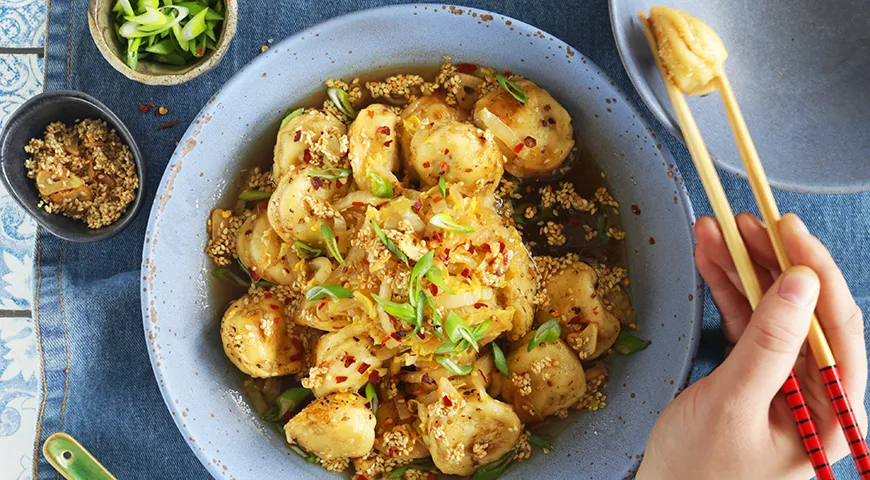
Sesame Dumplings in Spicy Broth are a revelation for lovers of Asian-inflected cuisine. This familiar dumpling, often paired with sour cream or vinegar, transforms into a fiery, aromatic masterpiece. Sweet-savory soy sauce, ginger, chili, and garlic build layers of heat, while Napa cabbage adds succulence and fried sesame seeds deliver a nutty finish. Perfect as a celebratory dish, it's a symphony of textures and flavors that will surprise and delight.
About This Recipe
Dumplings hold a cherished place in many culinary traditions, but rarely do they cross into the bold, spicy territory of East Asian broths. Here, the humble pelmeni—typically Russian—gets a dazzling makeover. The broth is built on a foundation of rich chicken stock, brightened with apple cider vinegar, and deepened with soy sauce. Fresh ginger and garlic provide warmth, while red pepper flakes bring a controlled heat. The toasted sesame seeds add an earthy, nutty crunch. This dish is not merely fusion; it's a thoughtful marriage of dumpling comfort and Asian umami. To achieve the finest cabbage shreds, a reliable food processor can save you time and effort.

Ingredients
- 500 ml chicken broth
- 300 g Napa cabbage (Peking cabbage)
- 50 ml soy sauce
- 50 g sesame seeds
- 3–4 onions
- 5 cm fresh ginger root
- 4 garlic cloves
- 5 tbsp olive oil
- 2 tbsp apple cider vinegar
- Salt
- Freshly ground black pepper
- Green onions for serving
Quality ingredients matter. For the broth, homemade stock is ideal, but a good store-bought version works. Look for best store-bought au jus? No, that's for prime rib—better to choose a low-sodium chicken broth. For a silky smooth sauce, an immersion blender can help combine flavors, though not essential here.
Step-by-Step Instructions
Step 1: Sear the Dumplings
In a deep skillet or wok, heat 2 tablespoons of olive oil over medium heat. Arrange the dumplings in a single layer and cook until the bottoms are golden brown, about 5 minutes. Pour in 120 ml of hot water, cover immediately, and steam for 5–6 minutes. The dumplings become tender with a crispy underside. Transfer them to a bowl and set aside. A commercial countertop convection oven is not needed here, but a good-quality wok makes all the difference.
Step 2: Toast Sesame and Garlic
In the same skillet, add 1 tablespoon of olive oil and heat. Add the sesame seeds and thinly sliced garlic. Season with red pepper flakes and stir-fry for 2 minutes until fragrant and golden. Spoon the mixture onto a plate. For even toasting, an air fryer can replicate this effect, but the stovetop method is quicker.
Step 3: Build the Broth
Thinly shred the Napa cabbage, cut the onions into rings, and finely grate the ginger. In the same skillet, heat the remaining olive oil and sauté the onion rings for 5 minutes until softened. Add the cabbage and ginger, cooking while stirring for another 5 minutes. Pour in the hot chicken broth, soy sauce, and apple cider vinegar. Season with additional red pepper flakes and bring to a rolling boil. A food processor can expedite the ginger grating task.
Step 4: Assemble and Serve
Divide the cooked dumplings among deep bowls. Ladle the hot broth and vegetables over them. Top with the fried sesame seed and garlic mixture. Garnish with sliced green onions. Serve immediately, while the broth is piping hot and the sesame seeds retain their crunch.
Tips for Perfect Dumplings
For the crispiest dumplings, ensure the skillet is hot before adding oil. Do not overcrowd the pan; work in batches if needed. Use a best oil sprayer to control oil usage when searing. If you prefer a thicker broth, simmer uncovered for an extra 5 minutes. For a gluten-free version, substitute tamari for soy sauce and use rice vinegar instead of apple cider vinegar.
Variations to Explore
This recipe is highly adaptable. Swap chicken broth for vegetable stock to make it vegetarian. Add a handful of baby spinach or bok choy along with the cabbage. For extra protein, toss in tofu cubes or shredded chicken. The broth can be spiced up with best lava flavors—a fiery chili oil drizzle works wonders. For a sweeter note, a dash of honey or brown sugar balances the heat.
Frequently Asked Questions
Can I use frozen dumplings?
Absolutely. Frozen pelmeni or potstickers work perfectly—just increase the steaming time by a minute or two. Ensure they are not stuck together before searing. A microwave pressure cooker can also steam them quickly, though the stovetop method gives a better crust.
What if I don't have Napa cabbage?
Savoy cabbage or regular green cabbage can substitute. Slice it very thinly to mimic the texture. For a more authentic Asian twist, use bok choy or Chinese broccoli.
How do I make the broth less spicy?
Reduce or omit the red pepper flakes. The ginger and garlic still provide warmth without intense heat. You can also add a tablespoon of creamy peanut butter to mellow the spice—a trick used in many Thai-inspired broths.
Can I prepare this dish in advance?
The broth and dumplings are best enjoyed fresh. However, you can store the cooked dumplings separately and reheat them in the broth just before serving. The sesame topping will lose its crunch if stored; re-toast it briefly in a dry pan.
What wine pairs well with this spicy broth?
A slightly sweet Riesling or a fruity Gewürztraminer cuts through the heat beautifully. For those who prefer red, a light-bodied Pinot Noir works. If you're exploring high-alcohol options, best sweet wine with high alcohol content can complement the dish's richness.
Can I use an electric kettle for the broth?
Yes, a quick way to heat chicken broth is with an electric kettle, but you'll still need to simmer it with the vegetables to meld flavors. For an even faster method, a built-in refrigerator? No, that's for storage. Better to use a coffee maker? Not ideal. Stick to stovetop for best results.
How do I toast sesame seeds without burning them?
Keep the heat medium-low and stir constantly. They turn golden quickly. A planetary mixer is overkill; use a simple skillet. Alternatively, a wheatgrass juicer won't help—stick to manual stirring.
What is the best way to grate ginger?
A microplane or the small holes of a box grater work perfectly. For a paste-like consistency, use a food processor with a grating disc. That same gadget can handle hard vegetables.







