


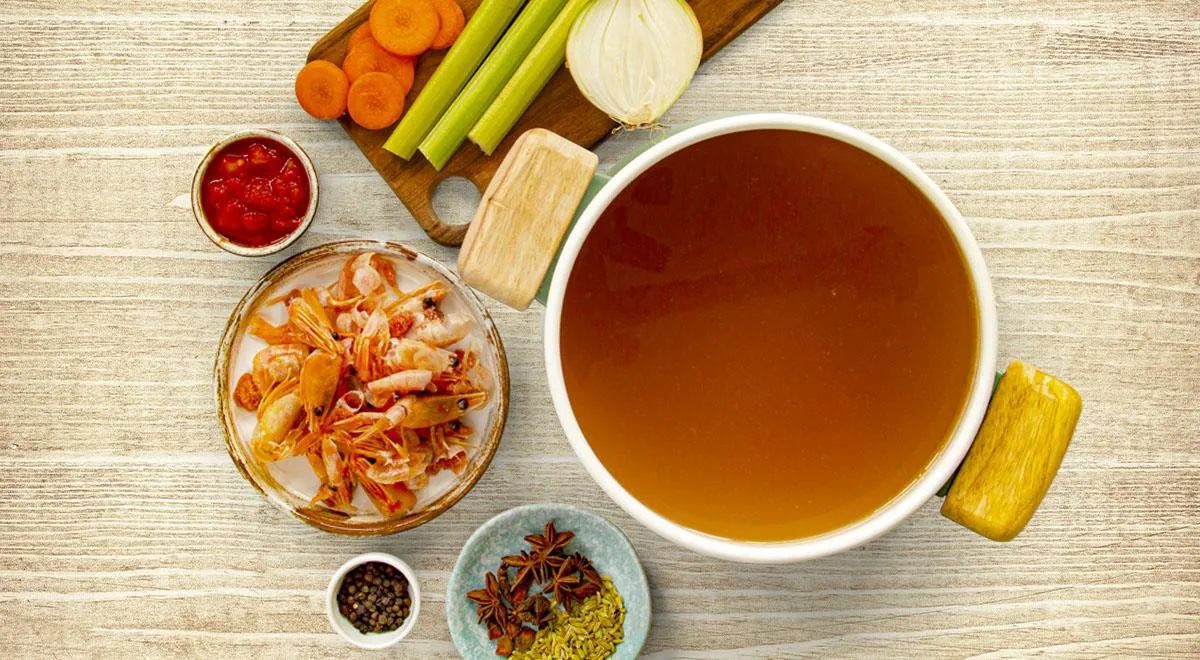
There is something profoundly satisfying about a broth that sings of the sea—a golden, aromatic liquid built not from fish fillets but from the often‑discarded shells and vegetable scraps. This Seafood Broth (Bulon s Moreproduktami) transforms humble prawn shells, fresh tomatoes, and a splash of white wine into an elixir that elevates everything from risotto to paella. Whether you plan to use it as a base for a chowder, cook rice for a quick paella, or simply sip it as a restorative soup, this recipe proves that the best flavors come from patience and a few clever techniques.
About the Recipe
This broth is a masterclass in extracting maximum flavor from minimal ingredients. The key lies in browning the prawn shells and, if you have them, bivalve shells until they release their concentrated essence. A non‑toxic immersion blender can help you achieve a silky texture if you choose to puree the solids, but for a clear broth, simply strain and press. The vegetables—carrots, tomatoes, onion, celery, and garlic—melt into sweetness, while fresh thyme and parsley add an herbal backbone. A touch of dry white wine brightens the whole affair. The result is a deep, savory stock that rivals any fish bouillon.

Essential Ingredients
Each component plays a crucial role. Prawn shells (about 300 g) provide the marine depth. If you have scallop or mussel shells, toss them in too. Carrots and tomatoes bring natural sweetness and umami; celery adds earthiness. Use a good quality sweet white wine with moderate alcohol for complexity, though a dry Sauvignon Blanc works beautifully. Olive oil forms the cooking medium, and black peppercorns and salt season the broth. For the aromatics, fresh thyme and parsley whole sprigs infuse without the need for chopping.
Step-by-Step Preparation
Step 1: Prepare the vegetables. Rinse the shellfish shells thoroughly with a stiff brush. Cut the onion into small dice, mince the garlic, and slice the carrots, tomatoes, and celery into random pieces—no need for perfection.
Step 2: Sauté the shells. In a heavy‑bottomed pot, heat 3 tablespoons of olive oil over medium‑high heat. Add the prawn shells and any bivalve shells, and sauté for about 5 minutes, stirring constantly, until they turn bright pink and fragrant. This step is critical for developing the rich crustacean flavor.
Step 3: Add vegetables. Reduce the heat to low. Add the diced onion, carrot, tomato, and celery. Cook for 15 minutes, stirring occasionally, until the vegetables soften and begin to caramelize. The natural sugars will deepen the broth’s color and taste.
Step 4: Deglaze with wine. Stir in the minced garlic, then pour in 100 ml dry white wine. Let it bubble for 3 minutes to cook off the alcohol and meld the flavors.
Step 5: Simmer the broth. Pour in 1.5 liters of hot water. Add whole sprigs of parsley and thyme, season with 1 teaspoon black peppercorns and salt to taste. Cover the pot and simmer on the lowest possible heat for 45 minutes. Do not boil vigorously—keep it at a bare simmer to avoid cloudiness.
Step 6: Strain and finish. Place a fine‑mesh sieve over a clean pot. Ladle the broth through, pressing on the solids with a spoon to extract every drop of liquid. Taste and adjust seasoning—you may want a splash more wine or a pinch of salt. Bring the broth to a brief boil, then remove from heat. Your seafood broth is ready.
Tips for the Perfect Broth
- For a cloud‑free broth, avoid stirring once the water is added and never let it come to a rolling boil.
- If you plan to store the broth, strain it immediately to prevent the shells from leaching bitterness.
- To intensify flavor, roast the shells and vegetables in a commercial countertop convection oven before simmering—this adds a delightful smokiness.
- Use a best oil sprayer for an even, light coating of olive oil when sautéing.
- Freeze the broth in ice cube trays for quick additions to sauces and risottos.
Variations
This broth is wonderfully adaptable. For a South‑Asian twist, add a stalk of lemongrass and a few slices of ginger in place of thyme. For a Mediterranean version, include a strip of orange zest and a pinch of saffron. If you want a richer texture, after straining, blend a small portion of the vegetables with a best food processor for nut butter (or any high‑speed blender) and stir back in—this yields a creamy bisque‑style broth. You can also use this broth to cook Catalan sponge cake? No, that’s for dessert; but for a savory rice dish, cook bomba rice in the broth to make an authentic seafood paella.
Frequently Asked Questions
Can I use frozen prawn shells?
Absolutely. Save shells from peeled raw prawns in the freezer. Thaw them slightly before browning. This method works perfectly.
How long can I store the broth?
Refrigerate in an airtight container for up to 3 days, or freeze for up to 3 months. Using a best steam canner extends shelf life significantly.
What if I don’t have white wine?
Substitute with a splash of dry vermouth or a tablespoon of lemon juice mixed with water. The acidity is essential for brightness.
Can I make this broth without shellfish?
For a vegetarian version, skip the shells and increase the vegetables—add mushrooms and a piece of kombu for umami. Use the same method for a light vegetable stock.
Is this broth suitable for a clear soup?
Yes. For a crystal‑clear consommé, strain through a coffee filter or a cheesecloth‑lined sieve. Avoid pressing the solids; let gravity do the work.
What other dishes can I use this broth in?
Use it as a base for fish soup, clam chowder, or bouillabaisse. It also works beautifully for cooking grains like farro or orzo. For a quick weeknight meal, poach fish fillets directly in the simmering broth.
This Seafood Broth is a cornerstone of home cooking that rewards attention to detail. With minimal effort you create a stock that outshines any store‑bought version. Whether you’re making a classic seafood pasta or a warming soup, this recipe will become your go‑to foundation.







