


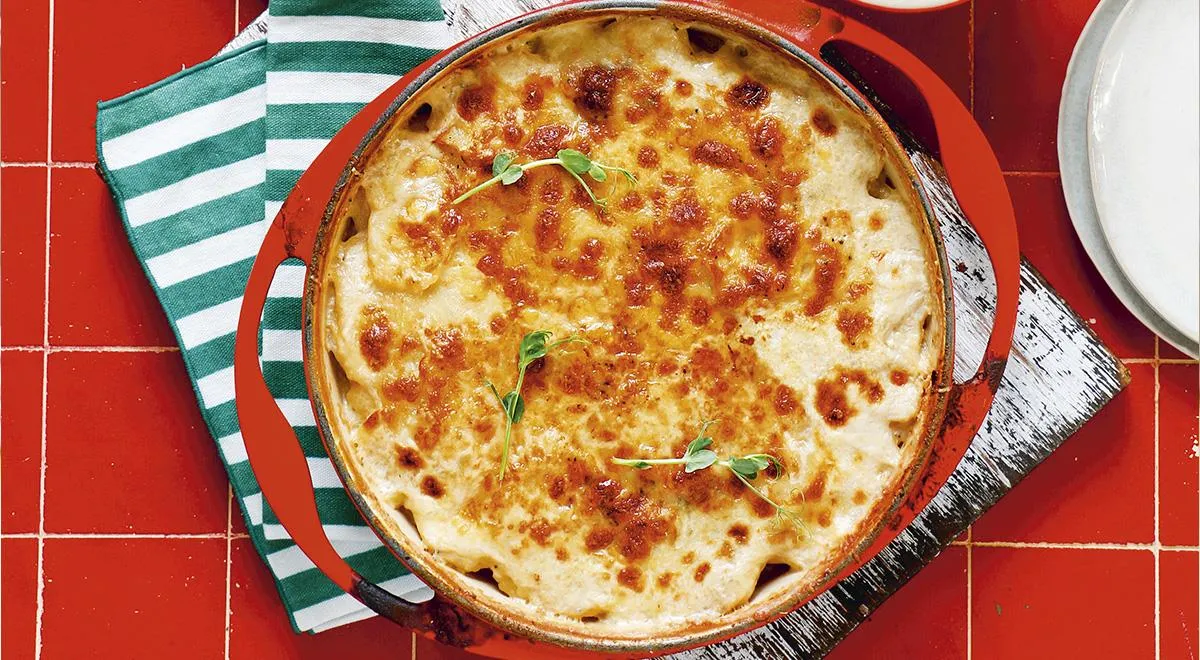
There is something profoundly comforting about a dish that transforms humble potatoes into a golden, bubbling masterpiece. Potato gratin with cheese and cream—known in French culinary tradition as gratin dauphinois and beloved across Russia—is precisely that alchemy. Thin slices of potato bathed in a luxurious cream-and-milk infusion, layered with aromatic garlic and nutmeg, then crowned with a molten cheese crust that shatters at the touch of a fork. This is not merely a side dish; it is a statement of hospitality, a centerpiece worthy of a royal table.
Despite common misconception, the term "gratin" refers not only to potato casseroles but to any baked dish with a confidently browned topping. In this recipe, the star is the potato—and the technique lies in the slicing. A mandoline slicer or a very sharp knife ensures paper-thin rounds, no thicker than 3 mm, which cook evenly and absorb the creamy liquid like a sponge. The choice of cheese matters deeply: Gruyère, with its nutty complexity, is traditional, but Parmesan or Maasdam bring their own character. For the richest result, seek out high-quality dairy and a good immersion blender for silky sauces.

About the Dish: A Brief History
The gratin dauphinois originated in the Dauphiné region of southeastern France, where cream and potatoes were abundant. It arrived in Russia via aristocratic kitchens in the 19th century and has since become a staple of festive dinners and quiet Sunday roasts alike. The key to its allure is the contrast between the tender, creamy interior and the crackling, cheese-rich crust—a texture achieved by patience and proper oven heat management. This version, enriched with whole milk and heavy cream, balances richness with a whisper of nutmeg and garlic.
Ingredients
- 1.5 kg large potatoes
- 350 ml whole milk
- 150 g heavy cream (33% fat or higher)
- 1–2 tbsp softened unsalted butter
- 3 cloves garlic
- Pinch of freshly grated nutmeg
- Black pepper, to taste
- Salt, to taste
- 200 g Gruyère (or Parmesan, Maasdam), finely grated
- Optional: a bouquet garni (bay leaf, thyme, parsley stems)
Step-by-Step Instructions
Step 1: Prepare the oven and dish
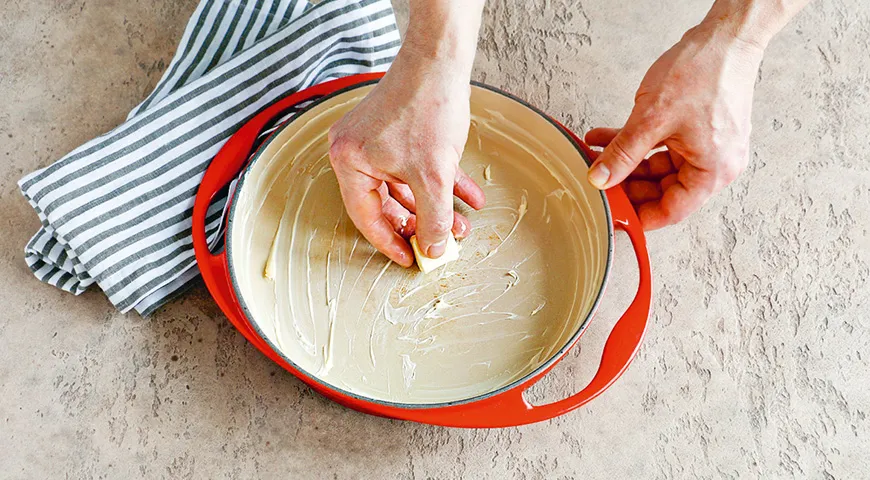
Preheat your oven to 180°C. Generously grease a deep baking dish with the softened butter, then place the dish in the refrigerator to chill. This helps create a non-stick surface and ensures even heat distribution.
Step 2: Infuse the milk
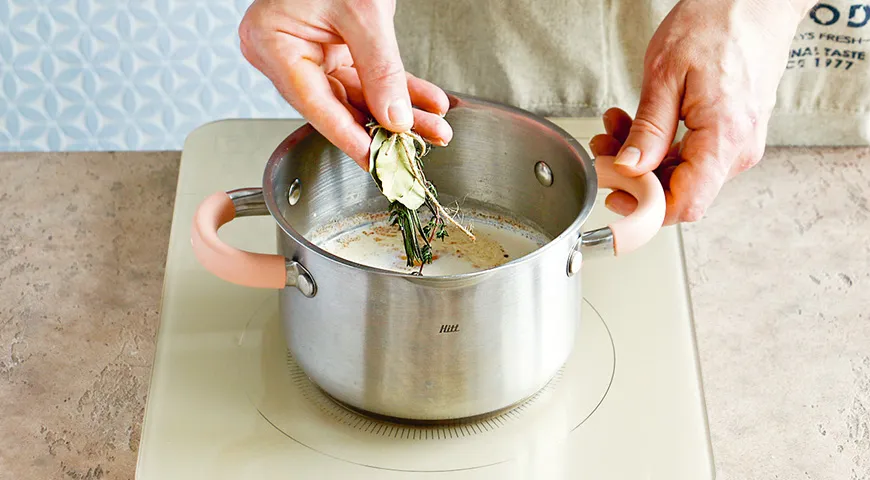
In a saucepan, combine the whole milk, nutmeg, peeled garlic cloves, and a bouquet garni if using. Bring to a gentle boil over medium heat, then remove from heat and let steep for 5 minutes. The garlic and herbs will perfume the milk, laying a subtle foundation for the gratin.
Step 3: Slice the potatoes
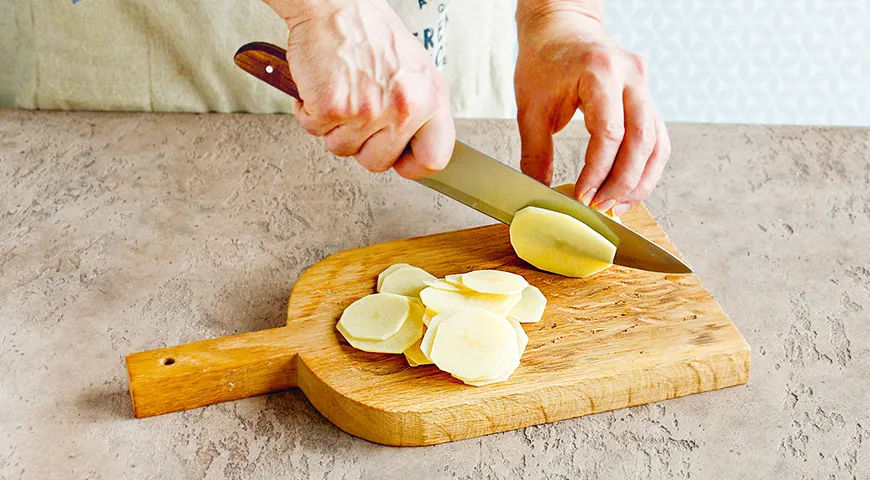
Peel the potatoes and slice them into very thin rounds—no thicker than 3 mm. A food processor with a slicing disc or a mandoline is ideal for speed and precision. Uniform slices are crucial for even cooking and that velvety texture.
Step 4: Layer the potatoes
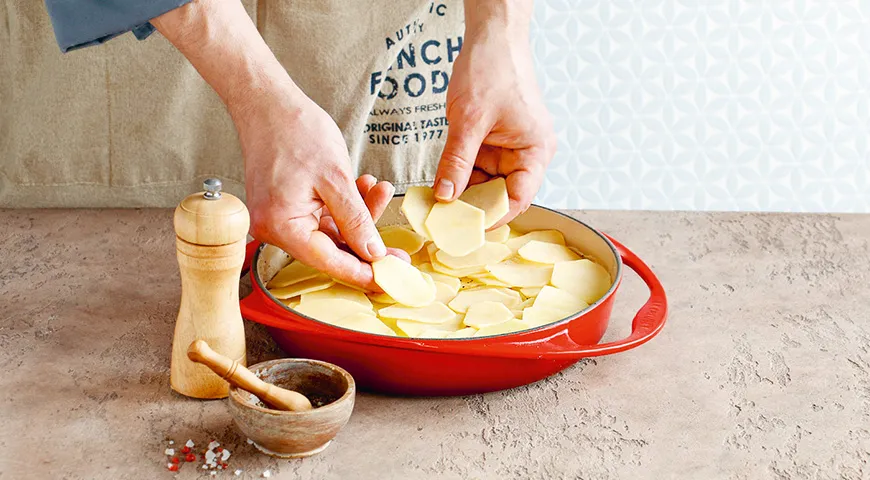
Arrange the potato slices in neat, overlapping layers inside the chilled dish. Season each layer with a pinch of salt and freshly ground black pepper. This simple seasoning builds flavor from the inside out.
Step 5: Add the cream-milk mixture
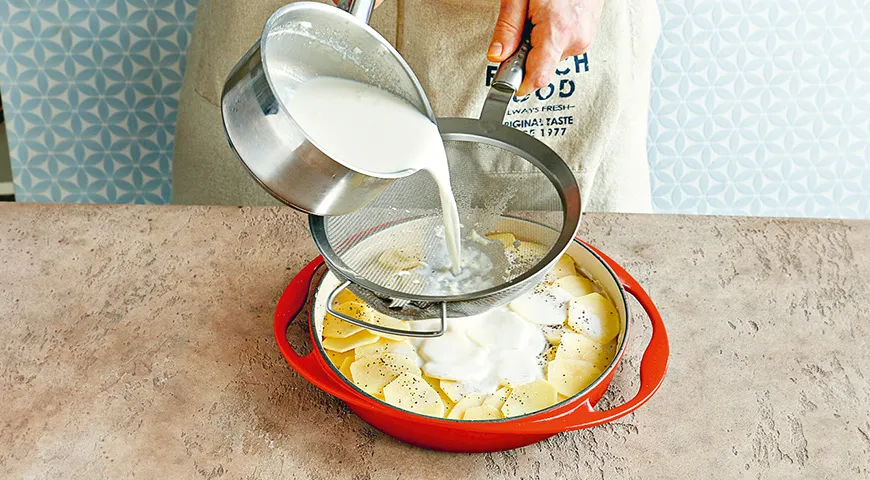
Stir the heavy cream into the warm infused milk. Then, strain the mixture through a fine-mesh sieve directly over the layered potatoes, discarding the solids. Pour in several stages, allowing the potatoes to absorb the liquid for a couple of minutes before adding more. This gradual process ensures every slice is saturated.
Step 6: Top with cheese and cover
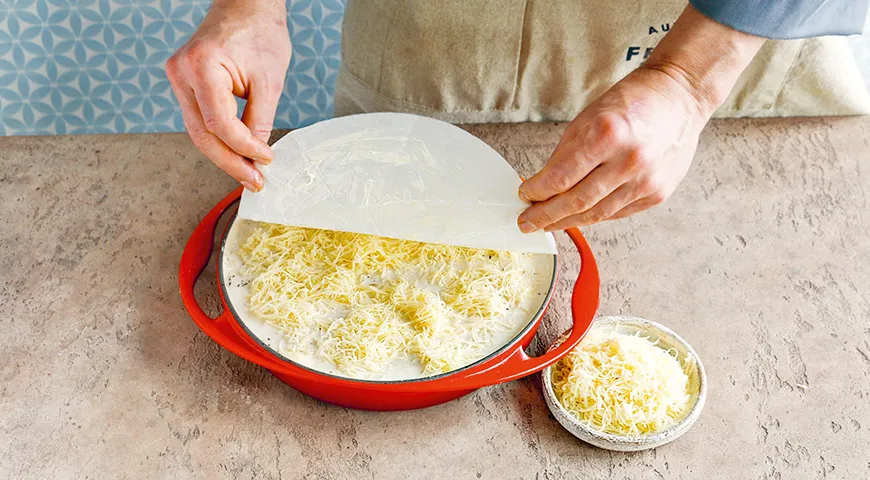
Generously sprinkle the grated cheese over the entire surface. Cover the dish with buttered parchment paper, then tightly with aluminum foil. This traps steam and prevents the top from browning too quickly.
Step 7: Bake
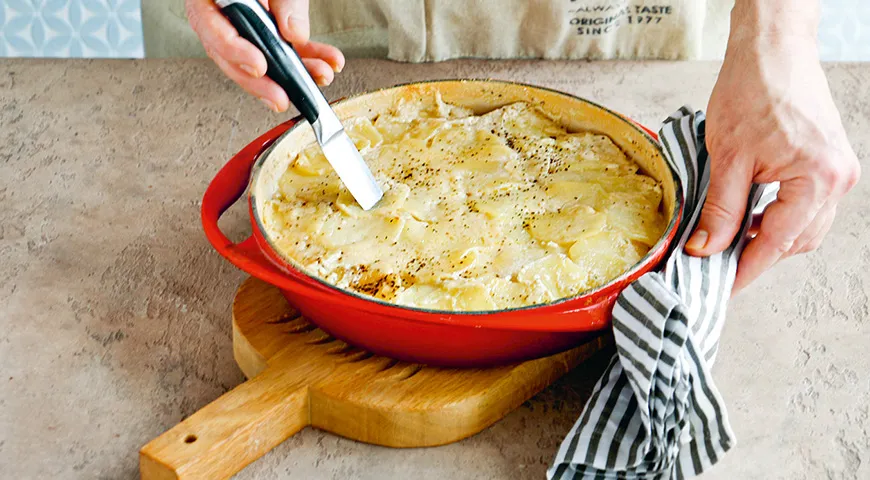
Bake for about 1 hour 20 minutes. The gratin should be tender when pierced with a knife, and the cream will have thickened.
Step 8: Uncover and brown
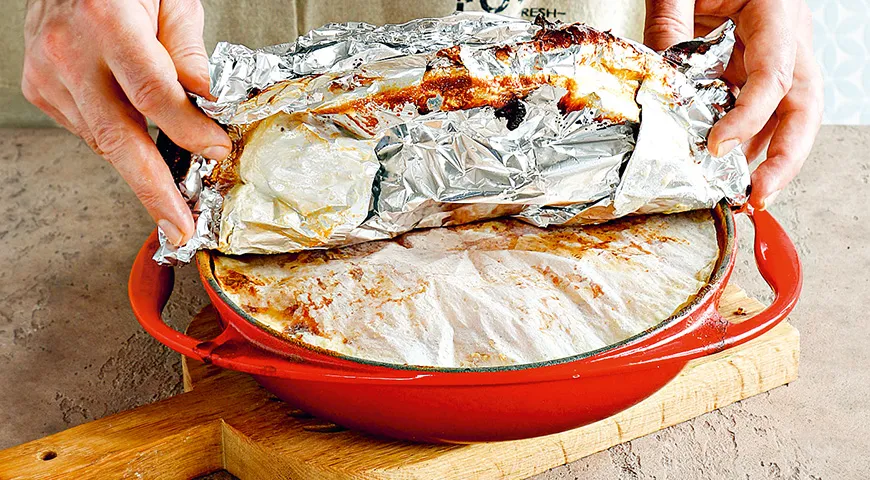
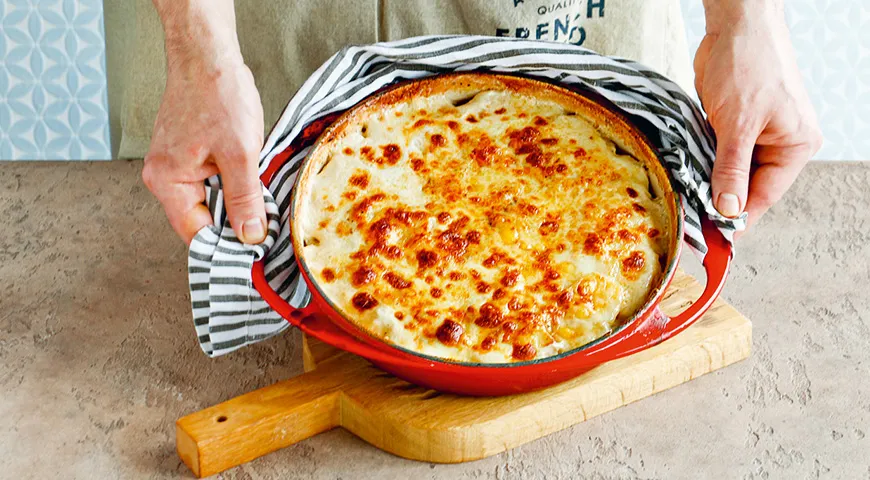
Remove the dish from the oven, discard the parchment and foil. Test with a knife—potatoes should slide in easily. Return to the oven (uncovered) for another 15 minutes to develop a deep golden crust.
Step 9: Rest and serve
Once beautifully browned, remove the gratin from the oven and let it rest for 30 minutes. This allows the layers to set, making slicing clean and easy. Serve warm, spooning any pooled cream over each portion.
Tips for Perfect Gratin
- Use starchy potatoes: Russet or Yukon Gold varieties release starch that thickens the cream naturally.
- Don’t skip the rest: The 30-minute resting period is non-negotiable for neat slices.
- Cheese variety: Combine Gruyère with a touch of Parmesan for extra depth. For a non-toxic cooking environment, choose organic ingredients.
- Slice uniformly: A planetary mixer attachment can slice, but a mandoline is faster.
- Control richness: Substitute half the cream with additional milk for a lighter version.
Variations to Explore
While classic is timeless, experimentation brings joy. Add thinly sliced onions between potato layers for sweetness, or scatter cooked bacon bits for smoky crunch. For a vegetarian feast, fold in sautéed mushrooms or wilted spinach. If you own a microwave pressure cooker, you can par-cook the potatoes first to reduce oven time. Feeling adventurous? Swap Gruyère for blue cheese or smoked gouda—the result is a whole new flavor profile.
FAQ
Can I make potato gratin ahead of time?
Yes. Assemble the gratin completely (without the final browning), cover, and refrigerate for up to 24 hours. Bake covered as directed, then uncover and brown just before serving. This makes it perfect for entertaining.
What’s the best cheese for gratin?
Gruyère is classic, but Parmesan, Comté, or even a sharp cheddar work beautifully. For a nutty, melting cheese, look for artisanal blocks and grate them yourself—pre-shredded cheese often contains anti-caking agents.
Why did my gratin turn out watery?
Watery gratin usually results from insufficient cooking time or using waxy potatoes (like red or new potatoes) that release too much moisture. Starchy potatoes and a longer, gentle bake are the solution. A convection oven can help evaporate excess liquid.
Can I freeze potato gratin?
Freezing is possible but the texture may suffer—the cream can separate upon thawing. If you must freeze, undercook it slightly, cool completely, wrap tightly, and reheat in the oven. For best results, enjoy fresh.
How do I get a really crispy top?
After the main baking, remove the foil and parchment, increase the oven temperature to 200°C, and bake for 10–15 minutes more. You can also finish under the broiler for 2–3 minutes, watching closely. For an extra crunch, sprinkle a thin layer of panko breadcrumbs mixed with melted butter before the final browning.
Is this recipe gluten-free?
Yes, as written—no flour is used. Ensure your cheese is free of anti-caking agents that may contain gluten. Serve it alongside Catalan sponge cake for a complete meal.
This potato gratin with cheese and cream is more than a recipe—it is a celebration of patience, quality ingredients, and the joy of a perfectly browned crust. Whether you serve it alongside a roast chicken or as the star of a vegetarian dinner, it promises to earn a permanent place in your repertoire. For more inspiration, explore our guides on kitchen tools and pairing sauces.







