


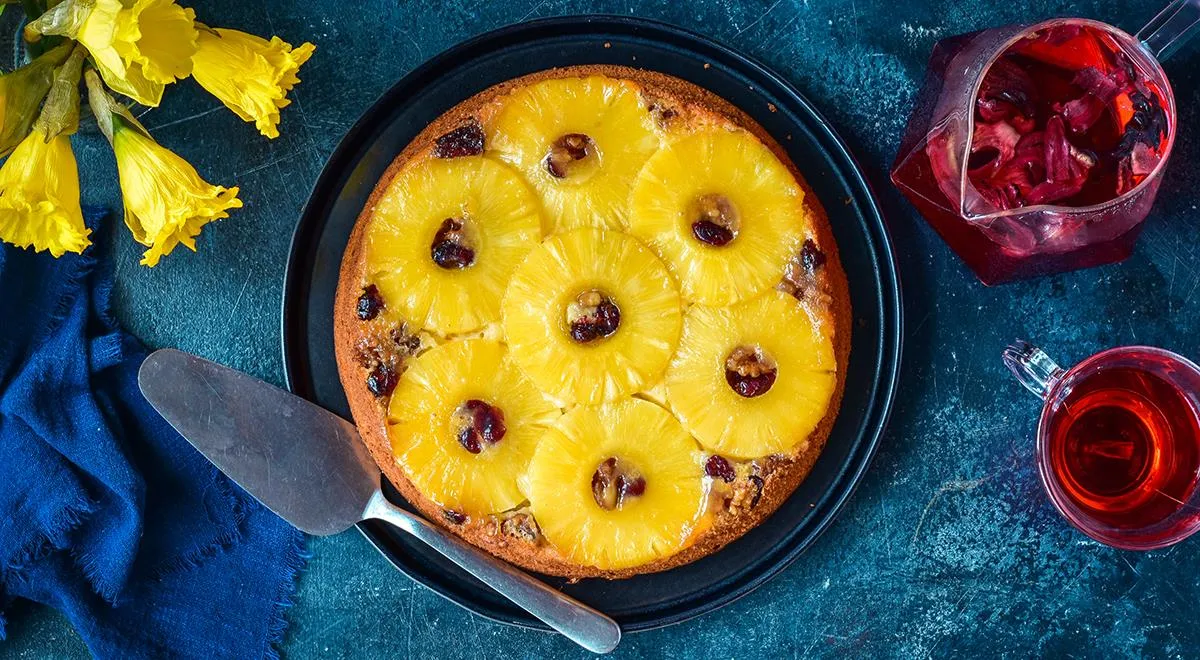
Imagine a classic apple charlotte, but transformed into a decadent butter cake with caramelized pineapple and crunchy walnuts. That is the magic of this zalivnoi pirog (poured pie) with canned pineapple. It is a quintessential Russian teatime treat that comes together quickly, using pantry staples and non-toxic immersion blender for a flawless batter. The result is a tender, buttery crumb with a sticky-sweet pineapple topping that rivals any American upside-down cake. Whether served warm with a dollop of crème fraîche or cold the next morning, this cake is a celebration of simplicity and flavor.
About the Dish
Zalivnoi pirog is a beloved Russian batter cake that translates literally to "poured pie" because the thin batter is poured over the filling. Unlike a traditional sponge, this version relies on melted butter and sour cream for a rich, moist texture that stays fresh for days. The use of canned pineapple is a clever trick: the fruit releases its syrup during baking, creating a natural caramelized glaze. For the best results, invest in a reliable food processor for nut butter to easily grind the walnuts. This cake is perfect for impromptu tea parties, holiday brunches, or as a comforting dessert after a hearty meal.

Ingredients
- 200 g all-purpose flour
- 150 g unsalted butter, plus extra for greasing
- 150 g granulated sugar (plus 2 tablespoons for the bottom)
- 2 large eggs, room temperature
- 100 g full-fat sour cream (20% fat)
- 1 teaspoon baking powder
- ½ teaspoon baking soda
- ½ teaspoon vanilla sugar (or ¼ teaspoon vanilla extract)
- 1 can (400 g) pineapple slices in juice, drained
- 50 g walnut halves or dried cranberries
Step-by-Step Instructions
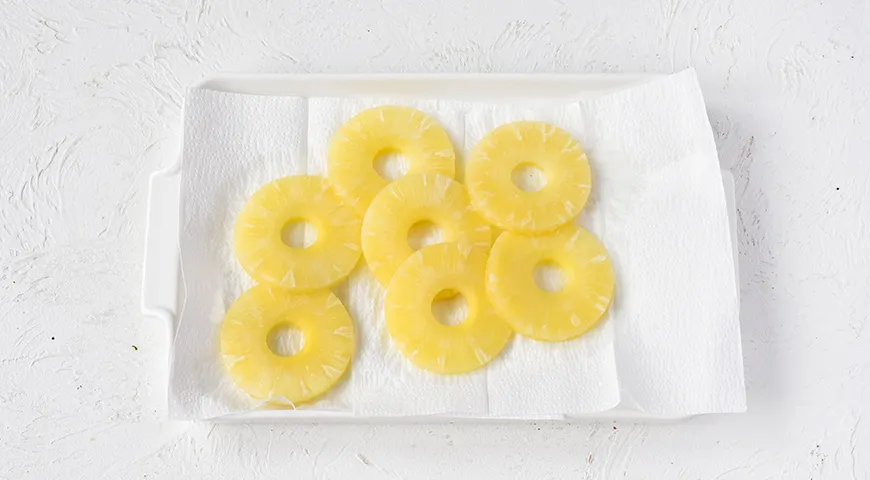
Step 1: Preheat the oven to 180°C (350°F). Drain the pineapple slices thoroughly and pat them dry with paper towels to remove excess moisture. This step is key for a non-soggy bottom.
Step 2: Place the butter, cut into small cubes, into a 22-cm (9-inch) non-stick springform or regular cake pan. Place the pan in the preheating oven for a few minutes until the butter melts completely. Use a planetary mixer to combine dry ingredients later, but for now, just watch the butter.
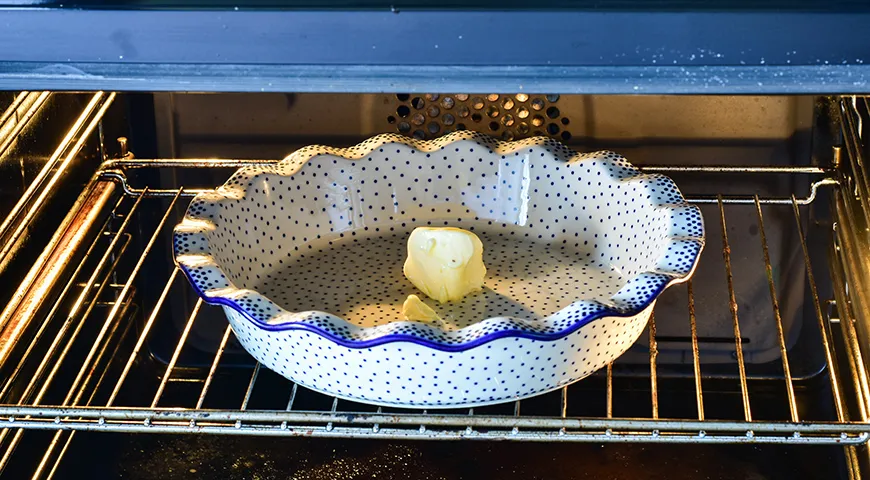
Step 3: Remove the pan from the oven and swirl the melted butter to coat the sides evenly. Any excess butter will pool at the bottom – this is good.

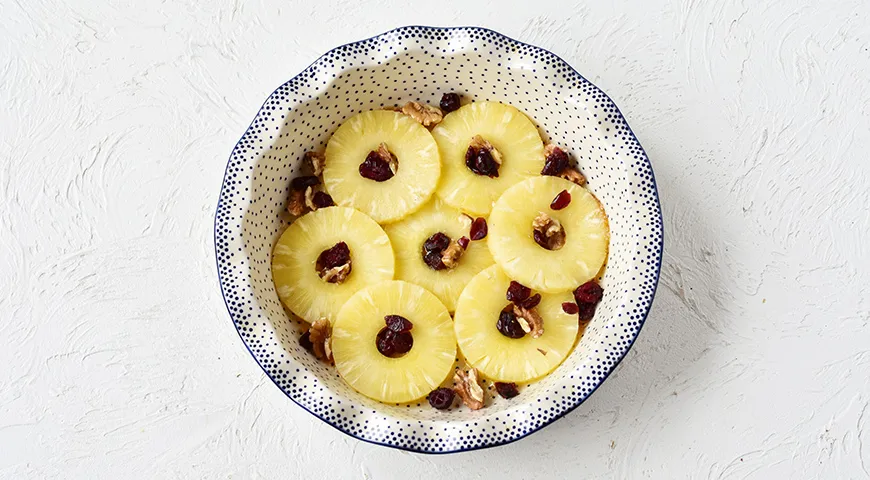
Step 4: Sprinkle the 2 tablespoons of sugar evenly over the bottom of the pan. Place one pineapple slice in the center and arrange the remaining slices in a circular pattern around it. This will become the beautiful top once inverted.
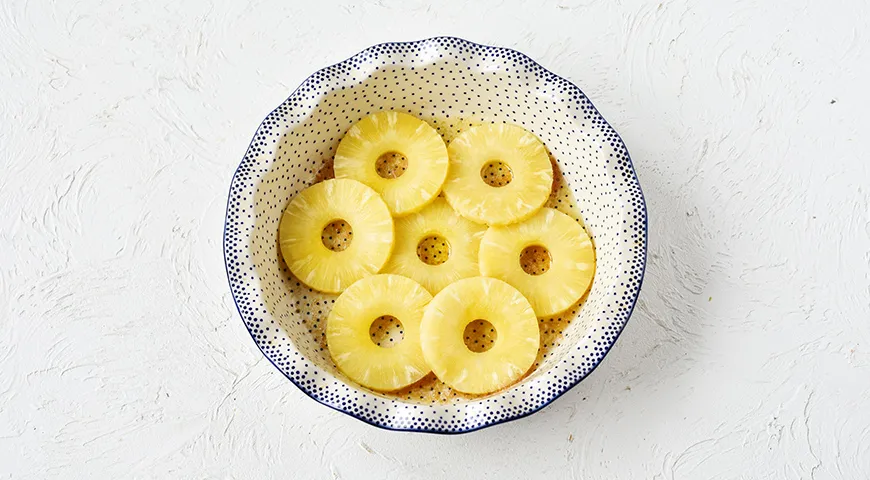
Step 5: Place walnut halves (or dried cranberries) into the holes of the pineapple rings and in the gaps between them, pressing them gently into the sugar-butter mixture. Arrange them pretty side down for the best visual effect.
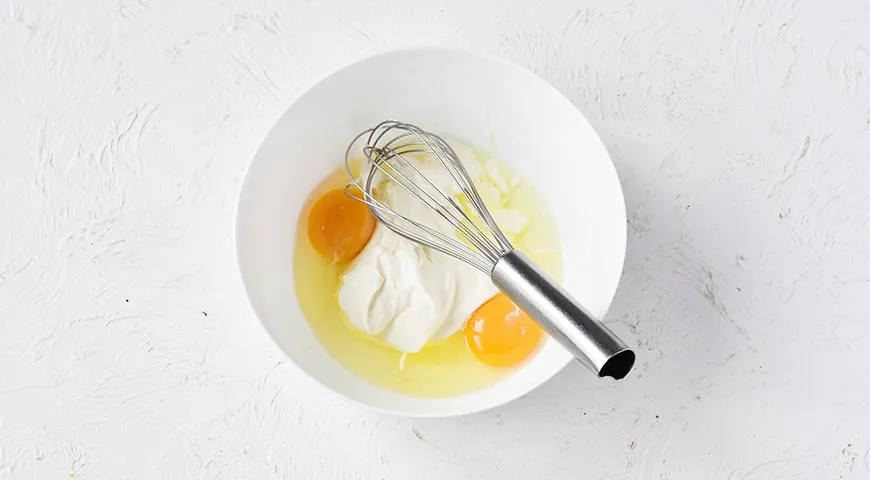
Step 6: In a small bowl, whisk together the eggs and 2 tablespoons of the sour cream. Set aside – this mixture will be added later.
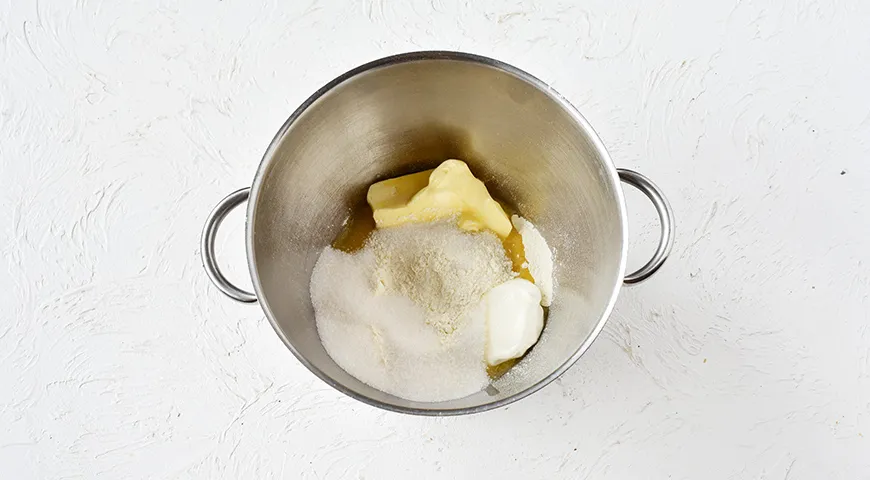
Step 7: In a large mixing bowl, combine the flour, 150 g sugar, vanilla sugar, baking powder, and baking soda. Add the remaining sour cream and melted butter reserved from the pan. Beat with an electric mixer on low speed until the flour is moistened, then increase to medium speed and beat for 2 minutes. The batter will be very thick – almost like a cookie dough. Use a stand mixer for effortless blending.
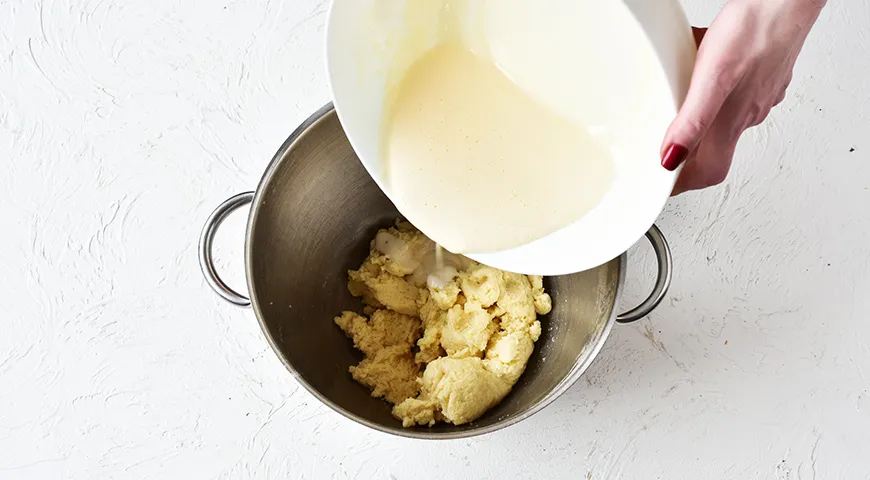
Step 8: Add the egg-sour cream mixture in three additions, beating for exactly 20 seconds after each addition. Scrape down the bowl and beaters after each pour. This method ensures a light, airy crumb without overworking the gluten.
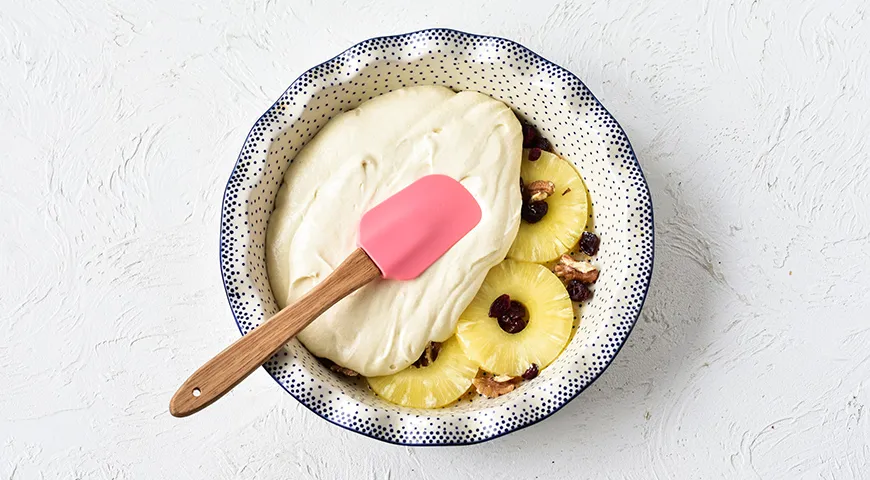
Step 9: Pour the batter gently over the pineapple and walnuts. Smooth the top with a spatula. Bake for 35–40 minutes, or until a wooden skewer inserted into the center comes out clean. The top should be deep golden brown.
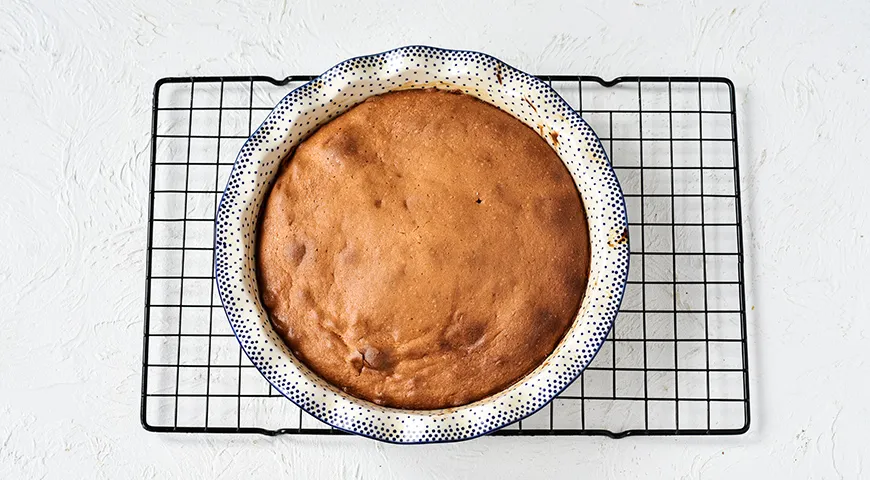
Step 10: Remove the cake from the oven and immediately tilt the pan in all directions to loosen the cake from the sides. Let it cool on a wire rack for 5–7 minutes. Place a serving plate upside down over the pan, then carefully invert the cake onto the plate. Lift the pan. If any pineapple slices or walnuts have shifted, gently reposition them with a fork. Serve warm or at room temperature. For a richer flavor, drizzle with caramel sauce or dust with powdered sugar.
Tips for Perfect Results
- Don’t skip drying the pineapple: Excess juice can make the cake soggy. Blot thoroughly.
- Use room-temperature ingredients: They emulsify better, creating a tender crumb. Let eggs and sour cream sit out for 30 minutes.
- Check doneness early: Ovens vary; start checking at 30 minutes. A convection oven may reduce baking time by 5 minutes.
- Flip while warm: The sugar-butter mixture hardens as it cools; flipping while warm ensures a clean release.
- Store properly: Keep covered at room temperature for up to 3 days, or refrigerate for longer freshness.
Variations to Try
- Fruit swap: Use canned peaches, apricots, or even pears instead of pineapple. Adjust sugar slightly if fruit is very sweet.
- Nut-free version: Replace walnuts with dried cranberries, raisins, or chopped dark chocolate.
- Spiced batter: Add 1 teaspoon ground cinnamon or cardamom to the flour mixture for a warm, aromatic twist.
- Coconut twist: Sprinkle shredded coconut over the fruit before pouring the batter. Toast the coconut under the broiler for 2 minutes after inverting.
- Almond essence: Substitute half a teaspoon of almond extract for the vanilla for a marzipan-like perfume.
Frequently Asked Questions
Can I use fresh pineapple instead of canned?
Yes, but fresh pineapple contains bromelain, an enzyme that can prevent the batter from setting. Poach fresh slices in a simple syrup for 5 minutes first, then drain and dry thoroughly. Canned pineapple is already heat-treated and reliable.
Why is my cake dense or rubbery?
Overmixing the batter after adding the egg mixture can develop gluten. Follow the 20-second rule and avoid vigorous stirring. Also, ensure your baking powder is fresh. Use a non-toxic air fryer for even heat distribution if you want to test small batches.
How do I prevent the cake from sticking to the pan?
The butter-sugar layer should be generous enough to act as a release. If you have a non-stick pan, this is rarely an issue. For stubborn pans, line the bottom with a circle of parchment paper before adding the butter.
Can I make this cake gluten-free?
Absolutely. Substitute the all-purpose flour with a 1:1 gluten-free baking blend that contains xanthan gum. Add an extra tablespoon of sour cream to maintain moisture. A food processor helps blend the batter smoothly.
What’s the best way to reheat leftovers?
Microwave individual slices for 15–20 seconds, or warm in a 160°C oven for 5 minutes. For a crispier edge, use a toaster oven. Pair with vanilla ice cream or a dollop of crème fraîche.
Can the cake be frozen?
Yes, wrap the cooled cake (without topping) tightly in plastic wrap and foil. Freeze for up to 2 months. Thaw overnight in the refrigerator, then reheat gently. The pineapple topping may soften slightly but will still be delicious.
This pineapple upside-down butter cake captures the essence of Russian home baking: humble ingredients transformed into something spectacular. With its buttery crumb, caramelized pineapple, and crunchy walnuts, it’s a dessert that never fails to impress. For more luscious cake ideas, browse our collection of Catalan sponge recipes or explore the best castor oil for greasing pans. Pair it with a cup of immersion blender-blended coffee for a truly comforting moment.







