


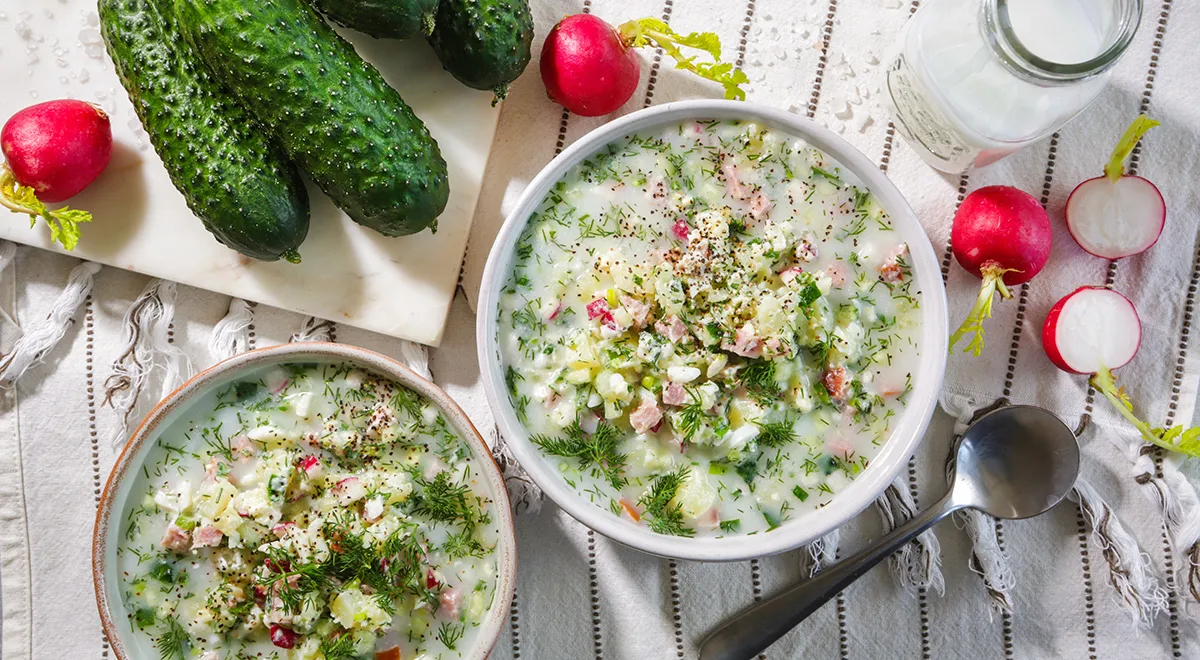
When the mercury climbs and appetite wanes, few dishes offer the same crisp, tangy relief as a properly made okroshka. This traditional Russian cold soup, typically based on kvass, gets a modern, creamy twist with the addition of tan – a fermented milk drink from the Caucasus that brings a gentle effervescence and a subtle yogurt-like tartness. Our Okroshka with Tan transforms humble boiled potatoes, fresh cucumbers, radishes, ham, and hard-boiled eggs into a symphony of textures, all bound together with fragrant dill and green onions. It is the perfect answer to sultry afternoons, offering both refreshment and substance in a single bowl.
Whether you are seeking a light lunch or a starter for a summer gathering, this recipe delivers balance, color, and that elusive quality we call svejest – the sensation of pure, invigorating freshness. Let us dive into the art of making this iconic Russian soup.

About Okroshka and Its Variations
Okroshka (from the Russian word kroshit, meaning to crumble) is one of the oldest cold soups in Slavic cuisine, dating back to at least the 18th century. Traditionally made with fermented rye bread kvass, sour cream, and a medley of diced vegetables, the soup evolved to include meat or fish. Today, countless regional variations exist: some rely on kefir, others on mineral water, but the soul of the dish remains unchanged – a beautifully rustic blend of garden-fresh produce and a tangy liquid base. Our version uses tan, a fermented dairy drink similar to kefir but slightly more carbonated, which adds a lively, thirst-quenching quality. For a deeper dive into Russian culinary traditions, explore Catalan sponge recipes that echo the simplicity of peasant food, or consider upgrading your kitchen tools to make preparation effortless.
Ingredients
- 600 g potatoes
- 4 large eggs
- 300 g fresh cucumbers
- 200 g radishes
- 300 g ham (or boiled sausage)
- 50 g green onions
- 30 g fresh dill
- 2 L tan (fermented milk drink, available in Russian grocery stores or made from ayran)
- 3 tbsp sour cream (20% fat)
- Salt, to taste
- Freshly ground black pepper, to taste
All measurements are metric, ensuring precision. For the best results, choose firm, waxy potatoes that hold their shape, and use the freshest cucumbers available. If you cannot find tan, a 50-50 mix of plain kefir and sparkling water works as an excellent substitute. For more on sourcing specialty ingredients, check out organic vodka recommendations to complement your meal.
Step-by-Step
Step 1: Cook the Potatoes and Eggs
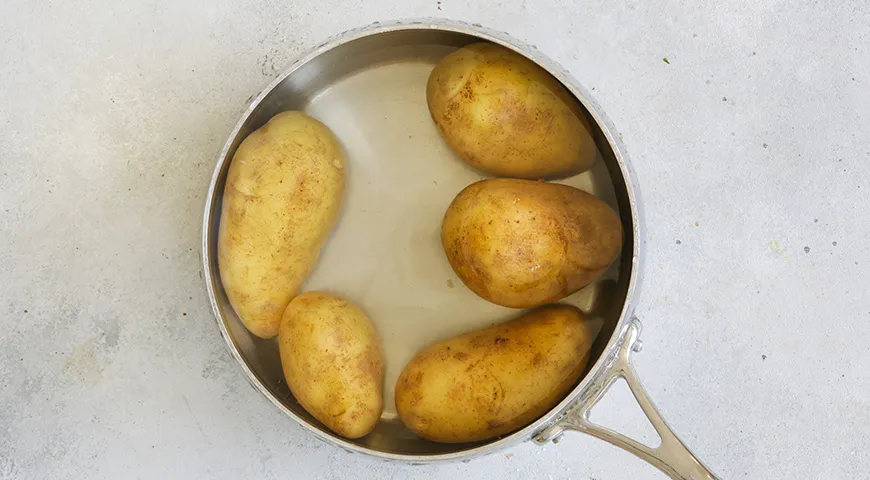
Thoroughly scrub the potatoes with a brush and place them in a saucepan. Cover with cold water, bring to a boil, then reduce heat to low and simmer for 30 minutes, until tender but not mushy. Meanwhile, place the eggs in a separate saucepan, cover with water, bring to a boil, and cook for exactly 10 minutes from the moment the water boils – this yields hard-boiled yolks without a green ring. Drain the eggs and cool under running cold water. Let the potatoes cool completely before handling.
Step 2: Dice the Base Ingredients
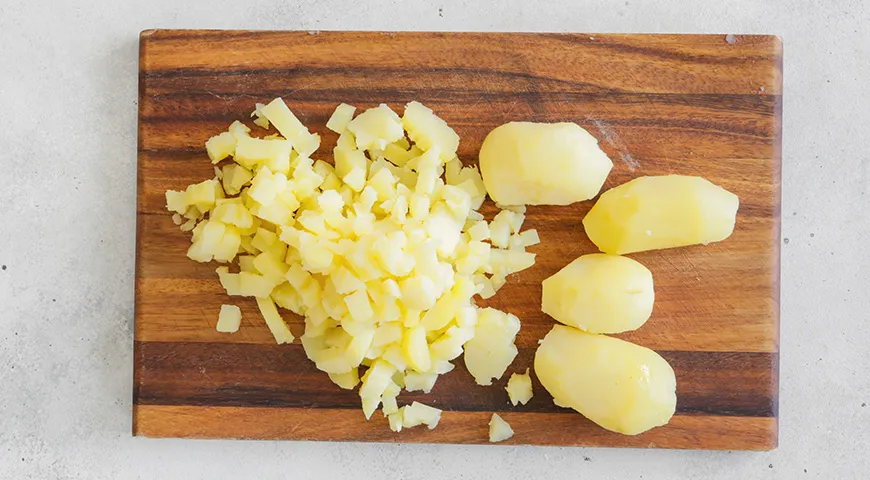
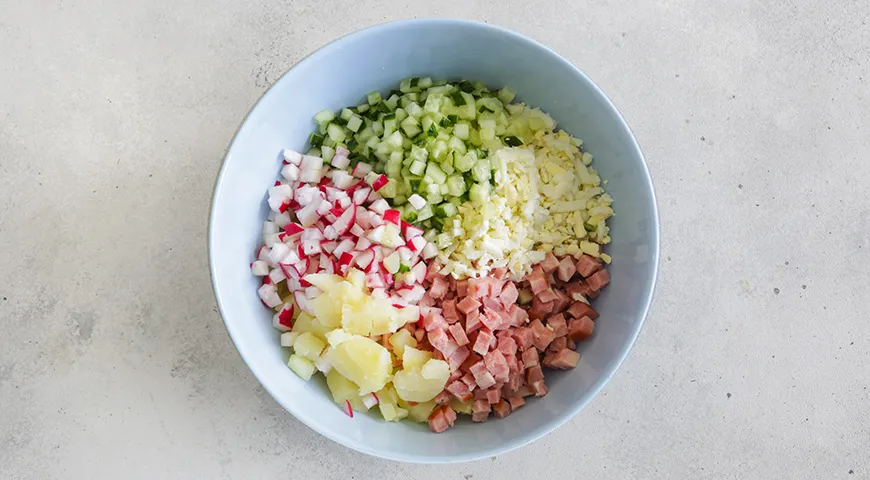
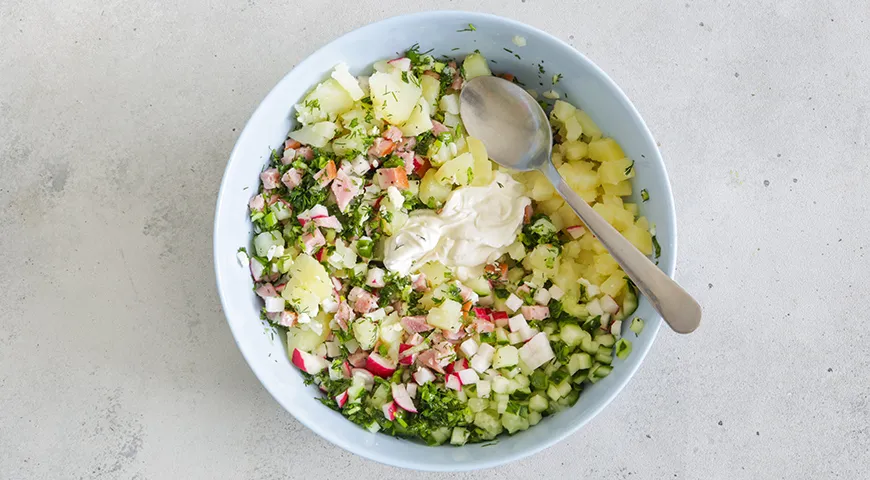
Peel the cooled potatoes and cut them into small, even cubes – about 1 cm. Dice the ham into identical cubes. Wash the cucumbers and radishes; peel the cucumbers if the skin is thick. Cut the cucumbers into small cubes and the radishes into thin matchsticks. Peel and chop the eggs finely. Transfer all these components to a large mixing bowl. A sharp knife is essential here, but if you have a glass food processor, you can achieve uniform dicing in seconds.
Step 3: Prepare the Fresh Herbs
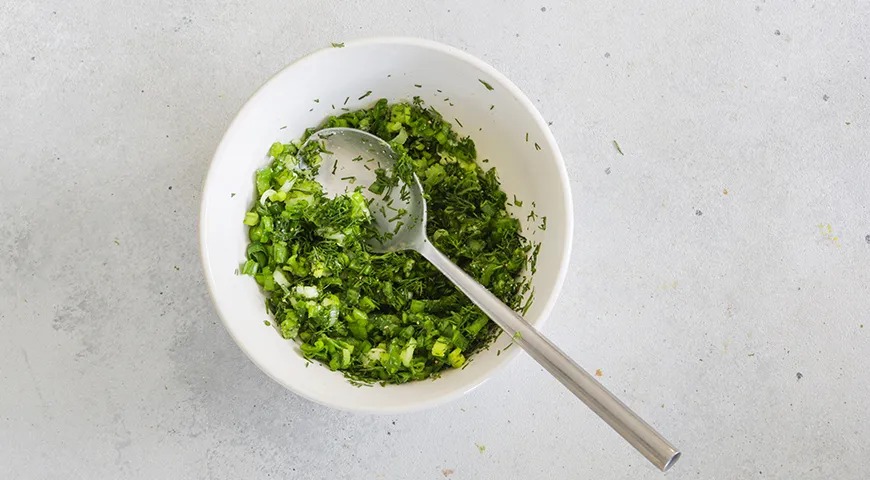
Wash the green onions and dill thoroughly, then pat dry with paper towels. Finely chop both. Place them in a small bowl, sprinkle with a pinch of salt, and use the back of a spoon to rub the salt into the herbs until they release their aromatic juices. This step is crucial – it unlocks the full flavor of the dill and onion. For a more intense herb experience, consider using a wheatgrass juicer to extract pure chlorophyll, though that’s optional for this soup.
Step 4: Assemble the Soup Base
Add the herb mixture to the large bowl containing the diced ingredients. Season with freshly ground black pepper. Add the sour cream and stir gently but thoroughly, ensuring the sour cream coats every piece. Now pour in the tan – start with 1.5 liters, reserving the rest to adjust the consistency later. Stir again until everything is well combined. Taste and adjust salt and pepper. If you prefer a thinner soup, add more tan. For a creamier texture, blend a portion with an immersion blender before adding back – though we prefer the chunky texture of traditional okroshka.
Step 5: Chill and Serve
Cover the bowl with plastic wrap and refrigerate for at least 30 minutes, or up to 2 hours, to allow flavors to meld. Okroshka is best served ice cold. Ladle into bowls and garnish with extra dill or a dollop of sour cream if desired. A side of rye bread makes a wonderful accompaniment. For a touch of elegance, serve with sweet wine – the contrast is delightful.
Tips for the Perfect Okroshka
- Cool everything thoroughly: Warm ingredients will turn the tan thin and ruin the chilling effect. Boil potatoes and eggs at least an hour ahead.
- Don’t skip the herb rubbing: The salt releases essential oils, giving the soup a fragrant, layered aroma.
- Adjust the tang: Some brands of tan are more sour than others. Start with less and add more to taste. A squeeze of lemon can also brighten the flavor.
- Use a sharp knife or a food processor: Uniform dicing ensures every bite is balanced. For effortless prep, consider investing in a food processor for nut butters – it handles vegetables just as well.
- Make it vegetarian: Replace ham with boiled chicken or omit meat altogether for a lighter version. The soup remains satisfying thanks to eggs and potatoes.
Variations
Okroshka is wonderfully adaptable. Try these creative twists:
- Seafood Okroshka: Substitute ham with cooked shrimp or crab, and add a dash of lemon juice.
- Kvass Okroshka: Replace tan with an equal amount of traditional rye kvass for a more classic, sour flavor profile.
- Herb-Infused: Add fresh tarragon, parsley, or mint along with the dill and green onion. For a modern twist, use a best oil sprayer to mist the finished soup with herb-infused oil.
- Spicy Okroshka: Stir in a teaspoon of horseradish or a pinch of cayenne for heat.
- Vegan Option: Omit eggs and ham; double the cucumbers and radishes, and use a plant-based yogurt and sparkling water blend in place of tan.
Frequently Asked Questions
1. What is tan, and can I substitute it?
Tan is a fermented dairy drink from the Caucasus, similar to kefir but with more carbonation. It has a tangy, slightly salty flavor. You can substitute with a mixture of plain kefir and sparkling mineral water (2:1 ratio) or use ayran. For best results, avoid sweetened yogurt.
2. How long does okroshka keep in the refrigerator?
Okroshka with tan is best consumed within 24 hours, as the dairy base can separate and vegetables lose crunch. If you need to store it longer, keep the solids and liquid separate, and combine only before serving. A great way to meal prep is to use a planetary mixer for consistent dicing of large batches.
3. Can I use low-fat sour cream?
Yes, but full-fat (20%) sour cream provides a richer mouthfeel and helps emulsify the soup. Low-fat versions may result in a thinner texture. If watching calories, you can reduce the amount to 2 tablespoons.
4. Is okroshka served cold or at room temperature?
Cold – ideally at 4–6°C (40–43°F). Chilling is essential for the flavors to meld and for maximum refreshment. Serve it with ice cubes if needed, but stir well to avoid diluting the tan.
5. What kitchen tools make okroshka easier?
A sharp chef’s knife is key, but a good food processor can dice vegetables in seconds. For boiling eggs precisely, a microwave pressure cooker works well. And to keep your tan chilled, consider a undercounter ice maker for constant ice supply.
Conclusion
This Okroshka with Tan is more than a recipe – it is a celebration of summer, tradition, and the joy of simple, wholesome ingredients. Balanced, tangy, and endlessly refreshing, it embodies the spirit of Russian home cooking. Whether you serve it as a lunch centerpiece or a starter, it will transport you to a sun-dappled dacha garden with every cold, creamy spoonful. For more inspiration, explore our collection of non-toxic air fryer recipes or espresso machine guides to complete your culinary repertoire.
Additional resources: best store-bought au jus for pairing, 48-inch refrigerator for food storage, and coffee maker for Airbnb to perfect your hosting setup.







