


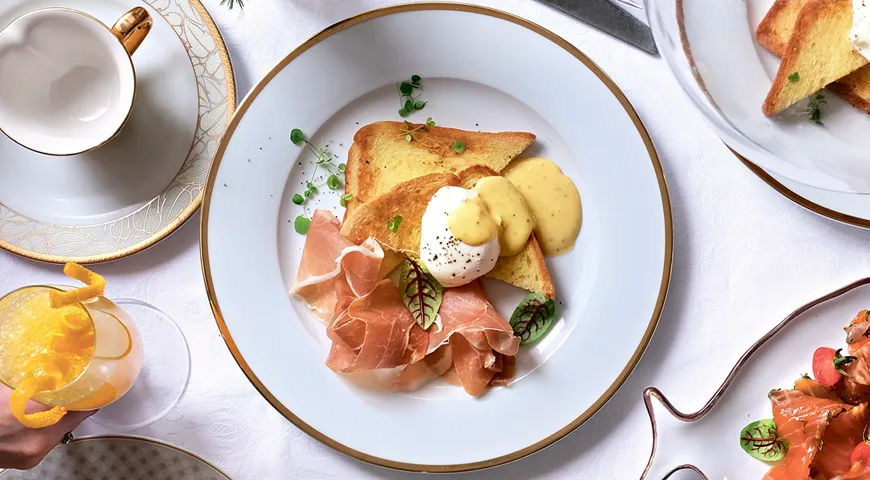
Eggs Benedict is a breakfast icon, a symphony of textures and flavors that has graced brunch menus from Manhattan to Melbourne. Legend has it that this luxurious dish was born in a New York hotel when a hungover patron requested "something special." The result was a masterpiece: a perfectly toasted English muffin or brioche, crowned with silky prosciutto or bacon, a flawlessly poached egg with a molten yolk, and a blanket of velvety hollandaise sauce. While the technique demands precision—especially for the poached egg and the emulsified butter sauce—the reward is a plate that feels both decadent and comforting. This recipe demystifies the process, using a clever plastic-wrap method for foolproof poaching and a blender for rapid hollandaise. Whether you're hosting a lazy Sunday brunch or treating yourself to a gourmet breakfast, mastering Eggs Benedict is a rite of passage for any home cook.
About the Dish
Eggs Benedict is believed to have been invented in the 1890s at Delmonico's Restaurant in New York City, or perhaps at the Waldorf Hotel—the origin story varies. What remains constant is the trio of components: a bread base (often an English muffin, brioche, or American biscuit), a cured meat (ham, bacon, or prosciutto), and a perfectly poached egg bathed in hollandaise. The key to its elegance is the balance: the rich, buttery sauce must not overpower the delicate egg, and the salty meat should complement the soft bread. Achieving that ideal runny yolk requires a gentle hand and precise timing, which is why many cooks turn to reliable tools like a non-toxic immersion blender for emulsifying the hollandaise or a food processor for quick blending. This recipe, adapted from the Russian culinary site Gastronom.ru, uses a unique method of poaching eggs inside oiled plastic wrap to guarantee a perfectly round shape every time.

Ingredients
- 4 large eggs (for poaching)
- 4 thin slices of cured ham or prosciutto
- Butter for toasting and greasing
- 120 g unsalted butter (82.5% fat) for hollandaise
- 4 large egg yolks (for hollandaise)
- Juice of ¼ lemon
- ½ tsp Dijon mustard
- Salt, to taste
- Freshly ground white pepper, to taste
- 4 slices of brioche, English muffin, or toast
Step-by-Step Instructions
Step 1: Toast the Bread
Lightly butter both sides of the bread slices. Toast in a skillet over medium heat until golden brown, about 2 minutes per side. Keep warm. For an even crispier texture, you can use an air fryer.
Step 2: Prepare the Hollandaise Sauce
Melt the 120 g butter in a small saucepan. Let it sit for a minute so the milk solids settle. In a blender or with a non-toxic immersion blender, combine the 4 egg yolks, salt, mustard, and 2 tablespoons of warm water. Blend until frothy. With the blender running, drizzle in the hot melted butter in a thin, steady stream. The sauce should thicken and emulsify. Stir in the lemon juice and adjust seasoning with salt and white pepper. Keep warm by placing the blender jug in a bowl of warm water.
Step 3: Poach the Eggs Using Plastic Wrap
Cut two pieces of plastic wrap about 30x30 cm each. Brush the center of each lightly with butter and season with a pinch of salt. Drape the wrap over a small cup or ramekin, buttered side up. Crack one egg onto the center. Gather the corners, twist to remove air, and tie into a tight knot. Repeat with the remaining eggs. Bring a small pot of water to a gentle simmer (just below boiling). Drop the wrapped eggs in and cook for 4–5 minutes over the lowest heat. The white will set while the yolk remains runny. For precise timing, consider a microwave pressure cooker to speed up the water heating.
Step 4: Assemble
Place the toasted bread on plates. Lay a slice of ham or prosciutto on each. Carefully cut the plastic wrap just below the knot and let the poached egg slide out onto the meat. Spoon the warm hollandaise sauce generously over the top. Serve immediately while the yolk is still flowing.
Tips for Perfect Poached Eggs
The plastic-wrap method eliminates the worry of wispy egg whites. For even better results, use the freshest eggs possible—they hold their shape better. If you prefer the traditional free-form poaching, add a splash of vinegar to the simmering water to help the egg whites coagulate. Always pat the poached egg dry with a paper towel before placing it on the toast to avoid a soggy base. To keep hollandaise warm without splitting, use a double boiler or a heatproof bowl over barely simmering water, stirring occasionally. An coffee maker isn't needed here, but a good espresso machine can complement the meal.
Variations
- Eggs Florentine: Replace ham with sautéed spinach and add a sprinkle of Parmesan.
- Eggs Royale: Substitute smoked salmon for the ham and garnish with dill.
- Vegetarian Benedict: Use grilled portobello mushrooms or avocado slices.
- Spicy Benedict: Add a dash of cayenne or smoked paprika to the hollandaise and use chorizo instead of ham.
- Benedict with a Twist: Swap the bread for a sweet brioche or a savory Catalan sponge cake for a surprising texture.
Frequently Asked Questions
Can I use vinegar when poaching eggs with the plastic-wrap method?
No need—the wrap already holds the egg together, and vinegar can give the plastic an unpleasant taste. For traditional poaching, a few drops of white vinegar in the water help the white set faster.
How do I keep hollandaise sauce from breaking?
Use a high-quality immersion blender to emulsify properly. If the sauce splits, whisk in a tablespoon of warm water or a fresh egg yolk while blending.
Can I make Eggs Benedict ahead of time?
It's best served fresh, but you can poach the eggs and make the hollandaise up to an hour early. Keep eggs in iced water, then reheat in simmering water for 30 seconds. Store hollandaise in a thermos or warm water bath.
What is the best bread for Eggs Benedict?
English muffins give the classic crumpet-like texture, but brioche or challah adds a buttery richness. For a gluten-free option, use a sturdy air-fryer toasted gluten-free bread.
Can I poach eggs in a microwave?
Yes, but the texture is less consistent. Use a microwave-safe bowl filled with water and a dash of vinegar, crack an egg, and microwave on 80% power for 1 minute. For foolproof results, stick to the stove-top method with an ice maker nearby for immediate cooling if needed.
What wine pairs with Eggs Benedict?
A crisp Champagne or sparkling wine cuts through the richness. For a non-alcoholic option, a dry apple cider works wonderfully. For something sweeter, try a high-alcohol sweet wine to balance the savory ham.
How do I get perfectly round poached eggs without plastic?
Swirl the simmering water into a vortex and gently drop the egg into the center. This gathers the white around the yolk. A wheatgrass juicer isn't relevant, but a fine-mesh sieve can strain thin whites.
Eggs Benedict is more than a meal—it's a culinary statement. With this recipe, you can bring restaurant-quality brunch to your own kitchen. The combination of a crisp base, savory ham, silky egg, and buttery sauce is timeless. Don't forget to experiment with variations and share your results! For more kitchen inspiration, explore our guides on best chocolate-covered raisins for a sweet finish, or check out commercial countertop convection ovens for perfect toast every time.







