


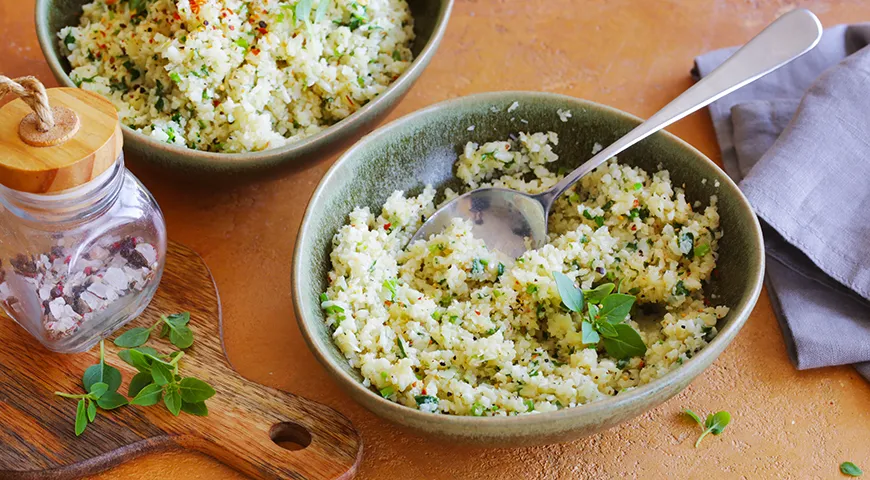
Forget everything you thought you knew about couscous. This rendition ditches the semolina entirely, substituting it with finely grated cauliflower that transforms into a light, fluffy, and entirely grain-free alternative. It’s a revelation in texture—tender yet with a delicate bite—and a blank canvas ready to absorb the nutty warmth of browned butter and the bright punch of fresh herbs. Whether you’re exploring gluten-free cooking or simply seeking a clever way to celebrate vegetables, this recipe from Gastronom.ru delivers unexpected sophistication with minimal effort.
About This Dish
The idea of a cauliflower "couscous" has gained traction in recent years, and for good reason. By pulsing raw cauliflower florets into rice-sized grains, you create a base that cooks in minutes, absorbing flavors without becoming mushy. This version relies on a dual-fat approach—butter for richness, vegetable oil for a clean, high-heat sear—resulting in golden-edged nuggets that taste anything but dietetic. The final flourish of chopped green herbs adds a vibrant freshness that lifts the entire dish, making it equally at home as a light lunch, a side for grilled fish, or an elegant starter.

Ingredients
- 1 small cauliflower head (about 1 kg)
- 40 g unsalted butter
- 40 g vegetable oil (such as sunflower or light olive oil)
- Fine sea salt, to taste
- Fresh herbs (parsley, dill, chives, mint—about a large handful, finely chopped)
Why these choices matter: The butter provides a toasty, nutty aroma while the oil ensures the cauliflower browns evenly without burning. For the herbs, a combination adds complexity: parsley gives earthiness, dill a hint of anise, chives a mild onion note, and mint a refreshing finish.
Step-by-Step Instructions
- Prepare the cauliflower: Remove the outer leaves and the tough, woody part of the core. Using a box grater or a food processor fitted with a grating disc, grate the remaining cauliflower into fine crumbs. Alternatively, cut into florets and pulse in a food processor until the texture resembles coarse sand. Be careful not to over-process into a paste.
- Heat the fats: In a large sauté pan or wide skillet, combine the butter, vegetable oil, and a generous pinch of salt. Heat over medium-high until the butter melts and the mixture begins to sizzle.
- Cook the "couscous": Add the cauliflower crumbs in an even layer. Cook, stirring frequently with a spatula, over high heat for 5–7 minutes, until the grains are lightly browned in spots and tender to your preference. The goal is a golden crust without steaming—work in batches if your pan is crowded, as a convection oven would distribute heat evenly but here stovetop control is key.
- Finish with herbs: Remove the pan from heat. Sprinkle the chopped herbs over the hot cauliflower couscous and gently fold to combine. Taste and adjust salt if needed. Serve immediately while hot, as the dish loses its crispness as it cools.
Tips for Perfect Cauliflower Couscous
- Dry it out: After grating, spread the cauliflower on a clean kitchen towel and pat gently to remove excess moisture. This promotes browning rather than steaming.
- Mind the heat: High heat is non-negotiable for that coveted sear. Use a heavy-bottomed pan like cast iron or stainless steel.
- Make it ahead: The grated cauliflower can be stored in an airtight container in the refrigerator for up to 2 days. Cook just before serving.
- Herb variety: Feel free to substitute with cilantro, basil, or tarragon. For a more robust flavor, toast a clove of garlic in the oil before adding the cauliflower.
- Oil spray option: For an even lighter finish, use a high-quality oil sprayer to mist the pan, though the recipe’s measured oils give better control for browning.
Variations to Explore
- Spiced version: Add ½ teaspoon each of ground cumin and coriander to the oil before cooking. Finish with a squeeze of lemon and a handful of pomegranate seeds.
- Cheesy twist: Stir in 30 g of finely grated Parmigiano-Reggiano during the last minute of cooking for a salty, umami crust.
- Global flavors: Swap the herbs for cilantro and mint, and serve alongside grilled lamb or as a bed for Catalan sponge – well, perhaps not that, but think of it as a versatile base for any protein.
- Immersion blender hack: If you don’t own a food processor, a non-toxic immersion blender with a chopper attachment works well in small batches.
Frequently Asked Questions
Can I use frozen cauliflower for this recipe?
Fresh cauliflower is strongly recommended because frozen releases too much water, resulting in a mushy texture. However, if only frozen is available, thaw completely, squeeze dry in a clean cloth, then proceed.
How do I store leftovers?
Refrigerate in an airtight container for up to 3 days. Reheat in a dry skillet over medium-high heat to restore some crispness, or use an air fryer at 180°C for 4 minutes.
Is this dish keto-friendly?
Absolutely. Cauliflower is low in carbs, and the fats from butter and oil make it perfect for ketogenic diets. Just watch the herb quantities—they’re negligible.
Can I make it vegan?
Yes, simply replace the butter with an additional 40 g of vegetable oil or a high-quality vegan butter. Coconut oil works well but adds a slight tropical note.
What can I serve alongside this cauliflower couscous?
It pairs beautifully with roasted chicken, grilled shrimp, or lamb chops. For a vegetarian meal, top with a poached egg or serve as a side to a hearty stew. A microwave pressure cooker can streamline cooking legumes to accompany it.
Why use both butter and oil?
Butter provides flavor and browning, but its milk solids can burn at high heat. The oil raises the smoke point, allowing you to cook the cauliflower at the intense heat needed for a golden crust without scorching.
Final Thoughts
This cauliflower "couscous" is a masterclass in transformation—turning a humble cruciferous vegetable into something that feels both familiar and entirely new. The technique is forgiving, the ingredients minimal, and the result is a dish that can stand on its own or elevate any meal. Whether you’re a seasoned cook or a curious beginner, organic vodka might not be the pairing here, but a crisp Sauvignon Blanc will do. Embrace the grain-free revolution and let this recipe become a staple in your repertoire.







