


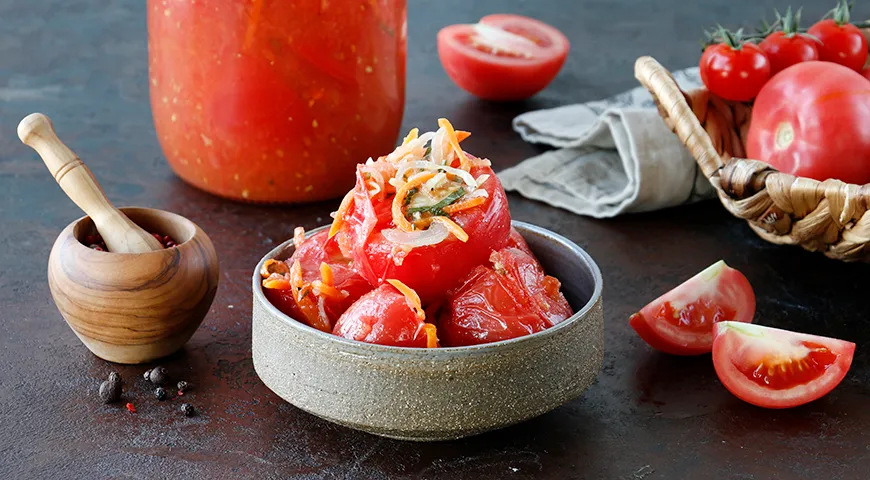
There is something deeply satisfying about capturing the peak of summer in a jar. This recipe for stuffed tomatoes in tomato juice – farshirovannye pomidory v tomatnom soke – is a beloved Russian preserve that transforms humble ingredients into a layered, tangy-sweet delicacy. Each tomato is carefully hollowed, filled with a savory sauté of onion, carrot, and parsley root, then bathed in a rich, homemade tomato juice. The result is a shelf-stable treasure that brightens winter tables as a side dish, appetizer, or salad component. Whether you are an experienced canner or a curious cook, this guide walks you through every step, from selecting the best tomatoes to achieving perfect sterilization.
About This Preserve
Russian home canning traditions celebrate vegetables at their ripest, often pairing them with aromatic roots and fresh herbs. Stuffed tomatoes in tomato juice offer a unique texture contrast: the firm, juicy tomato casing gives way to a tender, flavorful filling. The juice itself, thickened by slow simmering and balanced with sugar, salt, vinegar, and whole spices, acts as both cooking medium and final sauce. For the best results, use meaty, uniform tomatoes – Roma or plum varieties work beautifully – and a reliable food processor for blending the juice. This recipe yields approximately six 500-ml jars, but you can easily scale up or down.

Ingredients
- 1 kg firm, ripe tomatoes (for stuffing) + 600 g ripe tomatoes (for juice)
- 200 g onions
- 250 g carrots
- 25 g parsley root (or substitute with parsnip)
- 100 g sunflower or vegetable oil, plus extra for jars (1 tbsp per 500-ml jar, 2 tbsp per 1-liter jar)
- 30 g salt (non-iodized)
- 40 g sugar
- 2 tbsp 5% vinegar (white or apple cider)
- 3 sprigs fresh parsley
- 2 bay leaves
- 3 allspice berries
- Salt and freshly ground black pepper, to taste (for the filling)
Choose jars with tight-sealing lids. An excellent steam canner simplifies sterilization, but a large pot with a rack works perfectly too.
Step-by-Step Instructions
- Sterilize jars and lids. Wash jars and lids in hot soapy water, then place in a 120°C oven for 15 minutes or boil for 10 minutes. Keep them warm until needed.
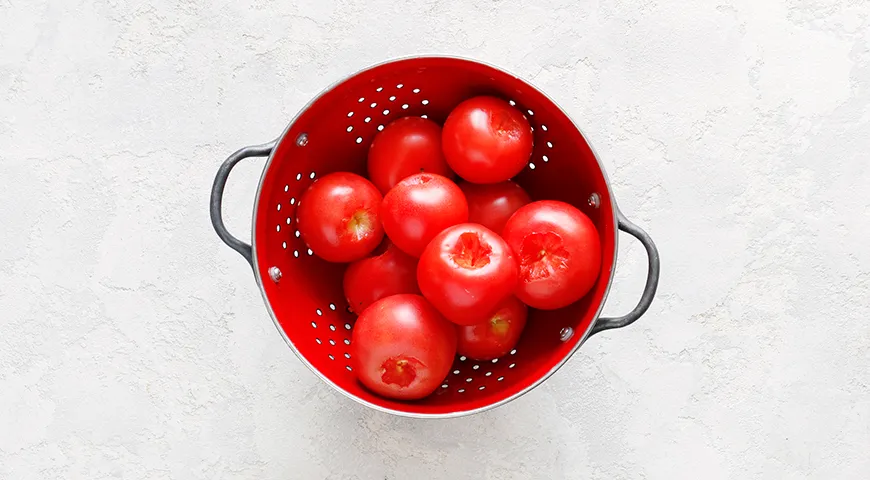
- Prepare the stuffing tomatoes. Wash 1 kg tomatoes, remove stems and any tough calyx leaves. Pat dry.
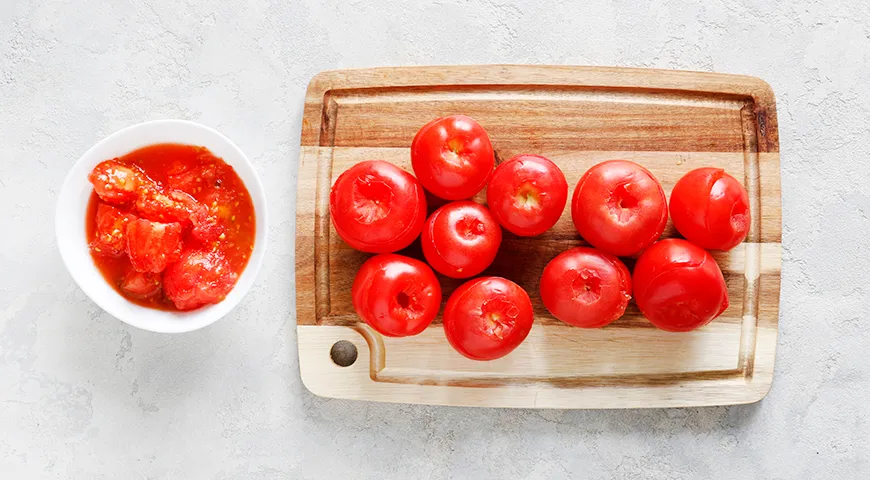
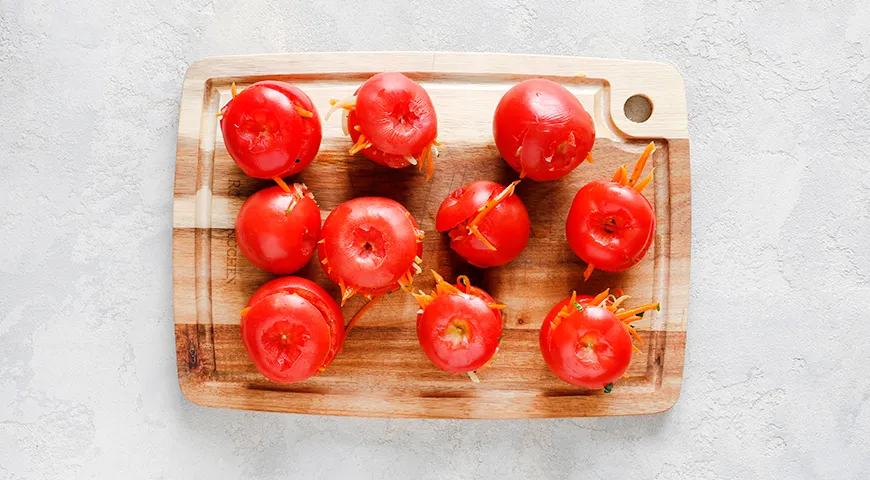
- Hollow the tomatoes. Using a sharp knife, cut a circular lid around the stem (about 2–3 cm wide). Lift the lid, then use a teaspoon to gently scoop out the core and seeds into a bowl. Reserve all pulp and juice – this goes into the sauce.
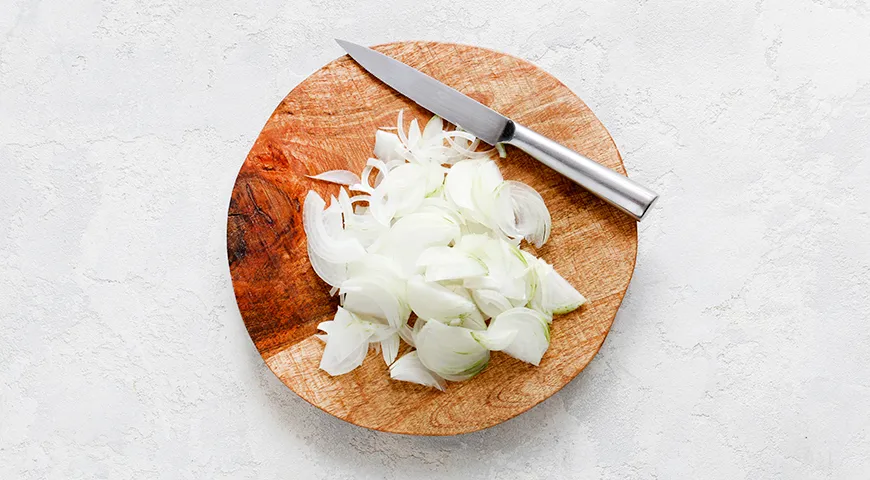
- Slice the onion. Peel onions and cut into thin rings or half-rings.
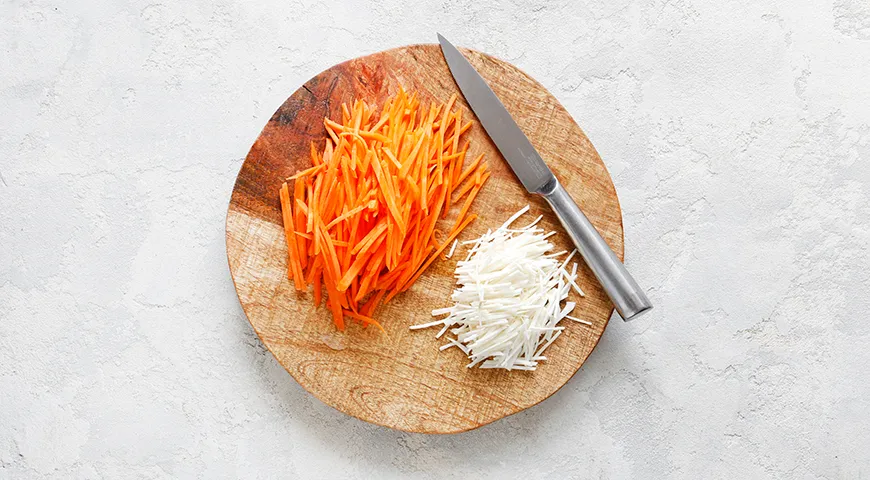
- Julienne carrots and parsley root. Peel both and cut into thin matchsticks. A good julienne peeler or knife skills make quick work of this.
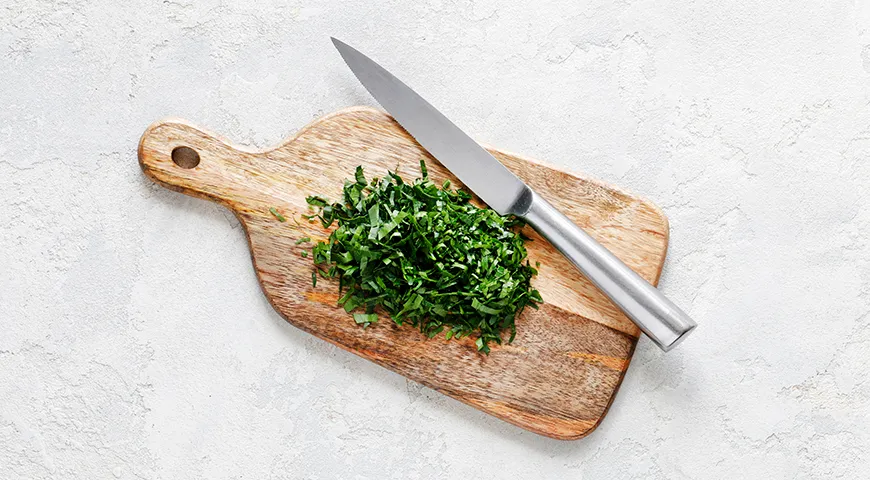
- Chop parsley leaves. Finely chop the fresh parsley sprigs.
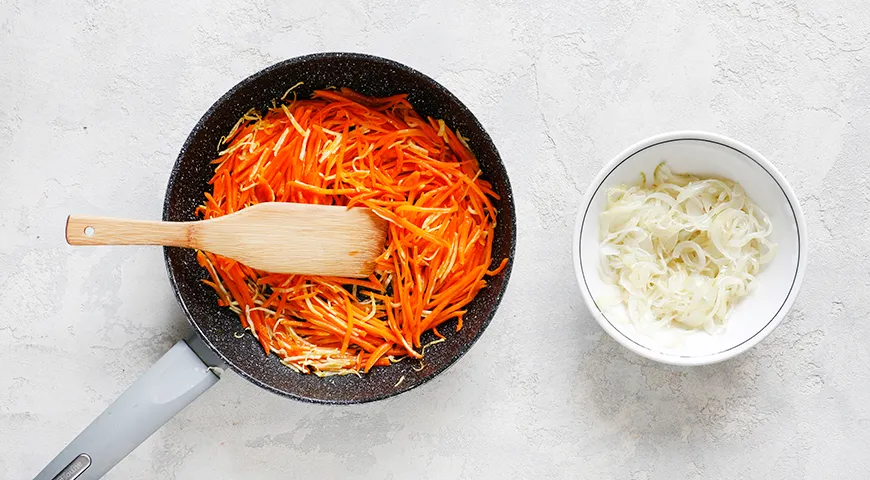
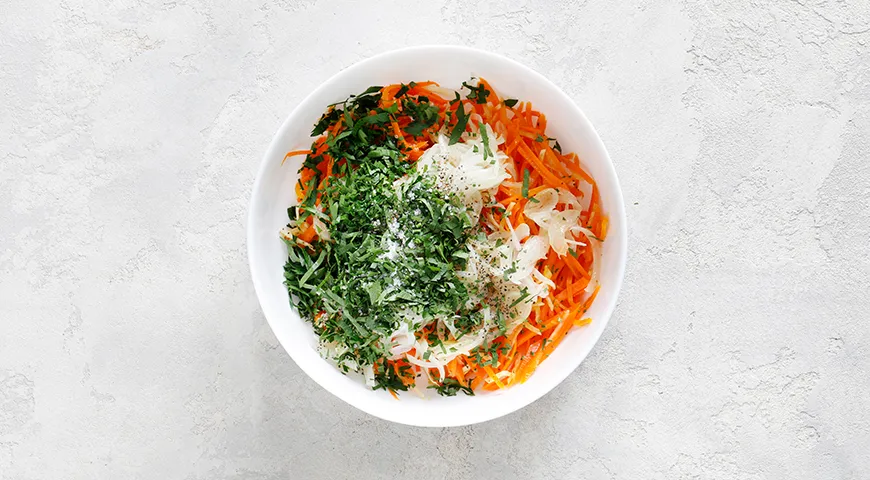
- Sauté the vegetables. Heat a generous drizzle of vegetable oil in a large skillet. Add onion and cook over medium heat until golden and translucent (about 5 minutes). Transfer to a bowl. In the same skillet, add a little more oil and cook carrots and parsley root, stirring, until tender (about 7 minutes). Return onion to the skillet, add chopped parsley, and mix. Season with salt and pepper to taste. Let cool slightly.
- Stuff the tomatoes. Fill each hollowed tomato with the vegetable mixture, pressing gently. Place the lid back on top, securing it with a toothpick if needed (though they often stay without). Arrange stuffed tomatoes upright in a single layer on a tray.
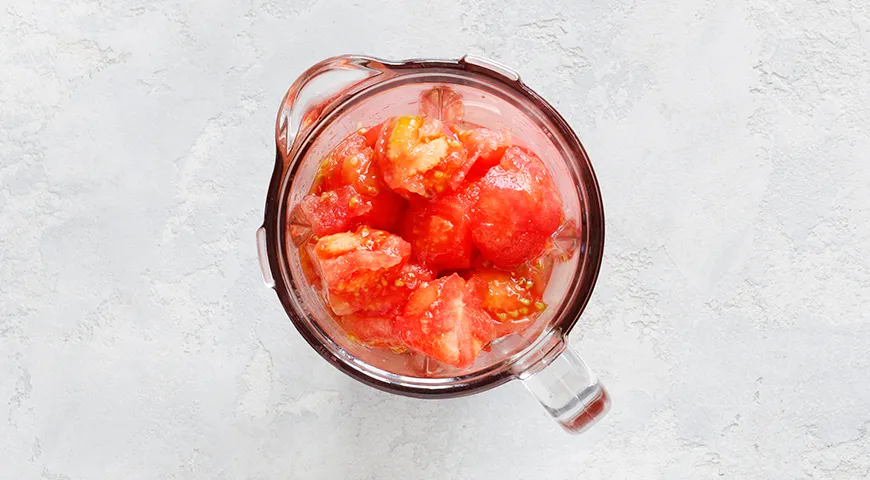
- Prepare the tomato juice base. Wash the 600 g tomatoes for juice, remove stems, and cut into rough chunks. Place in a blender along with the reserved cores from step 3. Purée until smooth. Use an immersion blender or stand blender.
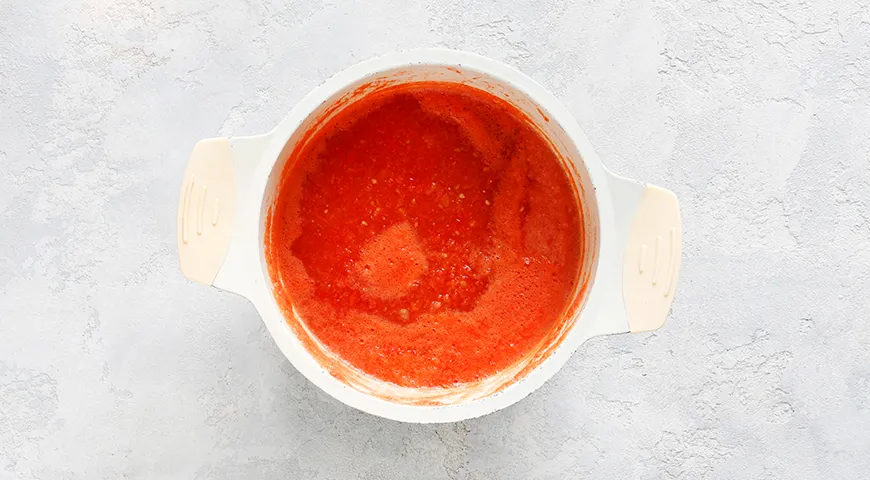
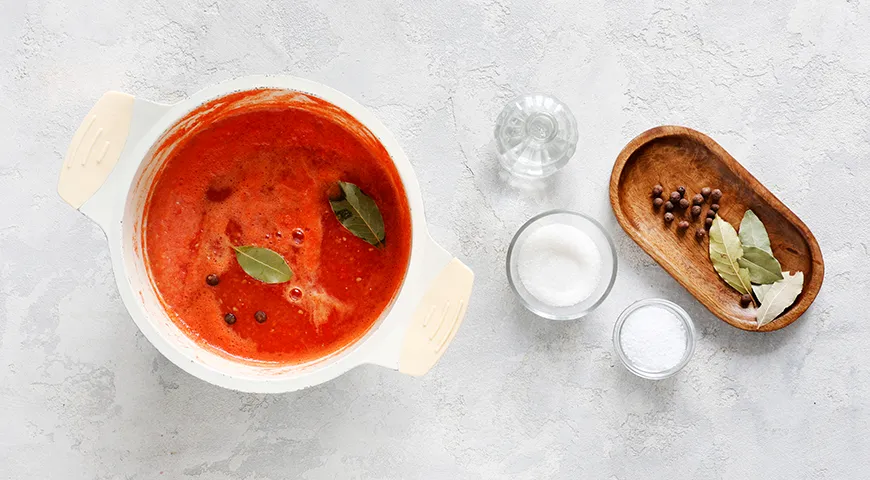
- Cook the tomato sauce. Transfer purée to a large heavy-bottomed pot. Bring to a boil, then reduce heat to a gentle simmer. Cook for 15 minutes, skimming off any foam that rises. The sauce will thicken slightly.
- Season the juice. Add salt, sugar, allspice berries, and bay leaves. Stir and cook another 10 minutes. Two minutes before removing from heat, stir in the vinegar. Taste – it should be pleasantly tangy and well-seasoned.
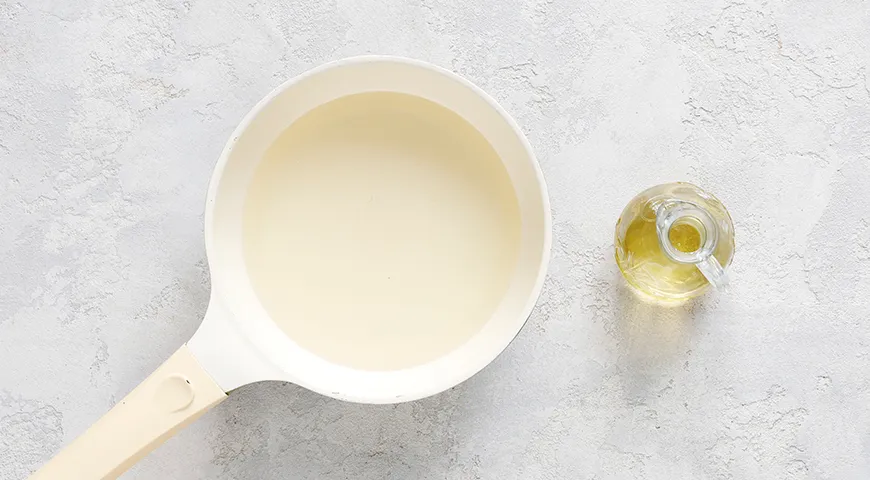
- Heat the oil for jars. In a small saucepan, heat the extra vegetable oil until it shimmers (first wisps of smoke). Remove from heat and let it cool to about 70°C – a candy thermometer helps. This step sterilizes the oil for long-term storage.
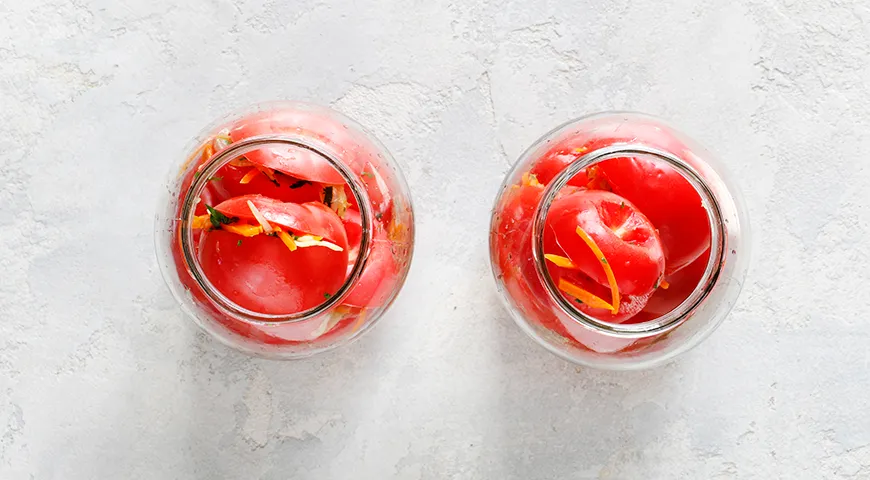
- Assemble jars. Pour the prescribed amount of heated oil into the bottom of each sterile jar (1 tbsp per 500-ml jar, 2 tbsp per 1-liter jar). Carefully pack the stuffed tomatoes upright, fitting them snugly but not crushing them. They will shrink slightly during sterilization.
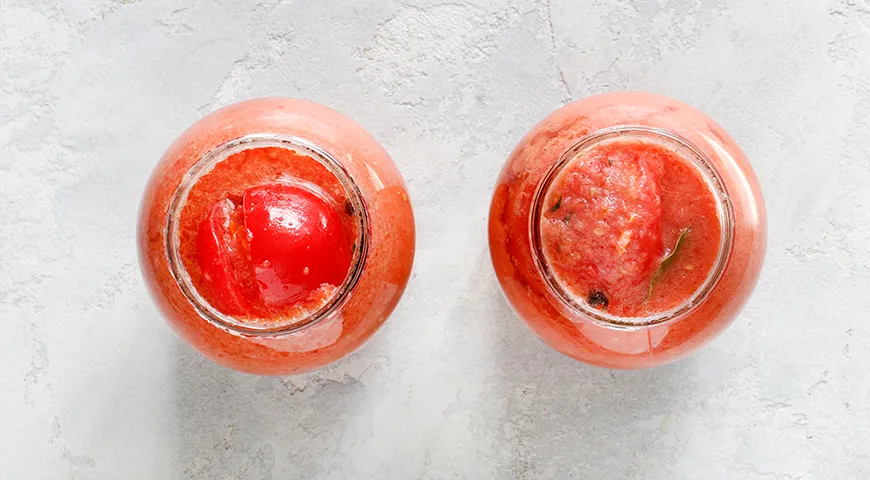
- Fill with hot tomato juice. Ladle the simmering tomato juice over the tomatoes, leaving about 1.5–2 cm headspace from the rim. Use a narrow spatula to release any air bubbles. Wipe jar rims clean, then screw on sterilized lids fingertip-tight.
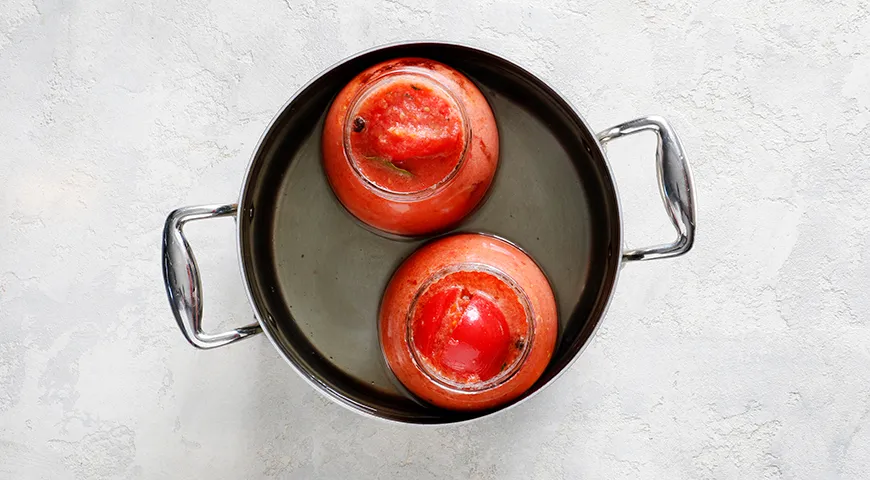
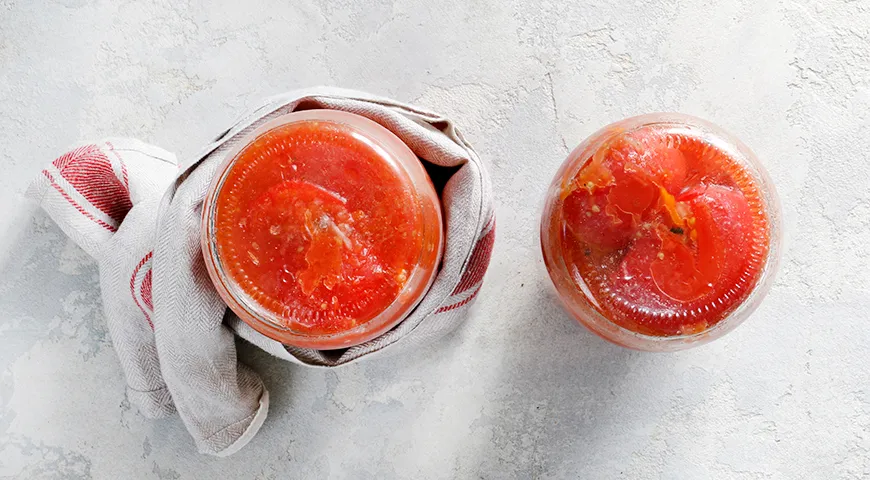
- Sterilize the jars. Place jars in a water-bath canner or large pot with a rack. Cover with water by at least 2 cm. Bring to a rolling boil and process for 40–50 minutes (adjust for altitude if needed). Remove jars and place on a towel to cool undisturbed for 24 hours. You will hear the satisfying ping of lids sealing.
- Close and cool. Once jars are sealed (lids should not flex when pressed), allow them to cool completely. Store in a cool, dark place for up to a year. Refrigerate after opening.
- Enjoy. Serve cold or at room temperature as an appetizer, or warm as a side to meats and grains. The tomato juice can be used in sauces or sipped as a savory drink.
Tips for Perfect Results
- Choose tomatoes that are ripe but still firm – overripe ones will fall apart during stuffing and sterilization.
- If parsley root is unavailable, substitute with parsnip or a small celery root for similar earthy sweetness.
- An oil sprayer helps distribute the heated oil evenly into jars, but pouring works too.
- To ensure accurate headspace, use a jar funnel and measure with a ruler.
- For a smoother sauce, pass the blended tomato purée through a fine-mesh sieve before cooking to remove seeds and skins.
Variations
This recipe is wonderfully adaptable. Replace part of the carrot with bell pepper for a sweeter filling. Add a minced garlic clove to the sauté for extra depth. For a spicier kick, include a small dried chili in each jar. You can also use green tomatoes (still firm) for a tangier preserve – adjust sugar accordingly. Feel free to experiment with different herbs like dill or basil. The principle remains the same: a sturdy tomato, a savory stuffing, and a well-seasoned juice.
FAQ
Can I use canned tomato juice instead of making fresh?
Yes, but the flavor and texture of fresh juice are superior. If using store‑bought, choose a no‑salt, no‑sugar variety and adjust seasoning in the recipe. A juicer can also help extract fresh juice quickly.
How do I know the jars are properly sealed?
After cooling, press the center of each lid. If it springs back, the jar is not sealed. You can also check for a concave lid (curved inward). Unsealed jars should be refrigerated and used within a week.
Can I reduce the sterilization time?
No – 40–50 minutes is necessary for low‑acid tomatoes to prevent spoilage. For high‑altitude canning (over 1,000 feet), add 5 minutes per 1,000 feet. Use a reliable refrigerant leak detector to keep your fridge organized after opening.
Why did my tomatoes become mushy?
Overcooking or using too‑soft tomatoes causes mushiness. Choose firm varieties and do not over‑cook the stuffed tomatoes during sterilization – stick to the recommended time. Also, avoid over‑packing jars.
Can I use this recipe for water‑bath canning without a pressure canner?
Yes, because tomatoes are acidic, water‑bath canning is safe. Just follow the sterilization times and add vinegar to boost acidity. For other vegetables, you would need a pressure canner – but this recipe stays within safe pH limits.
For additional inspiration, explore our sponge cake recipe or learn about best chocolate‑covered raisins for a sweet pairing. If you are also interested in canning equipment, the best steam canner and under‑counter ice maker can elevate your kitchen workflow.







