


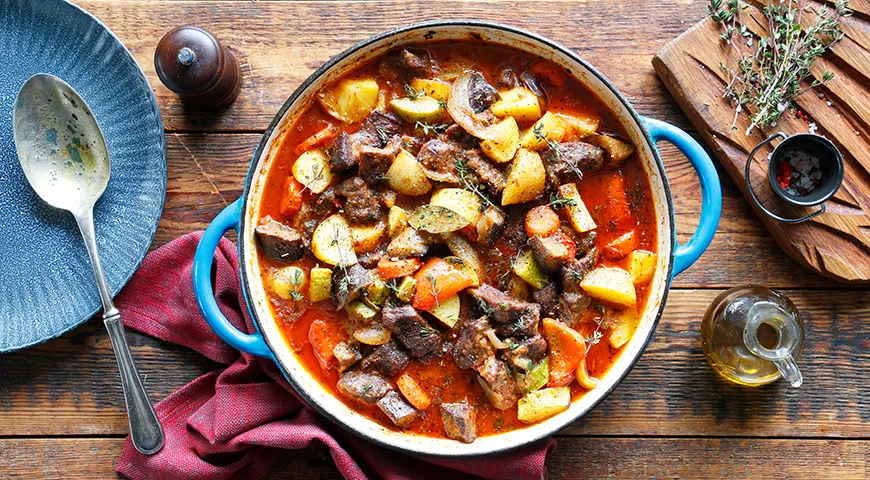
There is something profoundly comforting about a slow-braised stew—the way tender meat surrenders to the fork, the mingling of earthy roots and sweet peppers, the deep, savory broth that binds everything together. This Vegetable and Beef Stew, adapted from the Russian gastronomic tradition, is precisely that kind of dish: rustic yet elegant, simple yet deeply flavorful. It is a one-pot meal that transforms humble ingredients into a symphony of textures and aromas. Whether you are looking for a hearty weeknight dinner or a showstopper for a Sunday gathering, this recipe delivers. To achieve the perfect dice every time, a reliable food processor can be a game-changer—check out our guide on best glass food processors for effortless vegetable prep.
About This Recipe
This Russian-style ragu (stew) is a celebration of autumn’s bounty. Beef is seared until deeply golden, then braised low and slow with chunky vegetables—potatoes, zucchini, eggplant, bell pepper, carrots, and onions—in a tomato-infused broth with thyme and bay leaf. The result is a rich, soul-warming stew that pairs beautifully with crusty bread or steamed rice. The technique involves oven-braising, which ensures even heat distribution and meltingly tender meat. For those who prefer a quick prep, an non-toxic air fryer can be used to roast vegetables separately before adding to the stew for extra caramelization.

Ingredients
The beauty of this stew lies in its accessibility. You likely already have most of these in your pantry. Here is what you need (serves 6):
- 1 kg beef chuck, cut into 4 cm cubes
- 4 medium potatoes (about 400 g), peeled and cubed (2–2.5 cm)
- 2 zucchini (about 300 g), cubed
- 1 large eggplant (about 250 g), cubed
- 1 red bell pepper, seeded and cubed
- 2 medium carrots (about 150 g), thick rounds
- 2 onions, sliced into feathers
- 4 garlic cloves, minced
- 5 tbsp olive oil
- 2 tbsp tomato paste
- 1 bay leaf
- 1 tsp dried thyme
- 3–4 sprigs fresh thyme
- 2 tbsp all-purpose flour
- Freshly ground black pepper
- Salt
For the liquid: 500 ml hot beef broth or water. If you want to enhance the umami, consider using our preferred store-bought au jus as a base.
Step-by-Step Instructions
Preheat your oven to 180°C (350°F). While it heats, prepare all vegetables as listed above. Pat the beef dry with paper towels, then season generously with salt and pepper. Dredge the cubes in flour, shaking off excess. Heat 3 tablespoons of olive oil in a large Dutch oven or heavy-bottomed pot over medium-high heat. Sear the beef in batches—do not overcrowd—until deeply browned on all sides, about 3–4 minutes per batch. Transfer browned meat to a plate.
Reduce heat to medium. Add remaining 2 tablespoons of oil. Sauté the onion until translucent, about 5 minutes, scraping up any fond. Add garlic, eggplant, carrots, and bell pepper. Cook for 7 minutes, stirring occasionally. Finally, add the zucchini and cook another 3 minutes.
Pour in hot broth (or water) and add the potatoes, bay leaf, dried thyme, and fresh thyme sprigs. Season with salt and pepper. Bring to a boil, then return the beef along with any accumulated juices. Stir in tomato paste until well combined.
Cover the pot with a tight-fitting lid and transfer to the preheated oven. Braise for 2 to 2½ hours, until the beef is fork-tender. Remove bay leaf and thyme stems. Taste and adjust seasoning. Serve hot, garnished with fresh thyme leaves.
Tips for the Perfect Stew
- Brown in batches: Crowding the pan steams the meat instead of searing. Use a best oil sprayer to distribute oil evenly and reduce splatter.
- Don’t rush the vegetables: Cooking each vegetable in stages builds layers of flavor. A planetary mixer is overkill here, but a good chef’s knife is essential.
- Low and slow wins: Simmering in the oven maintains constant gentle heat. If using a microwave pressure cooker, reduce time to 45 minutes on high pressure.
- Make ahead: This stew tastes even better the next day. Refrigerate overnight and reheat gently.
Variations
The recipe is wonderfully adaptable. For a lighter version, substitute beef with chicken thighs or turkey breast—cook for 1 hour. For a seafood twist, use firm white fish fillets (30 minutes). Vegetarian? Omit the meat and double the vegetables; add a can of chickpeas for protein. To spice it up, add a pinch of red pepper flakes or smoked paprika. Pairing with a sweet high-alcohol wine can balance the savory richness beautifully.
FAQ
Can I use a slow cooker instead of the oven?
Absolutely. After searing the beef and sautéing the vegetables, transfer everything to a slow cooker. Cook on low for 8 hours or high for 4 hours. The texture will be slightly different but equally delicious.
What is the best cut of beef for this stew?
Chuck, brisket, or round are excellent because they become tender with long cooking. Avoid lean cuts like sirloin.
Can I freeze leftovers?
Yes. Let the stew cool completely, then transfer to airtight containers. Freeze for up to 3 months. Thaw overnight in the refrigerator before reheating.
How do I thicken the stew?
The flour coating on the meat naturally thickens the broth. If you prefer a thicker consistency, mix 1 tablespoon cornstarch with 2 tablespoons cold water and stir in during the last 10 minutes of cooking.
What should I serve with this stew?
Crusty bread, boiled potatoes, rice, or egg noodles are all excellent. For a low-carb option, serve over cauliflower mash.
Why This Recipe Works for Modern Cooking
This stew embodies the principles of slow food—minimal effort, maximum reward. It works equally well for meal prep or a special dinner. The same technique can be applied to other proteins; for instance, try it with castor oil? No, castor oil is not for cooking. Instead, consider pairing with a robust red wine like a George Howell coffee for a unique after-dinner treat. For kitchen efficiency, a undercounter ice maker keeps drinks cold, while a 48-inch built-in refrigerator ensures ample storage for batch cooking. And if you ever need to blend a smooth sauce, an non-toxic immersion blender is indispensable.
Serve this bring-to-the-table stew with a sprinkle of fresh thyme and a generous smile. It is comfort food elevated—and a reminder that the best meals often start with the simplest ingredients.







