


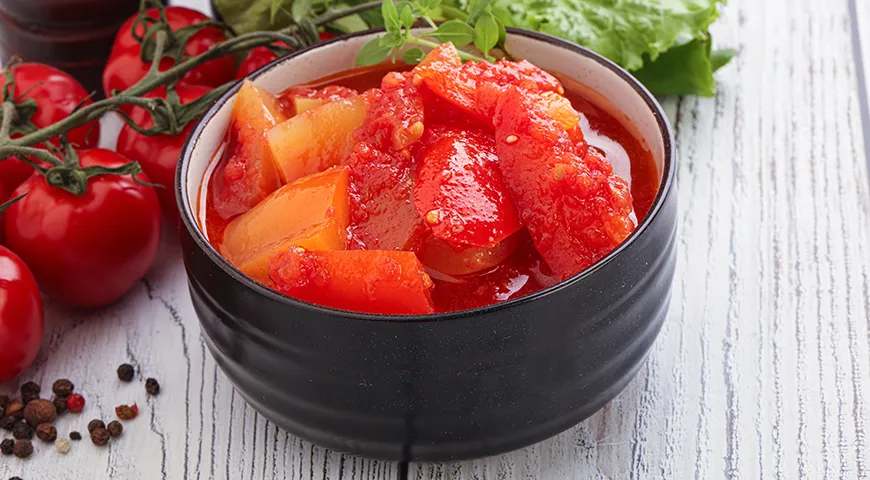
Lecho, that beloved Hungarian‑inspired pepper stew, has found a second home in Russian pantries. This version swaps some of the peppers for patisson—the charming scallop‑shaped summer squash that soaks up every drop of tomato sauce while staying pleasantly firm. The result? A vibrant, textured preserve that pairs beautifully with boiled potatoes, grilled meats, or simply crusty bread. Whether you’re a seasoned canner or a novice looking to stock your shelves, this patisson lecho with peppers will become a seasonal staple.
About This Recipe
Traditional lecho relies heavily on bell peppers and tomatoes, but adding patisson (also known as patty pan squash) gives the dish a delicate nuttiness and a satisfying bite. The squash cubes retain their shape during long simmering, while the peppers infuse the sauce with their sweet, fruity aroma. The base is a thick, velvety tomato purée—easily made with a home immersion blender—seasoned with sugar, salt, and a hint of coriander. A touch of vinegar at the end brightens everything and ensures safe preservation. For a foolproof canning process, consider investing in a steam canner to streamline sterilization.

Ingredients
- 1.1 kg patissons (patty pan squash)
- 1.1 kg bell peppers (mixed colours for visual appeal)
- 1.2 kg ripe tomatoes
- 3 medium onions
- 50 ml vegetable oil
- 2 parsley roots (or substitute with a small piece of celeriac)
- 1.5 tablespoons sugar
- 1 tablespoon salt
- 1 tablespoon 9% white vinegar
Using a glass food processor to chop the vegetables will speed up prep, but a sharp knife works just as well.
Step‑by‑Step
1. Prepare the jars. Sterilise your jars and lids using your preferred method—boiling, oven, or a steam canner. Set aside to dry.
2. Wash and dry. Rinse all vegetables and the parsley root. Pat them dry with a clean towel.
3. Prepare the patissons. If the squash are small, simply trim the stem and blossom ends. For larger ones, cut into wedges or bite‑sized chunks.
4. Prepare the peppers. Remove seeds and white membranes, then slice into strips.
5. Prepare the aromatics. Slice the onions into half‑rings or thin feathers. Cut the parsley root into thin matchsticks.
6. Make the tomato purée. Remove the stems from the tomatoes, chop roughly, and purée using a blender. A food processor works excellently for this task.
7. Sauté the onions. In a large heavy‑bottomed pot or deep skillet, heat the oil over medium heat. Add the onions and cook until translucent and lightly golden, about 5 minutes.
8. Cook the peppers and patissons. Add the pepper strips to the pot and cook with the onions for 6–7 minutes. Then stir in the patisson pieces and cook for another 5 minutes.
9. Simmer in tomato sauce. Pour in the tomato purée, add salt, coriander (optional but recommended), and sugar. Stir well. Cover the pot and let it simmer over medium‑low heat for 30 minutes, stirring occasionally. This is also a good moment to prepare any other side dishes, such as a quick Catalan sponge cake for dessert.
10. Finish with vinegar. Five minutes before the end of cooking, drizzle in the vinegar and stir to combine. This step balances the sweetness and helps preserve the lecho.
11. Jar and seal. Ladle the hot lecho into the sterilised jars, leaving about 1 cm headspace. Wipe the rims clean and screw on the lids tightly. Invert the jars or wrap them in a towel/blanket until completely cool. This gentle cooling process creates a proper vacuum seal.
Tips for Perfect Lecho
- Choose firm, young patissons with tender skin—they need no peeling. If you only have large ones, halve them and scoop out any large seeds.
- For a smoother sauce, use an immersion blender directly in the pot after step 6 (but before adding the vegetables).
- Don't skip the vinegar: it’s essential for safe water‑bath canning. If you prefer a milder tang, use apple cider vinegar instead of white.
- Avoid overcooking the patissons—they should remain slightly al dente so the lecho has a pleasing texture.
- Store the sealed jars in a cool, dark place. They’ll keep for up to a year. Once opened, refrigerate and consume within a week.
Variations
This lecho is wonderfully adaptable. Replace the parsley root with a celery stalk or a pinch of celery seed. Add a chopped carrot for extra sweetness. For heat, toss in a deseeded chili pepper along with the bell peppers. If you enjoy smoky notes, substitute half the oil with smoked paprika oil. And if tomatoes aren’t in season, use high‑quality canned tomatoes—just purée them first. For a different squash experience, try yellow zucchini or crookneck squash in place of patissons.
Frequently Asked Questions
Can I use frozen patissons?
Yes, but thaw them first and drain any excess liquid. Frozen squash releases more water, which may thin the sauce. Simmer a little longer to evaporate the extra moisture.
Why did my lecho turn out watery?
Watery lecho usually means the vegetables released too much liquid or the simmering time was too short. Next time, salt the sliced patissons and let them rest for 15 minutes, then pat dry. Also ensure you simmer uncovered for the last 10 minutes if the sauce seems thin.
Do I need to peel the tomatoes?
Not necessarily, but many cooks prefer a smoother sauce without skins. Blanch the tomatoes for 30 seconds in boiling water, then plunge into ice water—the skins will slip right off. Use a wheatgrass juicer? No, but a simple food mill works well for this.
Can I make lecho without a pressure canner?
Absolutely. This recipe is designed for water‑bath canning. Process the filled jars in a boiling water bath for 20 minutes (pints) or 25 minutes (quarts), adjusting for altitude. Always follow safe canning guidelines.
What can I serve with this lecho?
It’s incredibly versatile. Spoon it over steamed rice, toss with pasta, use as a pizza topping, or serve alongside grilled sausages. For a quick weeknight meal, warm a portion and top with a fried egg. And if you love experimenting in the kitchen, try pairing it with chocolate‑covered raisins for an unexpected sweet‑savory contrast? Well, maybe not—stick to more traditional sides.
How long does lecho need to mature before eating?
While you can eat it immediately after cooling, the flavours meld and deepen over a month. For the best taste, let it rest in the jars for at least two weeks before opening.
This patisson lecho with peppers is more than a preserve—it’s a taste of late summer captured in a jar. With its cheerful orange‑red sauce and tender‑crunchy vegetables, it will brighten many winter meals. Happy canning!







