


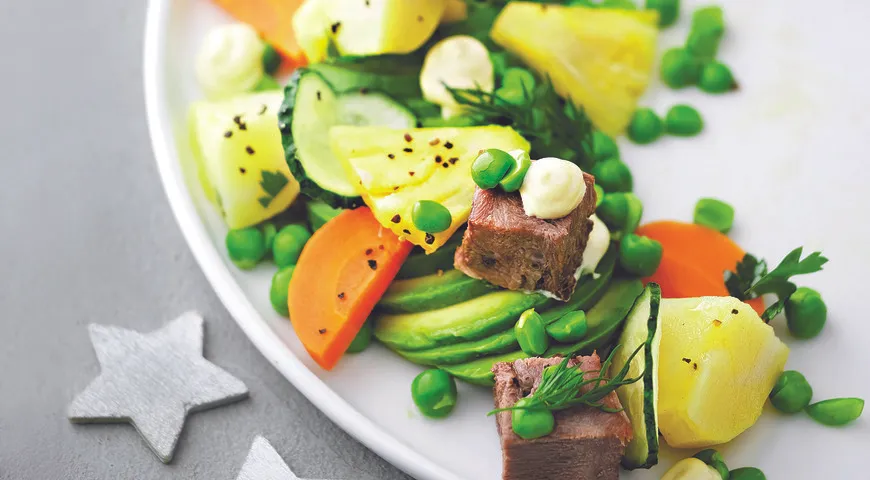
This reimagined Olivier salad—Russian cuisine’s most beloved festive dish—swaps traditional sausage for tender beef tongue and introduces creamy avocado and vibrant pineapple. A healthier, yet profoundly indulgent, centerpiece for your New Year table, it’s a celebration of textures and flavors: silky homemade mayonnaise, sweet peas, earthy potatoes, and a whisper of Dijon tang. The beef tongue, praised by dietitians for its low cholesterol (just 150 mg per 100 g) and high digestibility, makes this a guilt‑free feast. Perfect for those seeking a non‑toxic immersion blender to whip up the dressing, or for lovers of elegant comfort food, this Olivier is a revelation.
About This Recipe
Originating in 19th‑century Moscow, Olivier salad has evolved countless ways, but this version—Оливье с авокадо и говяжьим языком—stands out for its nutritional brilliance. Avocado adds heart‑healthy monounsaturated fats, while pineapple lends a tropical sweetness that cuts through the richness. The beef tongue, boiled until meltingly tender, offers a delicate, meaty depth without heaviness. In Russia, this salad is often served as a New Year’s tradition, but it’s equally stunning for Easter, birthdays, or any special gathering. For the best results, use a robust food processor to chop the vegetables uniformly or a planetary mixer to emulsify the mayonnaise effortlessly.

Ingredients
- 1 beef tongue (about 800 g)
- 100 g frozen green peas
- 4 medium carrots
- 4 medium potatoes
- 1 small pineapple
- 1 ripe avocado
- 3 spring onions (green parts only)
- 2 sprigs fresh dill
- 2 sprigs fresh parsley
- 5 large eggs
- 200 ml extra‑virgin olive oil
- 50 g Dijon mustard
- 30 ml white wine vinegar
- Salt and freshly ground black pepper to taste
- Optional: 1 small cucumber (for garnish rings)
Note: The dressing is a quick homemade mayonnaise. If you prefer, you can substitute with a high‑quality store‑bought version, but homemade elevates the dish. Use a precise oil sprayer to control the olive oil stream when emulsifying.
Step‑by‑Step Instructions
Step 1: Cook the Beef Tongue
Place the beef tongue in a large pot and cover with cold salted water. Bring to a boil, then reduce heat and simmer for 2–2½ hours until fork‑tender. Let it cool in the broth, then peel off the outer skin. Dice into 1‑cm cubes. Set aside. (For an even more tender texture, you can use a microwave pressure cooker to speed up the process.)
Step 2: Prepare the Homemade Mayonnaise
Separate the egg yolks from the whites (reserve whites for another use, such as a Catalan sponge cake). In a mixing bowl, whisk together the yolks, white wine vinegar, Dijon mustard, a pinch of salt, and a pinch of black pepper. While whisking continuously, add the olive oil in a thin, steady stream—ideally using an immersion blender—until the mixture thickens and becomes glossy. Refrigerate for 30 minutes to allow the flavors to meld.
Step 3: Prep the Avocado
Halve the avocado, remove the pit, and scoop out the flesh. Slice it thinly into half‑moons. This adds a buttery, creamy element that pairs beautifully with the other ingredients.
Step 4: Cook the Vegetables
Boil the potatoes and carrots in lightly salted water until just tender (about 15–20 minutes for potatoes, 10–12 minutes for carrots). Drain, cool under cold water, then peel and dice into uniform cubes. Meanwhile, cook the frozen peas in boiling water for 2 minutes, then plunge into ice water to preserve their bright green color.
Step 5: Prepare the Pineapple
Peel the pineapple, remove the core, and cut the flesh into small bite‑sized chunks. The natural sweetness will contrast the savory elements.
Step 6: Assemble the Salad
On a large serving platter, arrange the avocado slices in a single layer. Top with the diced beef tongue, potatoes, carrots, peas, and pineapple chunks. If using cucumber, slice into thin rings and place on top. Add large dollops of the homemade mayonnaise (about 2–3 tablespoons per portion). Finish with a final sprinkle of salt and pepper, and garnish with chopped spring onions, dill, and parsley. Serve immediately for the best texture.
Tips for Perfect Olivier
- Balance acidity: If the mayonnaise tastes too sharp, add a pinch of sugar. The Dijon mustard can vary in strength, so taste as you go.
- Uniform dice: For a professional look, cut all solid ingredients (tongue, potatoes, carrots) into roughly the same size (1 cm). A good food processor can speed up this task.
- Chill before serving: The salad tastes best when assembled within 30 minutes of serving, but you can prepare all components a day ahead and assemble just before guests arrive.
- Avocado browning: To keep the avocado bright, squeeze a little lemon juice over the slices before assembling.
- Egg whites: Don’t throw them away! Use them for meringues, macarons, or protein‑rich snacks.
Variations
- Swap the beef tongue for smoked turkey or chicken for a leaner option.
- Replace pineapple with diced mango or apple for a different sweet‑tart profile.
- Add a handful of toasted walnuts or pecans for crunch.
- For a vegetarian version, omit the tongue and double the avocado, adding marinated artichokes or grilled zucchini.
- Use a vegan mayonnaise made with aquafaba; a juicer can help extract fresh vegetable juices for other recipes.
Frequently Asked Questions
Can I use store‑bought mayonnaise?
Yes, but homemade mayonnaise gives a silkier texture and lets you control the acidity and freshness. If using store‑bought, choose a high‑quality brand with simple ingredients. Pair it with a non‑toxic immersion blender for quick emulsification next time.
How long does this salad keep?
Assembled Olivier with avocado is best eaten fresh—within 2 hours. However, you can store the individual components in airtight containers in the refrigerator for up to 2 days and toss together just before serving.
Can I freeze the beef tongue?
Cooked beef tongue freezes well for up to 3 months. Slice or dice it before freezing for easy use. Thaw overnight in the refrigerator.
Is beef tongue healthy?
Yes! It’s an excellent source of protein, iron, and B vitamins, and it contains only 150 mg of cholesterol per 100 g—lower than many cuts of beef. It’s also highly digestible, making it a favorite among dietitians for weight‑loss plans.
What can I substitute for white wine vinegar?
Apple cider vinegar or lemon juice work well. Adjust the quantity to taste. For a smoother finish, use a high‑quality castor oil for the dressing? No, stick to olive oil. But you can explore other vinegars like sherry or champagne.
Can I make this salad dairy‑free?
Absolutely. The only potential dairy is if you add any—this recipe is naturally dairy‑free. Just ensure your mustard and vinegar contain no milk derivatives.
Why does my mayonnaise sometimes break?
Emulsion breaks if the oil is added too quickly or if the ingredients are too cold. Use room‑temperature eggs and a steady, slow pour. If it breaks, whisk in a teaspoon of warm water to bring it back together.
This Olivier with avocado and beef tongue is more than a salad—it’s a testament to how classic recipes can evolve without losing their soul. Serve it with pride, and enjoy the delighted reactions of your guests. For more inspiration on elevating your kitchen game, explore under‑counter ice makers for perfect drinks, or a non‑toxic air fryer for healthier sides. This is your new holiday staple.







