


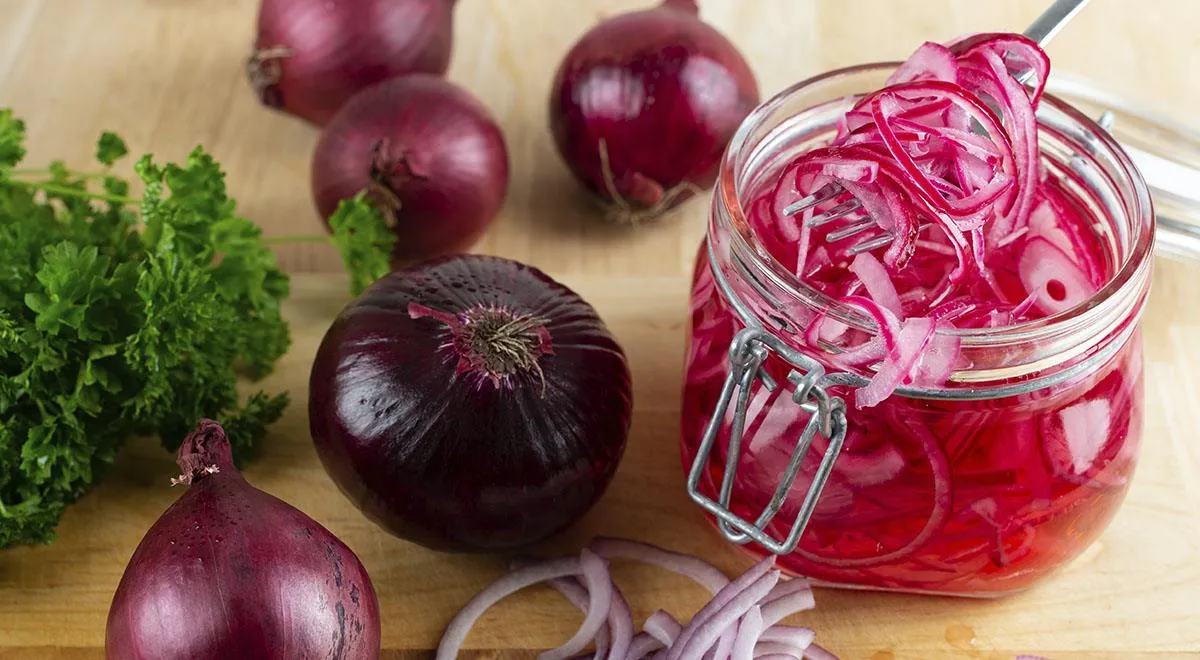
Marinated onions for winter – or маринованный лук на зиму – is one of those quiet triumphs of the Russian pantry. While summer's young, sweet red onions are at their peak, this simple recipe captures their gentle bite and transforms it into a year-round condiment. A brief encounter with a fragrant brine of vinegar, sugar, salt, and warming spices gives the onions a bright, sweet‑sour personality that elevates everything from grilled steak to roasted fish. In Russia, these pickled rings often appear alongside au‑jus for prime rib or as part of a lavish zakuski spread. The best part? The hands‑on time is under ten minutes, and the results last for months in the refrigerator.
About This Recipe
This marinated red onion recipe comes straight from the heart of Russian home preserving. Unlike long‑fermented pickles, this is a quick pickle – the onions are barely cooked, retaining a pleasant crunch while absorbing the nuanced flavours of cloves, black peppercorns, and bay leaf. The brine ratio (100 ml water, 3 tbsp sugar, ½ tsp salt, 2 tbsp 9% vinegar) is perfectly balanced for a glossy, sweet‑tart finish. While young red onions are ideal, the technique works equally well with white or yellow varieties. For more inspiration on perfecting your home preserves, explore our guide to the best steam canner for safe, efficient processing.

Ingredients
- 2 large red onions (approx. 400 g total)
- 100 ml water
- 2 tbsp (30 ml) 9% white vinegar
- 3 tbsp (approx. 45 g) sugar
- ½ tsp (3 g) salt
- 4 black peppercorns
- 4 whole cloves
- 1 bay leaf (optional, but recommended)
Each component plays a role: the sugar and salt balance the vinegar's acidity; the cloves add an earthy, almost floral note; the peppercorns contribute gentle heat. For the sharpest, most aromatic result, select a high‑quality vinegar. And if you're looking to expand your kitchen tool collection, the best glass storage containers are perfect for portioning out your finished pickle.
Step‑by‑Step Guide
- Prepare the onions. Peel the red onions and slice them in half lengthwise. Cut each half into thin half‑rings (about 3–5 mm thick). If you want uniformly thin slices without tears, a food processor can do the job in seconds – just use the slicing disc.
- Make the brine. In a small saucepan, combine the water, sugar, salt, black peppercorns, cloves, and bay leaf. Bring to a vigorous boil over medium‑high heat, stirring until the sugar and salt dissolve completely.
- Blanch the onions. Add the sliced onions to the boiling brine. Let the liquid return to a boil, then cook for exactly 30 seconds. Immediately remove the pan from the heat. The onions will soften slightly but remain crunchy.
- Cool and infuse. Allow the onions to cool in the brine at room temperature. As they rest, the flavours meld and the onions absorb the sweet‑sour brine – this step is crucial for a balanced pickle.
- Sterilise your jars. While the onions cool, sterilise two small (250–300 ml) glass jars and their lids. You can boil them in water for 10 minutes or use a steam canner for a dry‑heat method. Ensure they are completely dry before filling.
- Pack and seal. Using a slotted spoon, transfer the onion rings into the sterilised jars, leaving about 1 cm of headspace. Pour the brine over the onions, making sure the spices are evenly distributed (or discard them if you prefer a cleaner look). Wipe the rims clean, secure the lids fingertip‑tight, and refrigerate immediately.
The onions will be ready to eat after 24 hours, but the flavour deepens over the next week. For long‑term storage, keep them in the coldest part of your refrigerator. A quality unit like the best built‑in refrigerator maintains consistent temperatures that extend the shelf life of your homemade preserves.
Tips for Perfect Marinated Onions
- Don't overcook. The 30‑second blanch is non‑negotiable – any longer and the onions turn limp and lose their appealing crunch.
- Use fresh spices. Old cloves or stale peppercorns will dull the flavour profile. Grind black pepper fresh if possible, though whole peppercorns are preferred here.
- Adjust sweetness. If you prefer a less sweet pickle, reduce the sugar to 2 tbsp (30 g). For a more prominent vinegar tang, increase the vinegar by ½ tbsp.
- Keep it sterile. Even though this is a refrigerator pickle, always start with sterilised jars and clean utensils to prevent mould. The best oil sprayer isn't needed here, but a good set of tongs helps when handling hot jars.
Variations
This basic brine is a canvas for endless creativity. Swap red onion for shallots or pearl onions – just adjust blanching time (30 seconds for thin slices, 1–2 minutes for whole peeled pearls). Add a pinch of chilli flakes for heat, or a sprig of fresh dill for a Nordic twist. For a more complex pickling liquid, replace half the water with dry white wine and add a strip of orange zest. The non‑toxic immersion blender isn't necessary here, but you can use it to purée a portion of the onions into a creamy dressing.
These marinated onions pair beautifully with roasted pork, grilled sausages, or seared tuna. For a festive Russian appetiser, drape them over dark rye bread with a smear of butter and a slice of herring. If you're serving a steak dinner, consider a side of sweet high‑alcohol wine – the sweetness echoes the pickle's sugar and contrasts the meat's savoury char.
FAQ
How long do marinated red onions last in the refrigerator?
When stored in a sealed, sterilised jar at a consistent temperature (0–4 °C), they remain fresh for 2–3 months. Always use a clean fork to remove onions and return the jar promptly to the fridge. A reliable appliance like the undercounter ice maker isn't directly related, but a cold environment is key.
Can I use white onions instead of red?
Absolutely. White onions are milder and slightly sweeter when cooked, while red onions offer a more vivid colour and a subtle peppery note. Both work well; adjust sugar slightly if you find white onions less naturally sweet.
Do I need to boil the jars for this recipe?
Yes – because the onion is not fully cooked, sterilising jars prevents any bacterial contamination. A boiling water bath (10 minutes) or a steam canner (like the best steam canner) are both effective. After filling, the brine's acidity and refrigeration provide additional safety.
Can I make a larger batch for winter?
Certainly. Multiply the ingredients proportionally, but keep the brine ratio identical. Use a larger pot so the onions can be submerged in the brine during blanching. For bulk storage, the best 48‑inch built‑in refrigerator offers ample space.
What should I serve with marinated onions?
They are incredibly versatile: atop a burger, inside a grilled cheese sandwich, mixed into a potato salad, or as a garnish for creamy soups. For a Russian‑inspired dinner, pair them with au‑jus for prime rib and a side of Catalan sponge cake for a surprising sweet finish.
Can I substitute the vinegar with apple cider vinegar?
Yes. Apple cider vinegar (also 9% acidity) adds a fruity undertone that complements the cloves and onions beautifully. The flavour will be slightly milder; you may want to increase the vinegar by 1 tsp for the same tang.
For a truly authentic Russian experience, enjoy these marinated onions alongside a shot of organic vodka or a crisp white wine. And if you're planning a full zakuski table, consider also preparing the best chocolate‑covered raisins for a sweet counterpoint.
This marinated onion recipe proves that the simplest techniques often yield the most memorable results. With just a handful of pantry staples and a few minutes of active work, you can create a condiment that adds brightness and acidity to winter meals – a little taste of summer preserved in a jar.







