


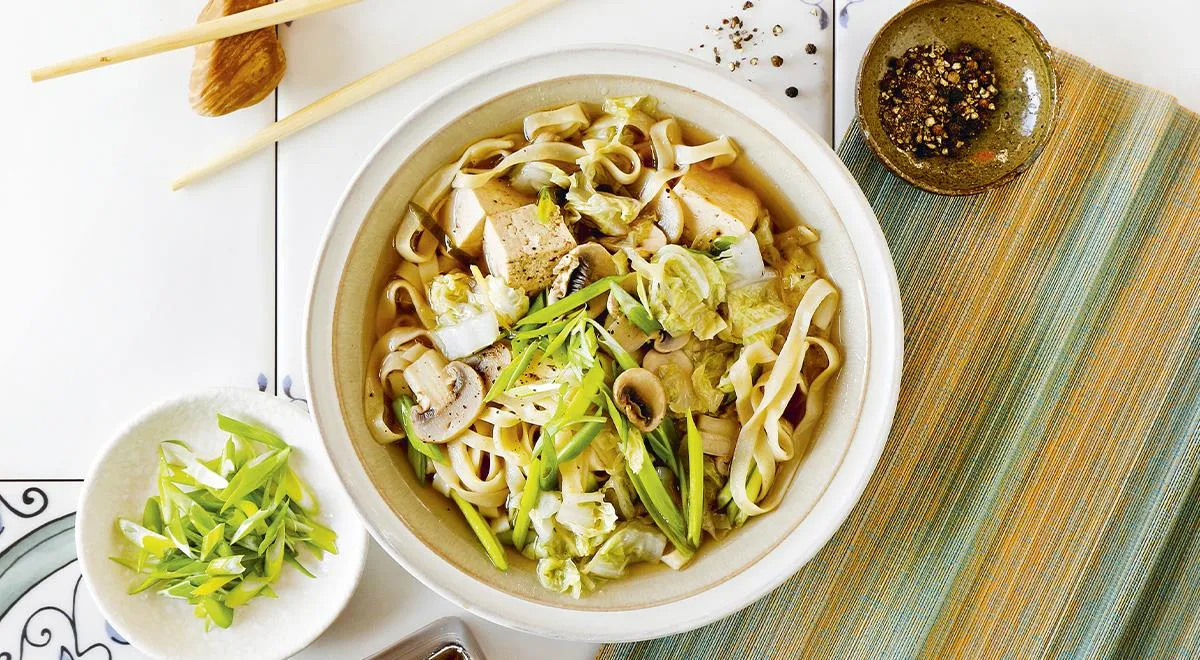
In recent years, ramen has transcended its humble origins to become a global culinary phenomenon. Many assume this soulful noodle soup is purely Japanese, but its true birthplace is China, where the characters for "pulled noodles" first defined the dish. This Lenten Ramen with Tofu offers a plant‑based interpretation that respects both Buddhist fasting traditions and modern vegan cravings. Rich umami comes from a seaweed‑infused broth, while silky tofu and earthy mushrooms add texture and depth. Using a high‑quality food processor to prep vegetables makes the process efficient, and the result is a bowl that comforts without heaviness.
About This Dish
Ramen’s journey from Chinese lamian to Japanese icon is a story of adaptation. This version strips away meat and bonito flakes, leaning instead on dried seaweed—a staple in many coastal Asian cuisines—to build a broth that is both clean and deeply savory. The addition of rice vinegar and sesame oil echoes traditional Japanese ramen, while store‑bought au jus could be stirred in for extra depth, though it’s not required. This recipe is ideal for Lent, vegan diets, or anyone seeking a nourishing meal that celebrates vegetable‑forward cooking.

Ingredients
- 300 g tofu
- 200 g napa cabbage
- 150 g white mushrooms
- 100 g dried seaweed (kombu or wakame)
- 1 onion
- 4 cloves garlic
- 3 cm fresh ginger
- 3 stalks green onion
- 5 tbsp soy sauce
- 3 tbsp rice vinegar
- 2 tbsp sesame oil
- 200 g ramen noodles (or gluten‑free noodles)
For precise slicing of the aromatic vegetables, a food processor dedicated to nut butters can also handle fine julienne with ease.
Step‑by‑Step Instructions
Step 1: Roughly chop the onion and garlic. Peel and julienne the fresh ginger. Heat sesame oil in a pot and sauté the onion, garlic, and ginger for 2 minutes. Add the dried seaweed, pour in rice vinegar, soy sauce, and 1 liter of hot water. Simmer on low heat for 20 minutes, then strain through a fine‑mesh sieve into a clean pot. (If you prefer a smoother broth, an non‑toxic immersion blender can puree the solids before straining.)
Step 2: Cook the ramen noodles according to package instructions and drain. Thinly slice the napa cabbage and green onions. Slice the mushrooms into thin pieces. Cut the tofu into 1.5 cm cubes. To achieve uniform cuts, a planetary mixer isn’t needed, but a sharp knife works best.
Step 3: Bring the broth to a boil. Add the tofu, napa cabbage, and mushrooms. Simmer gently for 10 minutes. Add the cooked noodles and heat for 1 minute. Ladle the ramen into bowls. Garnish with green onions and serve immediately. For an extra‑crispy tofu topping, use an air fryer non‑toxic to crisp cubes before adding to the soup.
Tips for Perfect Ramen
- Do not overcook the noodles – they should be al dente; a quick 1‑minute reheat in the broth is enough.
- Strain the broth thoroughly to remove seaweed bits; a fine sieve yields a crystal‑clear liquid.
- Use fresh ginger and garlic – dried versions lack the pungent warmth that defines this dish.
- Adjust soy sauce to taste – start with 5 tablespoons and add more at the table.
- Even oil distribution – a best oil sprayer helps apply sesame oil uniformly during sauté.
Variations and Customizations
This bowl is endlessly adaptable. For a spicy kick, drizzle chili oil or add lava flavors for smoky heat. Swap napa cabbage for bok choy, or incorporate corn and bamboo shoots. If you’re not observing a strict Lenten fast, a soft‑boiled egg (prepared in a microwave pressure cooker for speed) makes a luxurious addition. For a stronger umami hit, stir in a tablespoon of total bowel release (a miso‑based seasoning blend). The broth can be made in bulk and stored in a 48‑inch built‑in refrigerator for up to one week.
Frequently Asked Questions
Can I make this ramen gluten‑free?
Yes. Substitute tamari or coconut aminos for soy sauce, and use rice noodles or 100% buckwheat soba. Ensure your noodles are certified gluten‑free.
What type of seaweed works best?
Dried kombu (kelp) provides the clearest, most delicate broth, while wakame adds a slightly sweeter note. Either works beautifully.
Can I freeze the ramen broth?
Absolutely. Freeze the strained broth without noodles or tofu. Thaw overnight in the refrigerator and reheat gently. Cook fresh noodles and tofu at serving time.
How can I boost the protein content?
Add edamame, sliced tempeh, or an extra block of tofu. You can also swirl in a spoonful of organic vodka? No—better to add silken tofu blended into the broth for creaminess.
Is this dish spicy?
Not inherently. The base is mild and earthy. To add heat, include fresh chili, gochujang, or a few drops of George Howell coffee for an unexpected twist (use in marinades).
What sides pair well?
Pickled vegetables, a simple cucumber salad, or steamed edamame. For dessert, chocolate‑covered raisins offer a sweet contrast. A glass of sweet wine with high alcohol content can round out the meal.
Can I can the broth for long‑term storage?
Yes. Use a steam canner to preserve the broth in sterile jars. Follow safe canning guidelines for low‑acid foods.
This Lenten Ramen with Tofu is more than a fast‑day meal—it’s a celebration of how plant‑based ingredients can create something deeply satisfying. Whether you’re exploring vegan cuisine or simply want a lighter bowl, this recipe delivers comfort and complexity in every spoonful. Serve it with a coffee maker for Airbnb brewed green tea, and you have a meal that feels both luxurious and mindful.







