


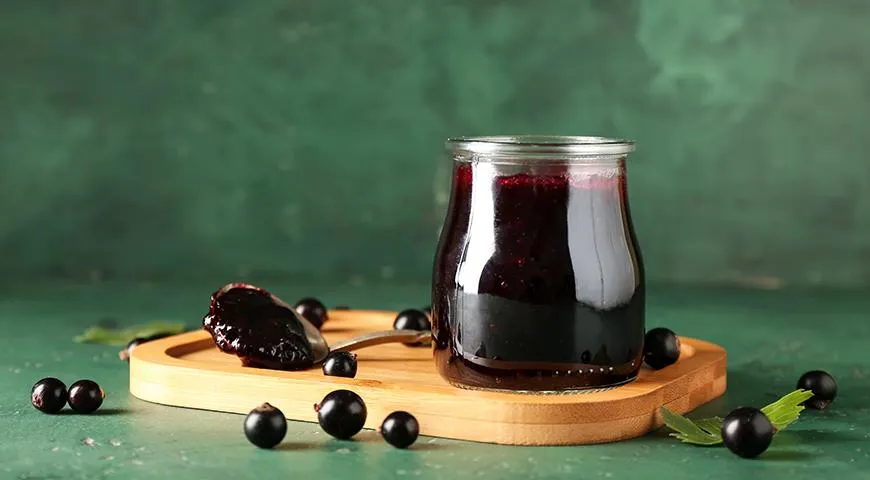
There is something profoundly nostalgic about the taste of blackcurrant—a burst of tart, earthy sweetness that evokes summer afternoons and grandmother's pantry. This frozen purée with sugar is a classic Russian technique for preserving the vitamin-rich bounty of blackcurrant without the degradation of heat. By using a modern immersion blender, you avoid both the vitamin loss from metal contact in a meat grinder and the laborious manual mashing. The result is a vibrant, spoonable purée that retains the fruit's full character, ready to brighten winter mornings.
About This Recipe
This frozen blackcurrant purée with sugar is as much a method as a recipe. It requires only two ingredients—blackcurrants and sugar—and a reliable blending tool. The ratio of 1 kg fruit to 500 g sugar (2:1 by weight) is deliberately less sweet than the traditional 1:1 preserve, allowing the blackcurrant's natural sharpness to shine. Freezing halts the crystallization that plagues refrigerator-stored preserves, keeping the texture silky and the flavor fresh for months. For best results, use a high-quality immersion blender that can quickly break down the skins and seeds without overheating.

Ingredients
- 1 kg fresh blackcurrants
- 500 g granulated sugar
Choose plump, fully ripe blackcurrants. The sugar preserves the fruit and balances acidity; do not reduce it if you plan to store the purée for more than a few weeks.
Step-by-Step Instructions
Step 1: Prepare the Currants
Pick over the blackcurrants, removing any stems, leaves, or bruised berries. Wash them thoroughly in cold water, then transfer to a colander to drain completely. Excess water will dilute the purée and encourage ice crystal formation.
Step 2: Combine with Sugar
Place the drained currants in a large bowl or the container of your blender. Add the sugar and stir gently to coat the berries. Let sit for 5 minutes to begin dissolving the sugar and soften the fruit.
Step 3: Blend to Purée
Using an immersion blender or the bowl of a stand blender, process the mixture until smooth and the sugar is completely dissolved—about 2 minutes. The purée should be glossy and free of large chunks. If using a stand blender, work in batches to avoid overheating the motor. A food processor can also be used, but the texture may be slightly coarser. Alternatively, for a clear juice, a wheatgrass juicer can extract juice alone, though you'll lose the fiber-rich pulp.
Step 4: Package and Freeze
Pour the purée into freezer-safe plastic containers, leaving about 1 cm headspace to allow for expansion. Seal tightly and label with the date. Freeze immediately. The purée will keep for up to 12 months. For easy portioning, freeze in ice cube trays from an under-counter ice maker, then transfer the cubes to a zip-top bag. Store the containers in a spacious built-in refrigerator freezer drawer for effortless access.
Tips for Success
- Use very ripe blackcurrants for maximum sweetness and color.
- If you prefer a seedless purée, pass the mixture through a fine-mesh sieve after blending, though this reduces fiber.
- For a lower-sugar version, reduce sugar to 300 g and use within 3 months.
- Always use glass or BPA-free plastic containers to avoid chemical leaching during freezing.
- For quick thawing, never use a microwave pressure cooker, as it can overheat the purée and cause uneven texture.
Variations
This basic purée can be adapted in many ways: add a splash of lemon juice for brightness, a vanilla bean for floral notes, or even a pinch of cinnamon. For a boozy twist, stir in 2 tablespoons of organic vodka to lower the freezing point and create a semi-frozen sorbet texture. Use the purée as a base for sauces, smoothies, yogurt swirls, or as a filling for pastries. Explore our Catalan sponge cake recipe for a delightful pairing. For an elegant dessert, serve alongside a glass of sweet dessert wine.
FAQ
Can I use frozen blackcurrants instead of fresh?
Yes, frozen berries work well. Thaw them slightly before blending to ease the process. No need to add extra sugar—the recipe already balances sweetness.
How long does the purée last in the freezer?
Properly sealed, it maintains peak quality for 6–12 months. After that, flavor may fade, but it remains safe to eat indefinitely.
Do I need to add pectin or other preservatives?
No. The high sugar content and freezing act as natural preservatives. However, for longer storage, consider using a steam canner to create shelf-stable jars.
What’s the best tool for blending?
An immersion blender is ideal because it minimizes aeration and keeps the purée dense. A high-speed blender works too, but avoid overheating. For larger batches, a planetary mixer with a whisk attachment is not suitable; stick to blenders.
Can I reduce the sugar?
Yes, but keep in mind sugar prevents large ice crystals. With less sugar (e.g., 300 g), the purée will freeze harder and may develop slight graininess. Use within 3 months. For a sugar-free alternative, consider stevia, but texture will differ. To enjoy the full experience, serve the purée with chocolate-covered raisins for a sweet-tart contrast.
This frozen blackcurrant purée embodies the art of preservation—simple, elegant, and deeply flavorful. Whether stirred into oatmeal, blended into a cocktail, or spooned over ice cream, it brings a taste of summer to any season. Invest in quality tools and enjoy the process as much as the result.







