


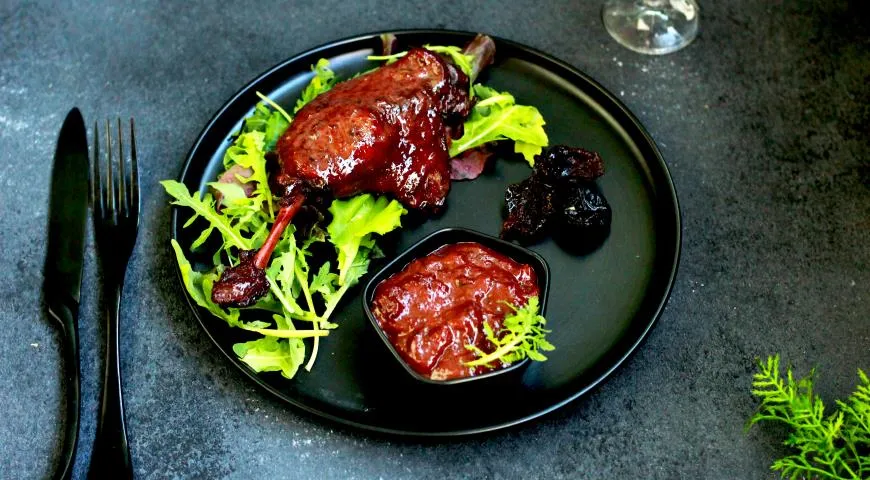
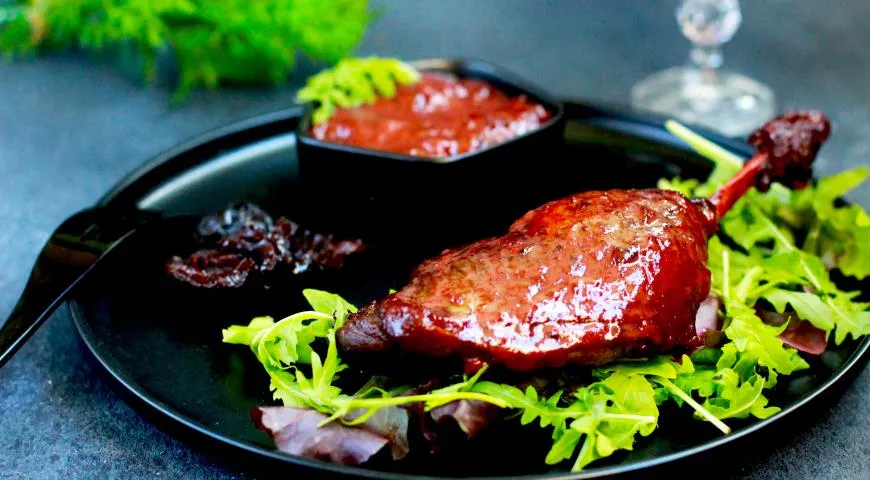
There are few dishes that evoke such warmth and elegance as duck legs braised in red wine. The deep, savory notes of the wine meld with the succulent duck, while prunes add a touch of sweetness that balances the richness. This recipe, inspired by French bistro cooking, is perfect for a festive dinner or a quiet romantic evening. With a few simple steps, you can create a restaurant-quality meal at home.
About This Dish
Braising duck legs in red wine is a time-honored technique that transforms tough meat into fork-tender perfection. The prunes not only lend a subtle sweetness but also help thicken the sauce naturally. For the best results, choose a full-bodied red wine with high alcohol content, as it adds depth and complexity. After braising, you can use a high-quality immersion blender to achieve a silky sauce, ensuring every last drop coats the duck.

Ingredients
- 4 duck legs (about 200 g each)
- 150 g pitted prunes
- 500 ml red wine (e.g., Merlot or Côtes du Rhône)
- 200 ml chicken stock
- 2 bay leaves
- 4 sprigs fresh thyme
- 1 tbsp vegetable oil
- Salt and freshly ground black pepper
For best results, store your prunes in a large built-in refrigerator to maintain freshness. When searing the duck, a quality oil sprayer helps control the amount of oil.
Step-by-Step
Step 1: Soak the Prunes
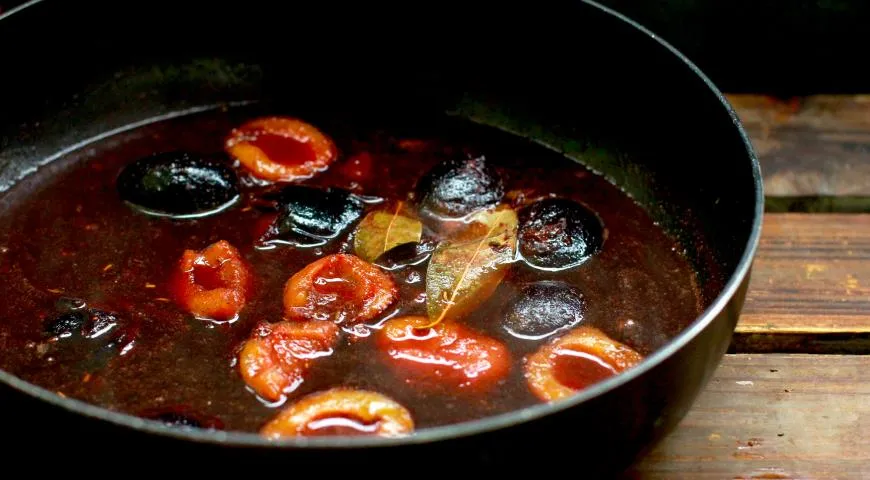
Pour the wine over the pitted prunes and leave them to soak for at least an hour. This allows the prunes to plump up and infuse the wine with their sweetness.
Step 2: Prepare the Duck Legs
Wash the duck legs, pat them dry, and trim any excess fat. Cut the tendons near the bone at the bottom of the leg for a neater appearance—this also helps the skin pull up slightly during cooking. Season both sides generously with salt and pepper.

Step 3: Sear the Duck Legs
Heat the oil in a deep saucepan over medium-high heat. Sear the duck legs skin-side down until golden brown, then flip and brown the other side. Pour off any excess fat, add the soaked prunes, and cook for 5 minutes, stirring occasionally.

Step 4: Build the Braising Liquid
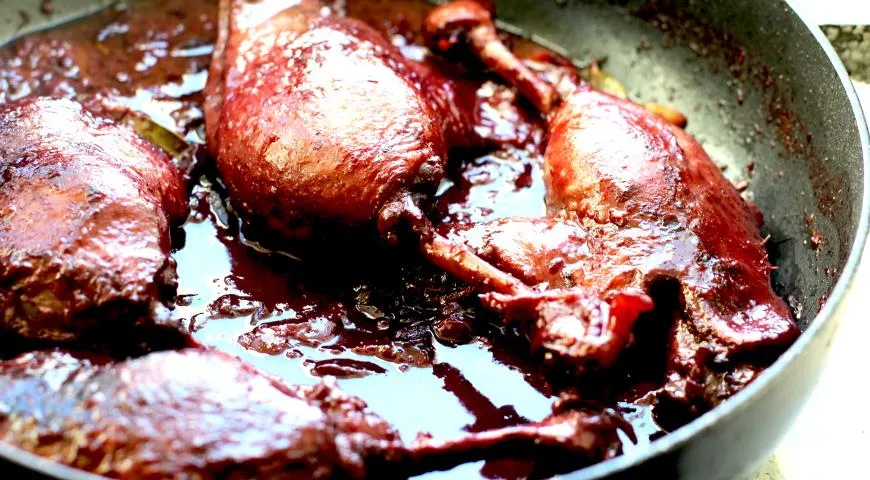
Pour the remaining red wine and the chicken stock over the prunes, stirring to combine. Return the duck legs to the pot, add the bay leaves, thyme sprigs, and a pinch of ground pepper. Reduce the heat to low, cover, and braise for about one hour, turning the meat occasionally.
Step 5: Finish the Sauce
When the duck is tender, carefully remove the legs from the pot. If the sauce seems too thin, bring it to a boil over high heat and reduce until it reaches your desired consistency. For a luxurious texture, blend the sauce with an immersion blender until smooth.
Step 6: Serve
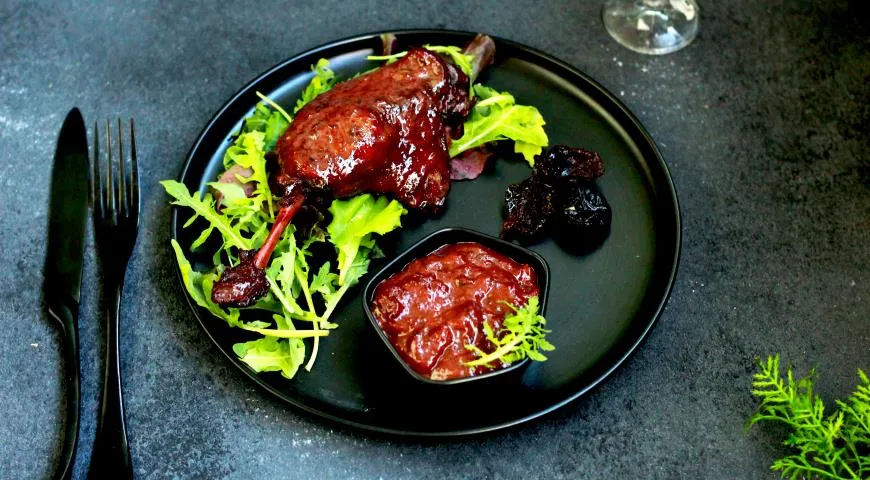
Season the sauce with salt and pepper to taste. Return the duck legs to the pot or plate them individually, spooning the rich prunes and wine sauce over the top. Serve immediately.
Tips for Success
- For even faster braising, use a microwave pressure cooker to tenderize the duck in less time.
- A countertop convection oven can maintain a steady low temperature if you prefer oven-braising.
- To keep the skin crisp, finish the duck under a broiler or in an air fryer for a few minutes before serving.
- If making ahead, the sauce can be stored in a steam canner for longer preservation.
- Pair this dish with a smooth espresso machine brew for a perfect after-dinner coffee.
Variations
Substitute duck with chicken thighs or pork shoulder for a different protein. Replace prunes with dried apricots or figs for a twist. For a white wine version, use a dry Riesling and add a splash of cream at the end. If you have a wall oven microwave combo with air fryer, you can cook the duck legs using the air fry function for a quicker, crispier result. A planetary mixer can be used to whip up a batch of mashed potatoes, an ideal side.
FAQ
Can I use boneless duck meat?
Yes, but reduce braising time to about 30 minutes. Boneless meat cooks faster and may dry out if overdone. For a thicker sauce, blend the prunes using a food processor (like the best for nut butter) before adding to the pot.
What wine is best for this recipe?
Choose a full-bodied red wine with high alcohol content, such as a Côtes du Rhône or a robust Merlot. Avoid overly tannic wines, as they can become bitter during braising. Our guide to the best sweet wine with high alcohol content can help you pick.
Can I make this dish ahead of time?
Absolutely. The flavors deepen overnight. Reheat gently on the stove or in a countertop convection oven. If the sauce thickens too much, thin it with a little stock or wine. Store leftovers in a built-in refrigerator for up to three days.
How do I thicken the sauce without blending?
Remove the duck and boil the sauce uncovered until it reduces by about one-third. Alternatively, mash some of the prunes with a fork. For an even silkier texture, use an immersion blender—our pick for non-toxic immersion blender is ideal.
What should I serve with the duck?
Creamy mashed potatoes, buttery egg noodles, or crusty bread to soak up the sauce. Enjoy it with a glass of the same wine you used for cooking, and finish the meal with coffee from a top-rated espresso machine under 2000.







