


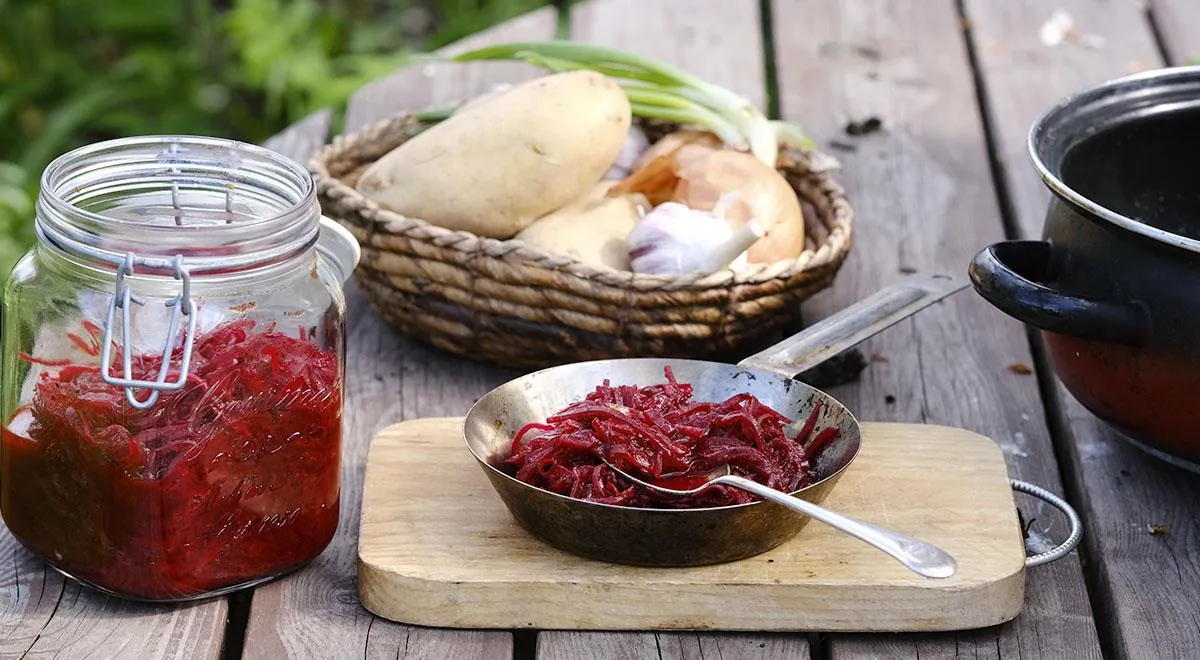
There is something deeply satisfying about opening a jar of homemade borscht fry in the middle of winter. The vibrant crimson of beets, the sweet aroma of caramelized onions, and the promise of a steaming bowl of borscht evoke memories of grandmother's kitchen. This recipe for beet borscht fry for winter storage is a time-honored technique that transforms a lengthy soup-making process into a quick, flavorful assembly. By preparing a bulk batch during the summer harvest, you capture peak vegetable flavor and nutrition while saving hours of labor later. This guide walks you through every step, from selecting the best root vegetables to proper sterilization for shelf‑stable preservation.
About This Recipe
Borscht fry, known as zazharka in Russian cuisine, is the aromatic base that gives borscht its characteristic depth. Unlike a simple sauté, this recipe slowly stews beets, carrots, peppers, and tomatoes until they meld into a rich, sweet‑sour concentrate. The addition of vinegar and sugar not only balances flavors but also acts as a natural preservative, allowing the fry to be stored at room temperature for up to a year. This method is ideal for home cooks who want to enjoy authentic borscht without spending hours each time. For efficient vegetable prep, consider using a best glass food processor to shred beets and carrots in seconds.

Ingredients
(All quantities are metric.)
| Ingredient | Amount |
|---|---|
| Beets | 3 kg |
| Onions | 1 kg |
| Carrots | 1 kg |
| Sweet bell peppers | 1 kg |
| Tomatoes | 1 kg |
| Hot chili pepper | 1 piece |
| Fresh parsley | 1 bunch |
| Fresh dill | 1 bunch |
| Fresh cilantro | 1 bunch |
| Vegetable oil | 200 g |
| 9% vinegar | 150 ml |
| Sugar | 100 g |
| Coarse salt | 3 tbsp |
Step‑by‑Step Instructions
-
Prepare the vegetables. Peel all vegetables. Slice onions into thin half‑rings, sweet peppers into strips. Grate beets and carrots on a coarse grater. Pass tomatoes through a meat grinder or use a non‑toxic immersion blender. Finely chop all fresh herbs.
(No step image provided) -
Sauté the onions. In a skillet, heat a small amount of vegetable oil. Add onions and cook over medium heat until golden brown, about 8–10 minutes.
(No step image provided) -
Cook the carrots. In a large pot, heat remaining oil. Add carrots and sauté, stirring, over medium heat for 10 minutes.
(No step image provided) -
Combine onion and carrot. Add the sautéed onions to the pot with carrots. Pour in 0.5 L of hot water, reduce heat, and simmer vegetables for 15 minutes.
(No step image provided) -
Add remaining vegetables. Stir in grated beets, sliced sweet peppers, whole hot chili, and the tomato puree. Bring to a boil, then add sugar and salt. Lower heat and cook at a gentle simmer for 45 minutes.
(No step image provided) -
Finish with herbs and vinegar. Add all the chopped herbs. After 5 minutes, pour in vinegar and cook another 10 minutes.
(No step image provided) -
Jar and seal. Ladle the hot fry into sterilized jars, seal with sterilized lids, turn upside down, wrap in a towel, and let cool completely. Store at room temperature for up to 1 year.
(No step image provided)
Tips for Perfect Borscht Fry
- Use the right equipment. A food processor for nut butter can also handle grating root vegetables quickly, but for this recipe a typical shredding disc works best.
- Balance acidity. Taste before jarring – if the fry seems too sharp, add a pinch more sugar; if too sweet, a dash more vinegar.
- Sterilize thoroughly. Jars and lids must be completely sterile to prevent spoilage. A best steam canner simplifies this step.
- Let flavors meld. Allow the sealed jars to rest for at least two weeks before opening; the flavors deepen beautifully.
- Storage conditions. Keep in a cool, dark pantry. Once opened, refrigerate and use within two weeks.
Variations
- Spicy lover’s version. Add an extra hot chili or 1 tsp red pepper flakes for more heat.
- Herb swap. Replace cilantro with dill and parsley for a different aromatic profile.
- Smoky twist. Roast the beets and carrots in a non‑toxic air fryer before grating for a subtle smokiness.
- Low‑sugar option. Reduce sugar to 50 g and use 100 ml of apple cider vinegar for a tarter finish.
- Italian influence. Add 2 tbsp dried oregano and a bay leaf during the 45‑minute simmer.
Frequently Asked Questions
1. Can I halve the recipe?
Yes, all ingredients scale proportionally. Use smaller pots and reduce cooking time slightly.
2. Is it necessary to use a meat grinder for tomatoes?
No. You can blanch and peel tomatoes, then crush them with a fork or use an immersion blender.
3. How do I know the jars are sealed properly?
After cooling, press the center of each lid. It should not spring back. Alternatively, check for a popping sound when unscrewing later.
4. Can I use this fry in other dishes?
Absolutely. It works as a vegetable side dish, a topping for mashed potatoes, or a hearty sauce for dumplings.
5. What if I don't have coarse salt?
Use regular table salt but reduce the amount slightly – 2 tbsp should suffice.
6. How long does it keep after opening?
Refrigerated, up to 2 weeks. Always use a clean spoon to avoid contamination.
7. Can I freeze instead of canning?
Yes. Cool the fry completely, transfer to freezer‑safe containers, and freeze for up to 6 months. Thaw in the refrigerator before using.
Conclusion
Making beet borscht fry for winter storage is a rewarding project that pays dividends all year long. With quality ingredients and careful technique, you can create a pantry staple that elevates everyday meals. Whether you are a seasoned preserver or a curious beginner, this recipe offers a taste of Eastern European tradition accessible to any kitchen. For more preservation inspiration, explore our guide on the best chocolate‑covered raisins – a sweet counterpoint to savory borscht.
Remember, the key to a successful borscht fry lies in patience – slow simmering develops complexity that quick cooking cannot replicate. Happy preserving!







