


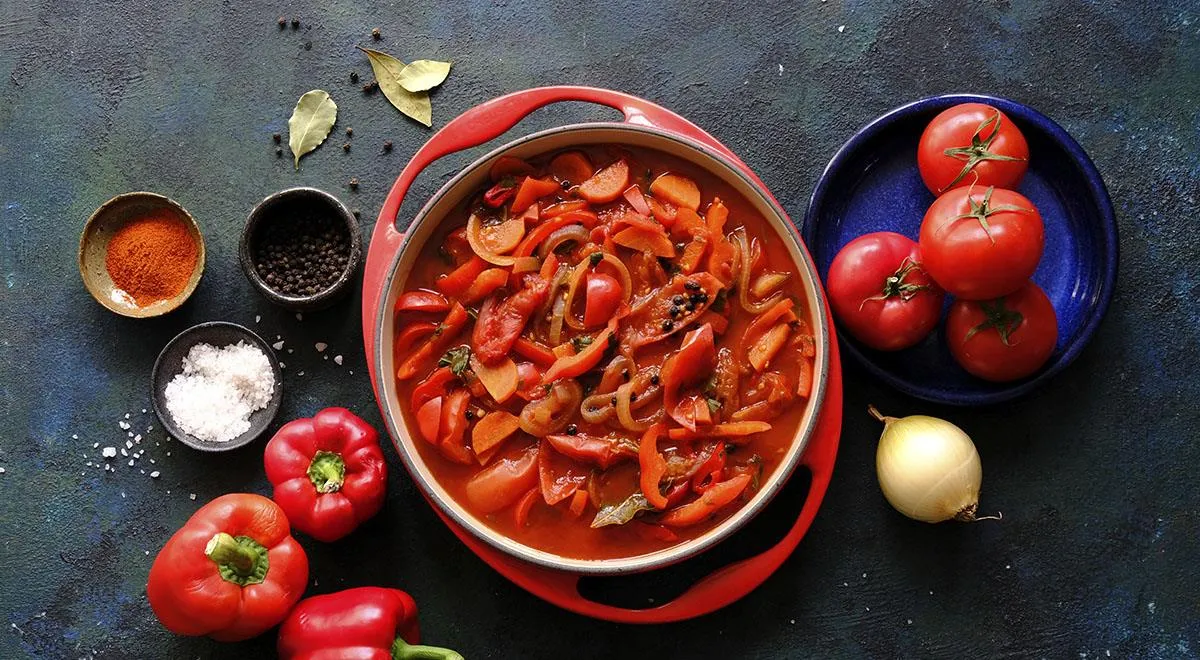
Few dishes capture the soul of Hungarian home cooking quite like lecsó. This rustic, sweet‑and‑smoky pepper and tomato stew is a celebration of late summer’s bounty, transformed through patient simmering into a preserve that brightens even the darkest winter meals. Whether served as a side, a sauce, or a standalone vegetable ragout, Hungarian lecho (or lecsó, in Hungarian) is a testament to the art of traditional canning and the beauty of simple, high‑quality ingredients. In this recipe, we honour the classic method taught by Hungarian grandmothers, using a generous amount of sweet paprika, a touch of heat, and a careful balance of tomatoes and peppers. The result is a thick, glossy preserve that tastes of sunshine and smoky paprika.
About Hungarian Lecho
Hungarian lecho is far more than a simple vegetable medley. It is a foundational preserve in Hungarian cuisine, often made in large batches at the height of pepper and tomato season. Unlike its Slovak or Polish cousins, the Hungarian version relies heavily on sweet paprika – both ground and whole – for its characteristic depth and colour. The dish is typically prepared with red bell peppers, ripe tomatoes, onions, and a modest amount of carrots for natural sweetness. A touch of vinegar and sugar balances the acidity, while bay leaf and black peppercorns add aromatic complexity. This lecho is not meant to be a quick sauté; it is a slow, mindful simmer that coaxes every drop of flavour from the vegetables. In Hungarian homes, lecho is often eaten on its own with crusty bread, stirred into scrambled eggs, or served alongside hearty meat dishes. Its versatility is endless, and a well‑made batch can elevate everyday meals for a full year.

Ingredients
- Red bell peppers – 2.5 kg
- Tomatoes – 700 g
- Tomato juice – 750 ml (preferably unsweetened)
- Carrots – 2 medium
- Large onion – 1 bulb
- Sweet paprika – 1 tsp
- Hot paprika – ½ tsp (or more to taste)
- Bay leaf – 1
- Vinegar (9% acidity) – 25 ml
- Salt – 1 tsp
- Sugar – 1 tsp
- Black peppercorns – ½ tsp
- Fresh parsley or lovage (optional) – a handful, for finishing
Step‑by‑Step Instructions
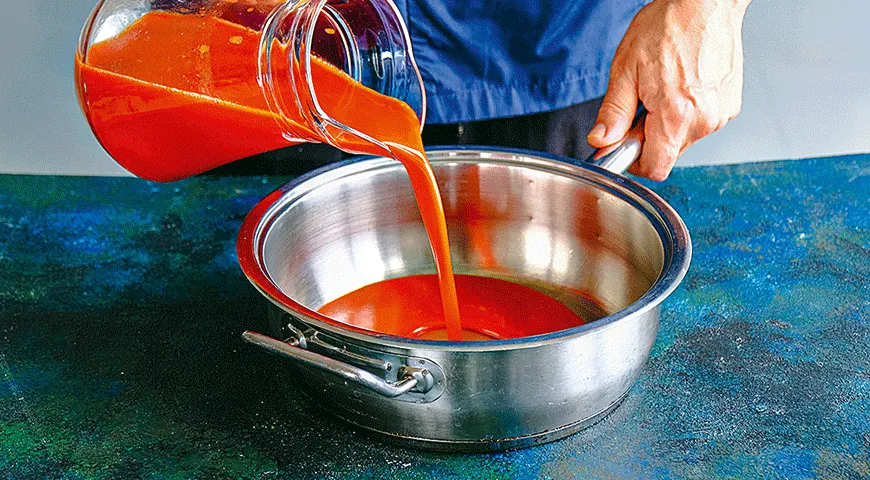
- Prepare the tomato juice base. Pour 750 ml tomato juice into a large heavy‑bottomed pot or Dutch oven. This will be the foundation of your lecho. If you are using homemade juice, even better – it adds layers of freshness.
- Season the liquid. Add vinegar, salt, sugar, bay leaf, sweet paprika, hot paprika, and black peppercorns to the tomato juice. Stir well to dissolve the spices. Place the pot over medium heat and bring to a gentle simmer. The aroma will be intoxicating – a prelude of things to come.
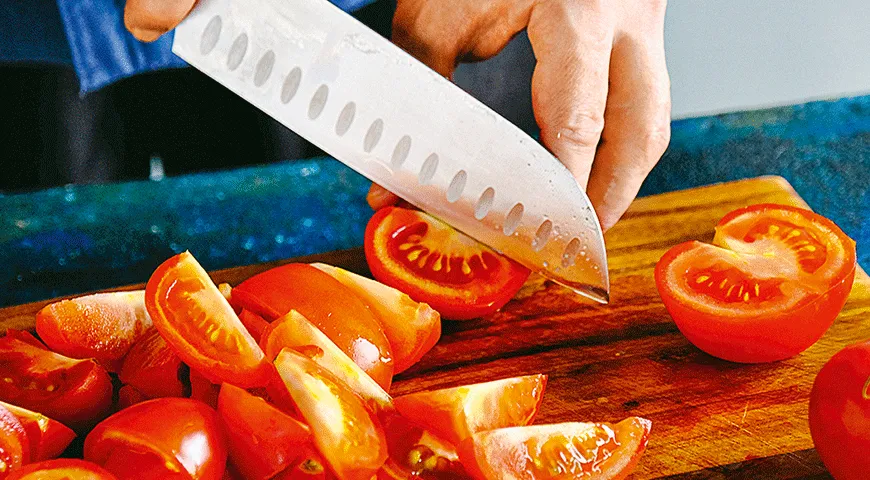
- Add the tomatoes. Core the tomatoes and cut them into large wedges (about 6–8 per tomato). Drop them into the pot. They will soften quickly and contribute to the sauce’s body.
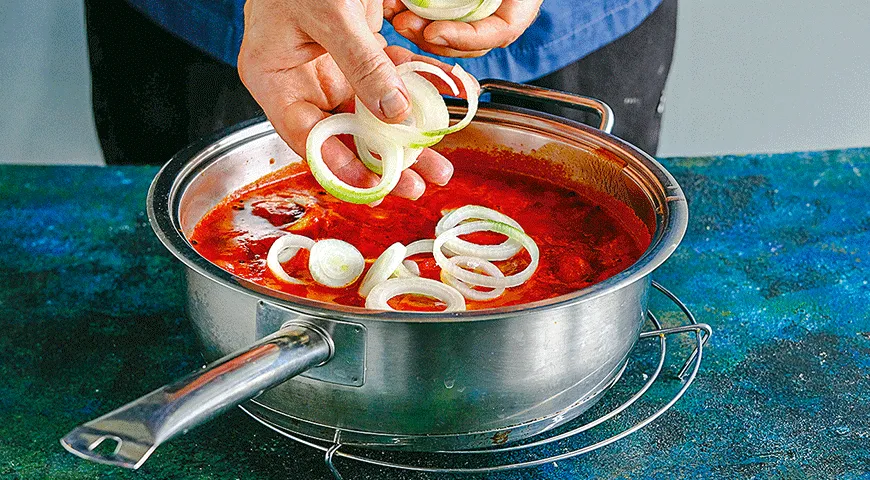
- Add the onion. Peel the onion and slice it into thin rings. Separate the rings and add them to the pot. Onion lecho is a classic – it provides a subtle sweetness that balances the acidity of the tomatoes.
- Prepare the carrots. Peel the carrots and cut them in half lengthwise, then slice into thin half‑moons. This shape allows the carrots to cook evenly without becoming mushy. Add them to the pot.
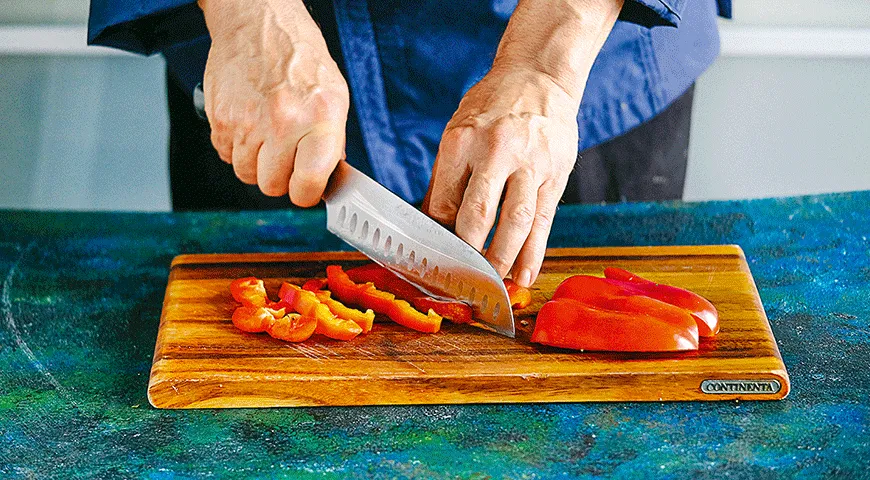
- Slice the bell peppers. Remove the stems and seeds from the peppers. Rinse them if necessary. Flatten each half on a cutting board, then slice into strips 5–7 mm wide. Uniform slices ensure even cooking. Transfer all the pepper strips to the pot.
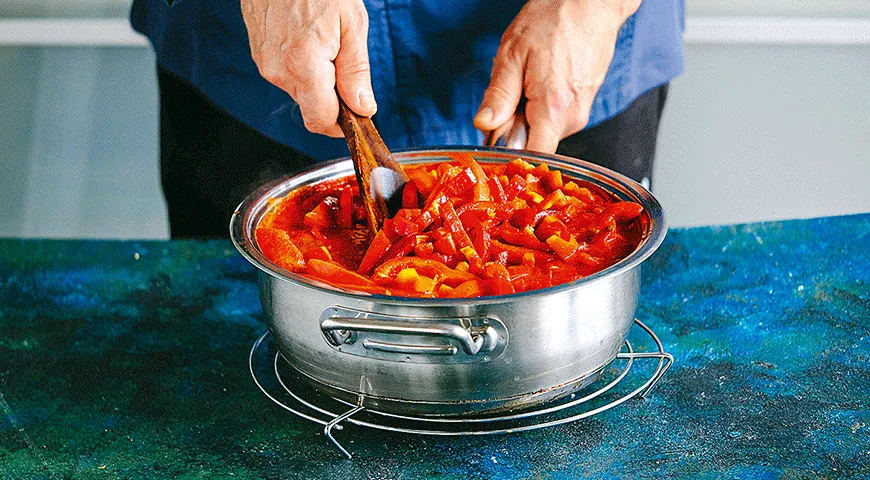
- Simmer the lecho. Once the liquid comes to a full boil, reduce the heat to medium and cook, stirring occasionally, for about 15 minutes. The vegetables should be tender but still hold their shape – not mushy. If using a stand mixer with a stirring attachment? Not needed here – a wooden spoon works best.
- Add fresh herbs. About 5 minutes before the end of cooking, stir in a handful of chopped fresh parsley or lovage (if using). This adds a bright, grassy note that lifts the smoky‑sweet base.
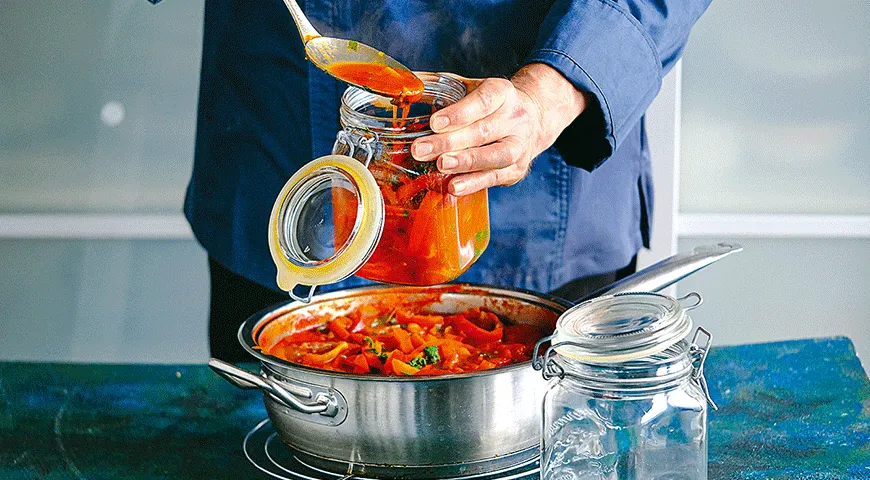
- Jar the lecho. Working quickly, ladle the hot vegetables into sterilised jars, then pour the simmering tomato liquid over them to cover completely. Seal with sterilised lids. Invert the jars (upside down) and allow them to cool completely undisturbed. This creates a vacuum seal. Once cool, turn upright and store in a cool, dark place. Properly sealed, Hungarian lecho keeps for up to 1 year.



Tips for Perfect Lecho
- Choose the right peppers. Red bell peppers are traditional for their sweetness and colour. Green peppers can be used but will yield a less sweet result. For a deeper flavour, add a few smoked paprika varieties if available.
- Balance acidity. The vinegar and sugar quantities are guidelines – taste your tomato juice first. If it’s very tart, add a little more sugar. If it’s flat, a splash more vinegar helps.
- Don’t overcook the vegetables. Lecho should be tender but still retain some bite. Overcooking turns it into mush. Set a timer for 15 minutes and check.
- Use a wide pot. A wide, shallow pot allows liquid to evaporate quickly, concentrating flavours. A narrow tall pot will steam the vegetables rather than simmer them.
- Sterilise jars properly. For safe long‑term storage, wash jars in hot soapy water, then place in a 120°C oven for 15 minutes. Boil lids for 5 minutes. Use a jar lifter for safety.
Variations
Hungarian lecho is endlessly adaptable. For a chunky version, cut peppers into larger squares and omit the carrots. For a spicier kick, include a seeded hot chili pepper along with the hot paprika. Some Hungarian cooks add a handful of rice to the pot for a thicker, stew‑like consistency – perfect served with crusty bread. If you prefer a smokier profile, roast the peppers and onions over an open flame before adding them to the pot. This variation, known as paraszt lecsó (farmer’s lecho), is especially popular in the Hungarian countryside. And for those who love air‑fried dishes, leftover lecho can be blended into a dipping sauce for crispy vegetables.
FAQ
What is the best type of paprika for Hungarian lecho?
Use sweet Hungarian paprika (noble sweet) as the base, and add a small amount of hot paprika for heat. Avoid smoked paprika unless you want a very different, non‑traditional flavour. For a premium spice, check reviews of the best paprika sources.
Can I use canned tomatoes instead of fresh?
Yes. Use 700 g of whole peeled canned tomatoes (preferably San Marzano) and crush them with your hands before adding. The tomato juice can also be replaced with a combination of tomato purée and water. Adjust vinegar and sugar to taste.
How long does homemade lecho last?
When properly sealed in sterilised jars and stored in a cool, dark place, lecho retains its quality for up to one year. After opening, refrigerate and consume within two weeks. Using a reliable refrigerator ensures freshness.
Can I make lecho without canning for immediate use?
Absolutely. Simply finish the recipe without jarring and refrigerate for up to 5 days. Lecho also freezes well – portion it into freezer bags and use within 6 months. For quick thawing, a microwave pressure cooker works beautifully.
What dishes pair well with Hungarian lecho?
Lecho is incredibly versatile. Serve it with sausages (the classic Hungarian pairing), over scrambled eggs, as a side to roasted meats, or stirred into rice. It also makes a fantastic base for one‑pot pasta bakes.
Whether you are a seasoned preserver or a newcomer to Hungarian cuisine, this lecho recipe is a rewarding project that yields jars of pure, comforting flavour. The interplay of sweet peppers, ripe tomatoes, and aromatic paprika is a testament to the magic of slow cooking. So gather your vegetables, heat your pot, and let the timeless tradition of Hungarian lecho fill your kitchen – and your pantry – with warmth.







