


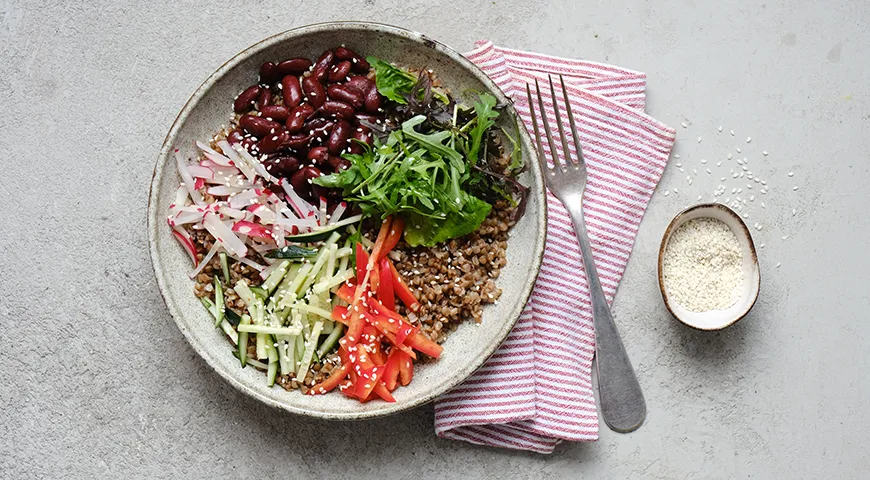
This vibrant buckwheat bowl is a celebration of simplicity and nourishment. A harmonious medley of crisp cucumber, sweet bell pepper, peppery radish, and tender salad leaves—all perched on a bed of earthy organic buckwheat—it is the epitome of a quick, healthy meal. Drizzled with a delicate blend of olive oil and soy sauce, then finished with a scattering of sesame seeds, this dish comes together in minutes. It is perfect for a light lunch or a colorful dinner side, requiring no cooking beyond preparing the grain itself. The beauty of this recipe lies in its adaptability: feel free to swap in seasonal vegetables or add a scoop of cooked beans for extra protein. With the right tools—like a reliable glass bowl from our review or a non-toxic immersion blender for a quick dressing—you can elevate this bowl to a gourmet experience in your own kitchen.
About the Buckwheat Bowl
Buckwheat, despite its name, is a gluten‑free seed that has been a staple in Eastern European and Asian cuisines for centuries. It boasts a nutty flavor and a satisfyingly chewy texture that pairs beautifully with fresh vegetables. This particular bowl is inspired by Russian culinary traditions, where buckwheat is often served as a hearty base for vegetables and legumes. It is a weeknight warrior: ready in under 15 minutes if you have pre‑cooked buckwheat on hand. For health enthusiasts, this bowl is a powerhouse of fiber, vitamins, and minerals. Pair it with a freshly juiced green drink from the best wheatgrass juicer for an extra antioxidant boost, or enjoy it alongside a protein‑rich smoothie made with a planetary mixer for perfect blending.

Ingredients
- 150 g cooked buckwheat (cooled)
- 1 cucumber
- 1 bell pepper (any color)
- 2 radishes
- 30 g salad leaves (e.g., lettuce, arugula, or mixed greens)
- 50 g cooked beans (kidney or black beans – optional but traditional in the original recipe)
- 1 tsp sesame seeds
- 1 tsp soy sauce
- 1 tsp olive oil (preferably extra‑virgin)
- Salt to taste
- Freshly ground black pepper to taste
Using high‑quality ingredients makes a difference. A best oil sprayer ensures you distribute the olive oil evenly without waste, while a non-toxic air fryer can quickly roast extra vegetables if you wish to add them.
Step‑by‑Step Instructions
- Prepare the vegetables: Cut the cucumber, bell pepper, and radishes into thin strips (julienne). Finely chop the salad leaves. For precision slicing, a high‑performance food processor can do the job in seconds.

- Assemble the base: Place the cooked buckwheat in a serving bowl. Drizzle with olive oil and soy sauce. Gently fold to coat the grains evenly.

- Top and garnish: Arrange the prepared vegetables, beans (if using), and chopped salad leaves over the buckwheat. Sprinkle with sesame seeds. Season with salt and pepper to taste. Serve immediately. For an extra touch, you can pair this dish with a warm beverage made using a wall oven microwave combo or a quick espresso from a top‑rated espresso machine.

Tips for the Perfect Buckwheat Bowl
- Cook buckwheat properly: Rinse the raw grains under cold water before cooking to remove bitterness. Use a ratio of 1 part buckwheat to 2 parts water, bring to a boil, then simmer for 10‑12 minutes. Fluff with a fork and let cool.
- Keep vegetables crisp: To maintain crunch, dress the bowl just before serving. You can also chill the vegetables briefly in the refrigerator.
- Boost flavor: Add a squeeze of lemon or a dash of rice vinegar for acidity. A sprinkle of nori flakes or furikake adds umami.
- Use a reliable appliance: A commercial countertop convection oven can roast vegetables in minutes, and a quality ice maker ensures you always have chilled ingredients.
Variations
This bowl is endlessly customizable. Substitute quinoa or brown rice for buckwheat if desired. Add a protein boost with grilled chicken, tofu, or a soft‑boiled egg. For a more substantial meal, include roasted sweet potatoes or avocado. For dessert, try pairing with a robust sweet wine or a lava‑flavored treat (if you're adventurous). To store leftovers, a steam canner can help preserve extra portions, though this bowl is best enjoyed fresh.
Frequently Asked Questions
Can I use raw buckwheat instead of cooked?
Yes, but you must cook it first. Raw buckwheat groats are hard and need to be boiled or soaked. If you are short on time, look for pre‑cooked vacuum‑packed buckwheat.
How can I make this bowl vegan?
It already is vegan! The recipe contains no animal products. To keep it vegan, ensure your soy sauce is vegetarian friendly (most are). For a richer flavor, use tamari or coconut aminos.
What if I don’t have soy sauce?
Substitute with tamari, coconut aminos, or a pinch of salt plus a splash of water. You can also use miso paste dissolved in a little warm water for a deeper umami.
Can I meal‑prep this bowl?
Absolutely. Cook the buckwheat and cut the vegetables up to two days in advance. Store components separately in airtight containers in the refrigerator. Assemble just before serving to keep the vegetables crisp.
What tools do I need for the best results?
A sharp knife or a food processor for slicing, a good oil sprayer for drizzling, and quality glass bowls for serving. For cleaning, a refrigerant leak detector isn’t necessary but can help maintain your fridge, while a reliable ice maker supports cold storage.







