


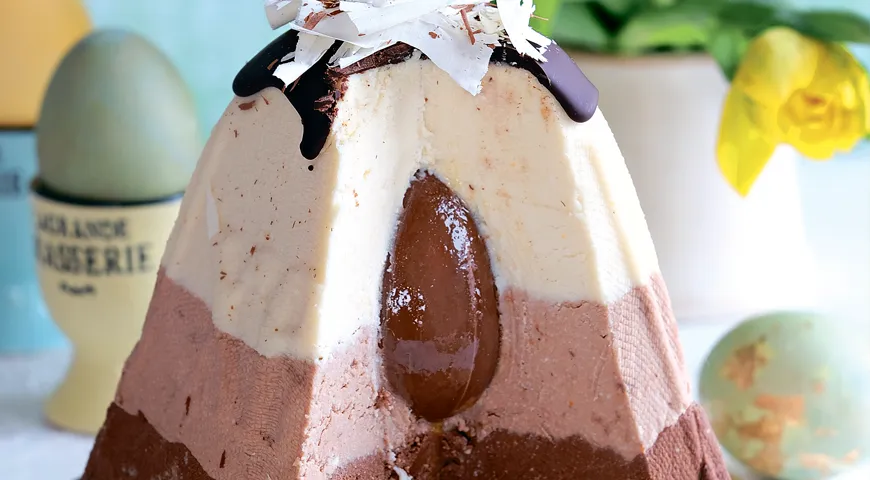
There are countless variations of paska—the traditional Eastern European Easter cheesecake—but this chocolate rendition is no ordinary iteration. Combining silky quark with layers of dark, milk, and white chocolate, this dessert conceals a delightful secret: a whole chocolate egg hidden at its core. Inspired by the beloved Kinder Surprise, this recipe flips the concept: the surprise itself is the chocolate egg nestled within the creamy cheese form. Perfect for both children and adults, this Chocolate Easter Paska elevates a classic to a new level of indulgence.
About This Recipe
Easter paska is a cornerstone of Slavic holiday tables, traditionally made with quark (tvorog), butter, and sugar, shaped into a pyramid and decorated. This version introduces a trio of chocolates, creating a stunning marbled interior and a rich, decadent flavor profile. The surprise element—a whole chocolate egg hidden in the center—adds an element of wonder when sliced. For best results, use full-fat quark (at least 9% fat) and high-quality chocolate. A planetary mixer makes whipping the butter and sugar effortless, while a non-toxic immersion blender can help smooth the quark if needed.

Ingredients
- 400 g quark (tvorog)
- 100 g icing sugar
- 50 g unsalted butter, softened
- 50 g dark chocolate (70% cocoa)
- 50 g milk chocolate
- 50 g white chocolate
- 100 ml heavy cream (33% fat)
- Chocolate shavings and melted chocolate for decoration
- 1 chocolate egg (Kinder or similar) for the surprise
Step-by-Step Instructions
Step 1: Drain the Quark
Place the quark in a cheesecloth bag, suspend it over a bowl, and leave at room temperature for 8 hours to drain excess moisture. This step is crucial for a firm, sliceable paska. Using a food processor for nut butter can also help achieve a smoother texture if your quark is grainy.
Step 2: Prepare the Cream Mixture
Whip the icing sugar with the softened butter until pale and fluffy. In a separate bowl, whip the heavy cream to soft peaks. Fold the quark into the butter mixture, then gently incorporate the whipped cream. For a lighter result, use a non-toxic immersion blender to combine.
Step 3: Melt the Chocolates
Break each chocolate type into pieces and melt separately in a double boiler or microwave. If using a microwave, a microwave pressure cooker can provide gentle, even heating. Allow to cool slightly.
Step 4: Divide and Color the Quark Mixture
Divide the quark mixture into three equal portions. Fold the melted white chocolate into the first, milk chocolate into the second, and dark chocolate into the third. Mix until uniform.
Step 5: Assemble the Paska
Line a traditional paska mold or a clean flowerpot with damp cheesecloth. Spread the white chocolate quark layer evenly at the bottom. Gently press the chocolate egg into the center, burying it slightly. Next, add the milk chocolate layer, spreading it around and over the egg. Finally, top with the dark chocolate layer, smoothing the surface. Place a small weight (a jar of water) on top and refrigerate for at least 10 hours, preferably overnight.
Step 6: Unmold and Decorate
Carefully remove the mold and cheesecloth. Invert the paska onto a serving plate. Drizzle with melted chocolate and sprinkle with chocolate shavings. For a professional finish, use an oil sprayer to apply a thin layer of cocoa butter for shine.
Tips for Success
- Always drain the quark thoroughly; excess water will make the paska too soft to hold its shape.
- Use room-temperature butter and cream for easier blending.
- Allow the melted chocolate to cool to lukewarm before mixing to avoid curdling the dairy.
- For a neat sliced reveal, chill the paska for the full 10 hours and use a refrigerant leak detector to ensure your fridge maintains a consistent temperature.
- If you don’t have a paska mold, a clean, unglazed terracotta pot works beautifully.
Variations
Swap the chocolate egg for a fruit-filled chocolate egg for an extra burst of flavor. You can also add a pinch of sea salt to the dark chocolate layer to enhance the taste. For a dairy-free version, use coconut cream and dairy-free quark. A wheatgrass juicer can be repurposed to make homemade nut milk if you prefer a plant-based alternative. Pair with a glass of sweet wine with high alcohol content for a sophisticated Easter dessert course.
Frequently Asked Questions
Can I use store-bought quark?
Yes, but look for one with no added stabilizers and a fat content of at least 9%. If the quark is very wet, drain it as described. A steam canner can also be used for pressure-draining in a pinch.
How do I get clean layers when slicing?
Use a sharp, wet knife and wipe it clean between cuts. Chill the paska thoroughly before slicing. For precise cuts, a commercial countertop convection oven is not needed, but a good serrated knife will do.
Can I make this gluten-free?
Yes, all ingredients are naturally gluten-free. Ensure your chocolate is certified gluten-free. To avoid cross-contamination, use dedicated utensils and a non-toxic air fryer for toasting nuts if adding as garnish.
How long does this paska keep?
Store in the refrigerator for up to 3 days. Cover tightly to prevent it from absorbing odors. For longer storage, freeze the unmolded paska (without decoration) for up to 1 month. Wrap in parchment and a undercounter ice maker machine bag is ideal for airtight sealing.
What can I use instead of a chocolate egg?
Use a hollow chocolate sphere, a large truffle, or even a chocolate-covered raisin cluster hidden inside for a playful texture.
Why did my paska crumble?
Crumbling often indicates the quark was too dry or the mixture was overmixed. Next time, add an extra tablespoon of cream. A planetary mixer can help incorporate ingredients gently.
This Chocolate Easter Paska with a Surprise is more than a dessert—it is a celebration of spring, family, and culinary creativity. Whether you serve it for Easter brunch or as a showstopping finale, its hidden treasure will delight everyone who takes a slice. Enjoy the process, and may your holiday be as rich and sweet as homemade paska.







