


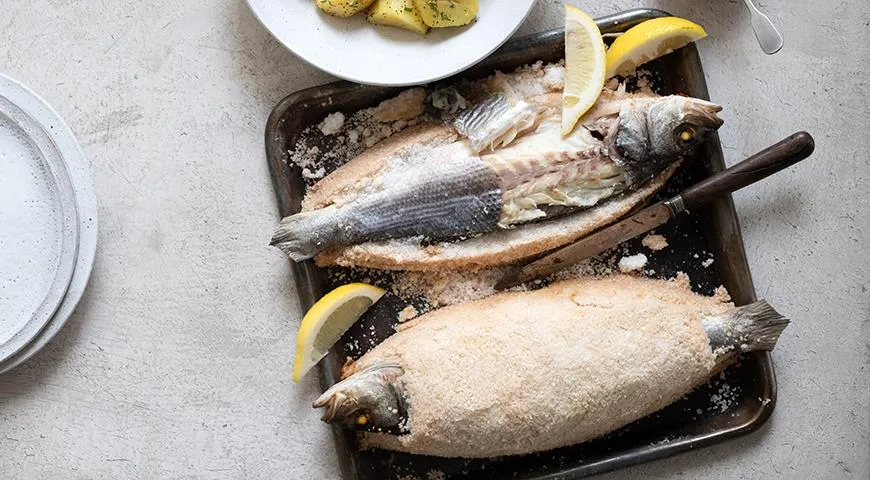
There is something almost primal about baking a whole fish inside a fortress of salt. The technique, known as en croûte de sel in French culinary tradition, transforms a simple sea bass into a moist, delicately seasoned centrepiece. This Russian adaptation, which pairs the fish with a classic Polish sauce—a luxurious emulsion of melted butter, chopped eggs, and fresh dill—elevates the dish to a celebration of refined simplicity. The salt crust locks in every drop of natural moisture, while the sauce adds a velvety richness that complements the flaky white flesh. Served with boiled new potatoes, this is a meal that speaks of quiet elegance and unhurried dinners.
About the Dish
Baking fish inside a salt crust is an ancient method that requires minimal ingredients but delivers maximum flavour. The salt forms a hard shell that steams the fish in its own juices, seasoning it evenly without making it overly salty. The Polish sauce, or sos polski, is a traditional butter-and-egg sauce that hails from Central Europe. Its creamy texture and herbal brightness cut through the richness of the butter, making it an ideal companion for the delicate sea bass. This recipe, featured in the November 2021 issue of Gastronom magazine, is a testament to how precise techniques and quality ingredients can create a memorable dish with little fuss.

Ingredients
- 1 whole sea bass (about 1 kg), gutted, gills removed
- 1 kg coarse sea salt
- 3 large egg whites (about 100 ml)
- 150 g unsalted butter
- 2 large eggs
- Large bunch fresh dill, finely chopped
- Freshly ground black pepper
- Flaky salt (for dill)
Step-by-Step Guide
1. Prepare the Fish
Rinse the gutted sea bass thoroughly under cold running water, ensuring the abdominal cavity and gill area are clean. Pat dry with paper towels. Spread one-third of the coarse sea salt in a thick layer on a baking sheet—this forms the base of the crust. Lay the fish on top.
2. Build the Salt Crust
In a large bowl, mix the remaining salt with the egg whites and 100 ml of cold water until the mixture resembles wet sand. Using your hands, pack this salt mixture over the entire fish, mounding it to cover all sides. Press firmly so the crust holds together. The fish must be completely encased.
3. Bake to Perfection
Place the baking sheet on the lower third of a preheated oven at 220°C. Immediately reduce the temperature to 150°C. Bake for 30 minutes. The high initial heat starts the crust formation, while the lower temperature gently steams the fish.
For precise oven temperature control, consider using a reliable convection oven to ensure even heat distribution during this delicate bake.
4. Make the Polish Sauce
While the fish bakes, prepare the sauce. Cook the two eggs in boiling water for 6–7 minutes (soft-boiled, or à la coque). Plunge them into cold water, then peel and mash with a fork. Finely chop the dill and mix with a pinch of flaky salt. Melt the butter gently in a small saucepan. Combine the melted butter with the mashed eggs and chopped dill. Season with freshly ground black pepper to taste.
For a silky sauce, you can use an immersion blender to emulsify the butter and eggs, but a simple fork works beautifully to keep the texture rustic.
5. Crack the Salt Crust and Serve
Remove the baking sheet from the oven. Using a heavy knife or kitchen mallet, crack the hardened salt crust. Carefully lift off the top pieces of salt—sometimes the skin comes off with them. If not, peel away the skin to expose the delicate flesh. Gently lift the fillets off the bones and transfer to warm plates. Spoon the Polish sauce generously over each serving. Accompany with boiled new potatoes or a simple green salad.
The salt crust may seem intimidating, but a sturdy food processor can help mix the salt and egg whites if you prefer to avoid getting your hands messy.
Tips for Perfect Sea Bass in Salt Crust
- Use coarse salt only: Fine salt will create an overly salty crust. Coarse sea salt or kosher salt works best.
- Don't skip the egg whites: They bind the salt into a solid crust that seals in moisture.
- Check for doneness: A probe thermometer inserted through the crust should read 55°C–60°C at the thickest part of the fish. An instant-read thermometer can help you avoid overcooking.
- Let the fish rest: Allow the cooked fish to sit for 5 minutes before cracking the crust. This lets the juices redistribute.
- Adjust the sauce consistency: If the sauce seems too thick, add a teaspoon of warm water. If too thin, whisk in a little softened butter.
Variations to Explore
While sea bass is a classic choice, you can substitute branzino, red snapper, or even a whole trout. The cooking time may vary slightly depending on thickness. For a herbaceous twist, add a few sprigs of thyme or lemon slices inside the fish cavity before encasing in salt. The Polish sauce can be enriched with a pinch of grated nutmeg or a squeeze of lemon juice for brightness. If you enjoy experimenting with textures, try serving the fish with a side of Catalan sponge cake for an unexpected sweet-savoury contrast.
FAQ
Can I use frozen sea bass for this recipe?
Yes, but thaw it completely in the refrigerator overnight and pat it very dry before using. Frozen fish retains more moisture, which can make the salt crust soggy if not handled properly.
What if I don't have egg whites?
You can substitute the egg whites with an equal amount of water, but the crust may not be as firm. The egg whites help the salt set into a solid shell that is easier to crack and remove.
How do I know when the salt crust is done?
The crust should be hard to the touch and lightly golden in spots. When you tap it, it should sound hollow. A oven-safe thermometer inserted through the crust into the thickest part of the fish should read 55°C–60°C.
Is the salt crust edible?
No, the crust is not meant to be eaten. It is simply a cooking vessel that seasons the fish lightly. Discard the salt pieces after cracking.
Can I make the Polish sauce ahead of time?
Yes, but it is best served warm. Reheat gently over a water bath or in a microwave on low power. Avoid boiling, as the eggs may curdle.
What wine pairs well with this dish?
A crisp, dry white wine such as Sauvignon Blanc or an unoaked Chardonnay complements the delicate fish and buttery sauce. For a sweeter option, try a why sweet wine with high alcohol content can balance the richness of the sauce.
How can I ensure the fish doesn't stick to the salt?
Lining the baking sheet with parchment paper before spreading the base salt layer helps prevent sticking. Also, ensure the fish is well dried before encasing.
This sea bass in a salt crust with Polish sauce is a stunning dish that requires no complex equipment—just a reliable oven and a bit of patience. For other ways to elevate your cooking, explore our guides on non-toxic air fryers or high-end espresso machines to complement your kitchen arsenal. The beauty of this recipe lies in its balance: the salt crust delivers perfect seasoning, the sauce adds creamy indulgence, and the fish remains moist and tender. Serve it at your next dinner party, and watch your guests marvel at the dramatic cracking of the salt crust—and then savour every bite.
If you're looking for more seafood inspiration, consider pairing this dish with a side of best chocolate covered raisins for a sweet finish, or explore our best undercounter ice maker machine to keep drinks cold. For the perfect kitchen organisation, we recommend a best 48 inch built in refrigerator to store fresh fish. And if you're into beverage pairings, consider a best george howell coffee after the meal. This recipe is a true gem from the Gastronom archives—simple enough for a weeknight, elegant enough for a celebration.







