


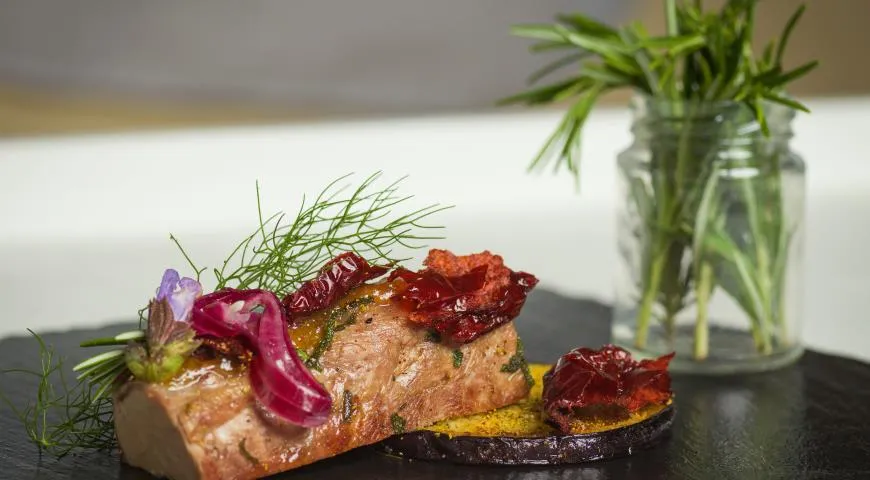
The art of cooking pork tenderloin to a perfect medium-rare, paired with the bright citrus notes of tangerine mustard and earthy sage, creates a dish that is both elegant and deeply satisfying. This recipe, rooted in Italian culinary tradition, transforms simple ingredients into a restaurant-worthy meal. Whether you are hosting a dinner party or seeking a refined weeknight indulgence, these medallions deliver a symphony of flavors and textures. The gentle steam-cooking method ensures the pork remains succulent, while a quick sear adds a golden crust. Accompanied by tender eggplant and tangy pickled onions, every bite is a celebration of balance and sophistication.
About This Dish
Italian cuisine is renowned for its ability to highlight a few quality ingredients, and this recipe exemplifies that philosophy. Pork medallions are seasoned with fragrant sage, then cooked in a steamer at a precise low temperature to achieve a buttery texture. The tangerine mustard—a bright, zesty condiment—cuts through the richness of the pork, while fried eggplant and quick-pickled red onions provide contrasting flavors and textures. The use of fennel flower (or fennel pollen) adds an anise-like perfume that ties everything together. This dish is a testament to the power of technique and ingredient selection. For a similar approach to precision cooking, explore our guide to the best wall oven microwave combo with air fryer, which offers versatile steaming and roasting options.

Ingredients
- 600 g pork tenderloin, trimmed and cut into 2.5 cm medallions
- 8–10 fresh sage leaves
- Fine sea salt and freshly ground black pepper, to taste
- 2 large eggplants, sliced into 1 cm rounds
- All-purpose flour, for dredging
- Olive oil, for frying (use a quality extra virgin)
- Fennel flower or fennel pollen, for garnish
- 2 red onions, peeled and sliced into thin rings
- 125 ml water
- 125 ml white wine vinegar
- 75 g granulated sugar
- 3–4 tablespoons tangerine mustard (or substitute with whole-grain mustard + tangerine zest)
- Fresh sage and microgreens for serving
For best results, source your pork from a trusted butcher. If you don't have a steamer, a microwave pressure cooker can similarly lock in moisture, while a best oil sprayer helps control oil for frying.
Step-by-Step Preparation
Step 1: Season and Steam the Pork
Generously season the pork medallions with chopped fresh sage, salt, and pepper. Place them in a steamer basket. Set your steamer to 70°C (158°F) and cook until the internal temperature reaches 64°C (147°F) for a perfect medium-rare. This gentle cooking method ensures the meat stays incredibly tender—similar to sous-vide. If you don't own a steamer, a commercial countertop convection oven set to low steam can work wonders.
Step 2: Prepare the Eggplant
While the pork steams, slice the eggplants into 1 cm rounds. Lightly dredge each slice in flour, shaking off excess. Heat a generous amount of olive oil in a non-stick skillet over medium-high heat. Fry the eggplant slices until golden brown on both sides, about 3 minutes per side. Transfer to a paper towel to drain, season with salt, and garnish with fennel flower. For evenly crispy results, consider using a non-toxic air fryer instead of pan-frying.
Step 3: Quick-Pickle the Onions
In a small saucepan, combine water, white wine vinegar, and sugar. Bring to a boil, stirring to dissolve the sugar. Add the sliced red onion rings and remove from heat. Let them sit for at least 10 minutes to soften and absorb the pickling liquid. The acidity will balance the richness of the pork. For a more uniform slice, a glass food processor with a slicing disc makes quick work of the onions.
Step 4: Sear the Medallions
Once the pork has reached the target temperature, remove it from the steamer and pat it dry with paper towels. Heat a heavy cast-iron skillet over high heat with a drizzle of olive oil. Sear the medallions for 1 minute per side until a deep golden crust forms. Do not overcook. The interior should remain pink and juicy.
Step 5: Plate and Serve
To serve, place a fried eggplant slice on each plate. Top with a pork medallion, a generous dollop of tangerine mustard, a few pickled onion rings, and a sprinkle of fresh sage or microgreens. The combination of warm pork, tangy mustard, and sweet-sour onions is irresistible. Pair with a glass of sweet wine with high alcohol content like a late-harvest Riesling to complement the citrus notes.
Tips for Perfection
- Invest in an accurate digital thermometer to monitor the pork's internal temperature—precision is key.
- For the tangerine mustard, you can make your own by mixing whole-grain mustard with fresh tangerine zest and a splash of juice. A non-toxic immersion blender ensures a smooth emulsion, and a planetary mixer can handle larger batches.
- Allow the pork to rest for 5 minutes after searing to redistribute juices.
- If fennel flower is unavailable, use a pinch of toasted fennel seeds crushed in a food processor for nut butter.
- Keep the pickled onions refrigerated for up to a week—they are a versatile condiment.
Variations
This recipe is highly adaptable. Substitute pork tenderloin with chicken breast or turkey cutlets for a leaner option. For a vegetarian version, use thick slices of portobello mushrooms or cauliflower steaks. The tangerine mustard can be replaced with a classic Dijon or honey mustard. For a touch of heat, add a pinch of red pepper flakes to the pickling liquid. If you enjoy baking, try serving the medallions alongside a slice of Catalan sponge cake for a sweet contrast. For a complete meal, consider steaming the pork in a steam canner if you are processing larger batches. For an easy sauce upgrade, a store-bought au jus for prime rib can add depth when mustard is unavailable.
Frequently Asked Questions
Can I use a different cut of pork?
Yes, pork loin or sirloin can work, but adjust cooking time. The key is to cook to the same internal temperature (64°C) for optimal juiciness. For storage, a large 48-inch built-in refrigerator helps keep leftovers fresh.
What internal temperature should pork be cooked to?
For medium-rare, cook to 64°C (147°F). For medium, 68°C (154°F). Always rest before serving.
Can I prepare this dish ahead?
You can steam the pork and pickle the onions a day in advance. Sear just before serving. The eggplant is best fresh. A high-end espresso machine can start your day while you finish the dish.
What can I substitute for tangerine mustard?
Combine whole-grain mustard with fresh tangerine zest and a little juice. Alternatively, use Dijon mustard with a splash of orange liqueur. For a cocktail pairing, organic vodka in a citrus martini complements the dish.
How do I get a perfect sear?
Ensure the pork is dry before searing, use high heat, and avoid overcrowding the pan. A non-toxic immersion blender (already linked) helps for sauce, but for searing, a cast-iron skillet is best.
This dish celebrates the elegance of Italian cooking with modern precision. Explore more gourmet recipes and kitchen reviews at Walfos Brand.







