


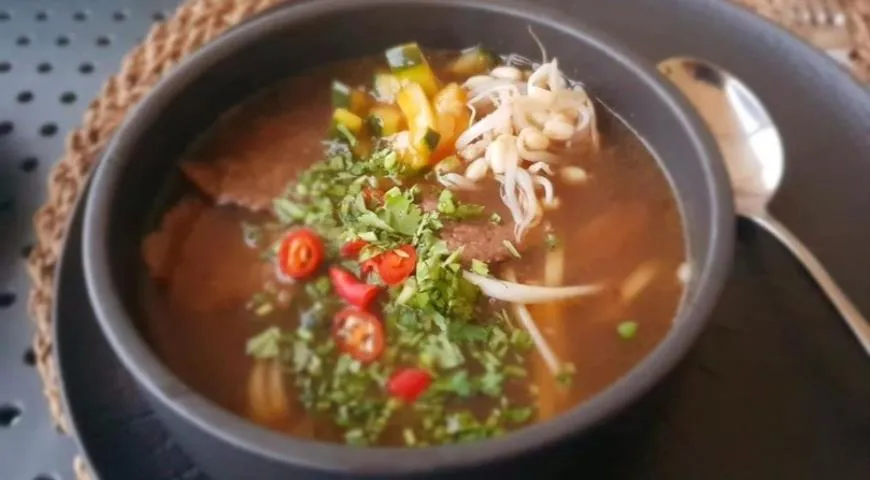
There is something deeply soulful about a bowl of Pho Bo. The aromatic broth, the delicate rice noodles, the paper-thin slices of raw beef that cook instantly in the steaming liquid—this is Vietnamese cuisine at its most elegant. And while many think of pho as a quick street-food staple, the true art lies in the hours of careful simmering that coax out a clear, fragrant, and deeply savory consommé. This recipe, originally from Gastronom.ru, guides you through the authentic process of building that perfect broth from scratch. Whether you’re a seasoned home cook or a curious novice, this detailed guide will help you recreate the vibrant flavors of Hanoi in your own kitchen.
About Pho Bo: A Culinary Icon
Pho Bo, or beef pho, is Vietnam’s most famous noodle soup. Its roots trace back to the early 20th century in northern Vietnam, where Chinese and French culinary influences merged with local ingredients. The hallmark is the broth—a clear, amber liquid infused with charred onion, ginger, star anise, cinnamon, and coriander seeds. Unlike many Western soups, pho broth is never murky; it requires careful skimming and a low, gentle simmer. The beef is typically raw when served, relying on the boiling broth to cook it tableside. For a truly authentic experience, pair it with fresh herbs, bean sprouts, and a squeeze of lime. If you enjoy exploring global flavors, you might also appreciate our guide on Catalan sponge cake for a sweet contrast.

Ingredients
- For the broth: 2 kg beef bones (marrow and knuckle), 1 large onion, 1 head garlic, 1 carrot, 1 daikon radish, 2 celery stalks, 5 cm ginger, 2 cinnamon sticks, 4 star anise, 1 tbsp coriander seeds, 5 cloves, 3 tbsp fish sauce, salt to taste.
- For serving: 300 g rice noodles (banh pho), 200 g beef tenderloin, 1 spring onion, 1 fresh red chili, 1 small onion, 1 zucchini, 1 lime, fresh basil and cilantro, 100 g bean sprouts.
Using fresh, high-quality bones is key. For precise slicing of the tenderloin, a sharp knife or a glass food processor can help achieve paper-thin cuts. Also, consider investing in a non-toxic immersion blender for pureeing sauces or soups if you plan to make variations.
Step-by-Step
1. Blanch the Bones
Place all bones in the largest pot you have (at least 5 liters). Cover with cold water, bring to a boil over high heat, then reduce to a simmer for 10 minutes. Discard this water, rinse the bones thoroughly to remove any scum, and return them to the clean pot. Cover with fresh cold water until the pot is three-quarters full. Bring to a boil again, then lower the heat to a gentle simmer. Skim off any foam that rises during the first 10 minutes. This initial blanching is crucial for a crystal-clear broth. Using a non-toxic air fryer might be handy for charring vegetables later, but for now, keep the stovetop method.
2. Char the Aromatics
Remove the outer papery skin from the onion. Stud the onion with the cloves. On a dry, hot skillet, char the onion, ginger slices, cinnamon sticks, star anise, and coriander seeds until fragrant and slightly blackened. Add these spices to the broth. This step releases essential oils and imparts that iconic smoky depth. For even toasting, a commercial countertop convection oven can give you consistent results if you’re making large batches.
3. Add Vegetables and Simmer
Roughly chop the garlic, carrot, daikon, and celery stalks. Add them to the pot. Cover and simmer over the lowest possible heat for about 3 hours. The broth should never reach a rolling boil—just the occasional bubble. After 3 hours, remove from heat, cool completely, and refrigerate for another 3 hours. This allows the fat to solidify on top, which you can then easily remove. A refrigerant leak detector might not be necessary, but a reliable fridge ensures proper chilling.
4. Second Simmer and Seasoning
Return the chilled broth to the stove, bring to a boil, then reduce to a minimum. Cover and simmer for another 3 hours. Season with fish sauce and salt to taste. Let it cool slightly, then strain through a fine-mesh sieve into a clean pot. The result should be a clear, golden liquid. If you prefer a thicker consistency, you could use a immersion blender (though not traditional).
5. Prepare Accompaniments and Assembly
While the broth simmers, prepare the garnishes: slice green onion and chili into thin diagonal rings, regular onion into fine feathers, zucchini into julienne, and lime into quarters. Finely chop basil and cilantro. Rinse bean sprouts. Partially freeze the beef tenderloin, then slice across the grain into pieces no thicker than 2 mm. Cook the rice noodles according to package directions, rinse with cold water, and drain. Just before serving, bring the strained broth to a rolling boil. Place a portion of noodles in each deep bowl, top with raw beef slices, and immediately ladle the boiling broth over the meat. Serve with the accompaniments on the side so each diner can customize their bowl. For efficient slicing, a food processor for nut butter can handle thin cuts, but a sharp knife is traditional.
Tips for Perfect Pho
- Skim diligently: The first 30 minutes of simmering require constant skimming to avoid cloudiness.
- Low and slow: Never boil the broth vigorously; a gentle simmer preserves clarity and flavor.
- Char the spices: Don’t skip toasting—it’s the secret to the aromatic depth.
- Use a large pot: At least 5 liters to allow bones and water room.
- Chill for fat removal: Refrigerating the broth makes removing fat effortless, leaving a clean taste.
For other kitchen tasks, a best oil sprayer helps control oil for stir-fries, and a coffee maker for Airbnb might be a nice addition for post-meal coffee.
Variations
Pho Bo is versatile. Try these twists:
- Chicken Pho (Pho Ga): Replace beef bones with chicken carcasses and use chicken breast instead of tenderloin.
- Vegetarian Pho: Use vegetable stock, mushrooms, and tofu. Add soy sauce for umami.
- Spicy Pho: Add extra chili or a dollop of sriracha to the broth.
- Seafood Pho: Swap beef for shrimp and fish, using a lighter fish-based broth.
For dessert, explore best chocolate-covered raisins or organic vodka for a pairing.
FAQ
What is the best cut of beef for Pho Bo?
Beef tenderloin is ideal for its tenderness when flash-cooked in the broth. Other cuts like sirloin or eye of round work if sliced very thin.
Can I use a pressure cooker to speed up the broth?
Yes, a microwave pressure cooker or stovetop pressure cooker can reduce simmering time to about 1 hour, though the depth of flavor may be slightly less.
Why did my broth become cloudy?
Cloudiness usually results from boiling too vigorously or not skimming enough. Always simmer gently and skim frequently during the first hour.
Can I freeze leftover pho broth?
Absolutely. Cool completely, store in airtight containers, and freeze for up to 3 months. Reheat gently.
What are the essential garnishes for authentic pho?
Bean sprouts, fresh basil, cilantro, lime wedges, sliced chili, and hoisin sauce are classic. Some also add mint or sawtooth herb.
How do I store leftover cooked noodles?
Keep noodles separate from broth to avoid sogginess. Store in the fridge for up to 2 days, then reheat in boiling water.
For more kitchen inspiration, check out our reviews on best planetary mixer, best wheatgrass juicer, best undercounter ice maker, best steam canner, and best George Howell coffee. Each of these tools can elevate your cooking experience.







