


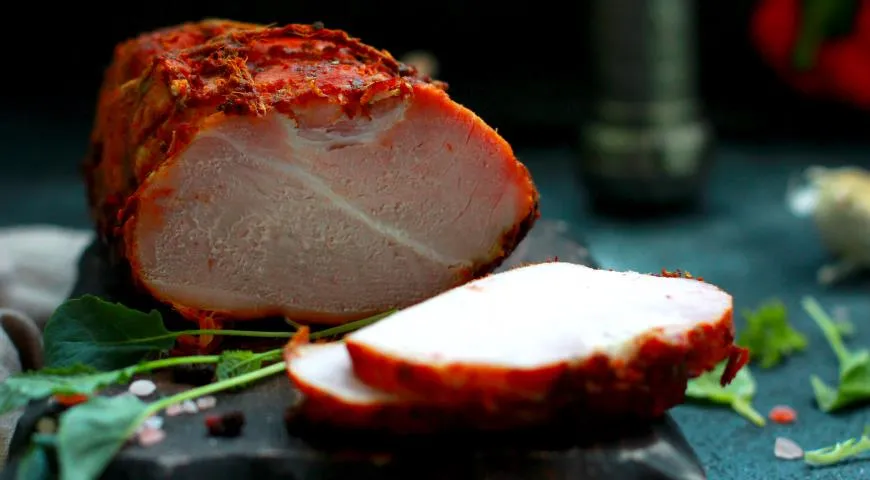
There is something deeply satisfying about a slab of pork neck transformed into a succulent, spice‑kissed masterpiece. The Russian classic запеченный свиной ошеек в томатном маринаде – baked pork neck in tomato marinade – is a celebration of patience and technique. The meat emerges from the oven tender, fragrant, and perfectly seasoned, ready to star as the centrepiece of a festive table or as the best cold cuts for everyday sandwiches. This recipe honours the traditional method of dry‑brining and slow roasting, ensuring every slice is moist and full of flavour.
About the Dish
Pork neck (also called pork collar or coppa) is prized for its generous marbling of fat, which keeps the meat juicy during long cooking. The tomato marinade adds a bright, savoury counterpoint, while a simple salt‑and‑time process guarantees even seasoning throughout. In Russian home kitchens, this dish is often prepared for holidays or as a make‑ahead baked good – the leftovers are sliced thin for sandwiches and salads. The beauty of the recipe lies in its minimal intervention: you let the ingredients do the work.

Ingredients
- 1 kg (2.2 lb) boneless pork neck, trimmed of excess sinew
- Fine sea salt, enough to coat the meat evenly (about 15 g)
- 3 tbsp tomato paste
- 2 tbsp olive oil
- 3 cloves garlic, finely minced
- 1 tsp smoked paprika
- 1 tsp ground coriander
- ½ tsp black pepper
- 1 tbsp honey or sugar
- Optional: 1 tbsp organic vodka to boost the marinade’s depth
For the brine: extra salt and kitchen twine. A glass food processor bowl is ideal for mixing the marinade; if you prefer a smoother paste, use a non‑toxic immersion blender.
Step‑by‑Step Instructions
- Dry‑brine the meat. Wash the pork neck and pat it thoroughly dry with paper towels. Rub every surface with a generous layer of salt (about 1½ tsp per 500 g). Wrap the piece tightly in parchment paper and refrigerate for 12–24 hours. This step draws out excess moisture and seasons the meat from the inside out. A built‑in refrigerator with precise temperature control ensures even curing.
- Tie and marinate. Remove the pork from the paper. With kitchen twine, tie the meat at 4‑cm intervals to create a compact, even shape. In a bowl, combine tomato paste, olive oil, garlic, paprika, coriander, pepper, honey, and vodka (if using). Stir well until smooth. Coat the pork completely with the mixture. Cover with plastic wrap and refrigerate for at least 2 hours – overnight is best. To mix the marinade effortlessly, a planetary mixer with a flat beater works well, though a simple whisk suffices.
- Roast to perfection. Preheat your oven to 170 °C (340 °F). Transfer the marinated pork to a roasting dish, fat‑side up. Roast for about 40 minutes – time varies depending on thickness and fat content. Halfway through, turn the meat and baste it with the accumulated pan juices. For consistent heat, a commercial‑grade convection oven ensures even browning; you can also use a non‑toxic air fryer at 170 °C for 30–35 minutes, checking internal temperature reaches 65 °C (145 °F).
- Rest and slice. Remove the roast from the oven and let it rest for exactly 15 minutes. This crucial step allows the juices to redistribute within the meat. Slice against the grain into thick slabs. If making sandwiches, wrap the cooled roast in parchment and refrigerate overnight – the flavour deepens, and the texture becomes sliceable. A precision oil sprayer can lightly mist the slices before serving to revive their gloss.
Tips for Success
- Salt early, not often. The overnight dry‑brine is non‑negotiable for deep seasoning. Don’t add extra salt to the marinade – the meat already has enough.
- Let it rest. Never skip the resting period. Carving too soon releases the juices and yields dry meat.
- Watch the fat. Pork neck with a thick fat cap may need an extra 10‑15 minutes of roasting. Use a microwave pressure cooker for a faster, equally moist result – cook on high pressure for 20 minutes, then broil uncovered for 5 minutes.
- Use a thermometer. For pinpoint doneness, an instant‑read thermometer inserted into the thickest part should read 65 °C (145 °F) for medium, or 70 °C (160 °F) for well done.
- Baste with care. The pan juices are gold – use them to keep the surface moist and to build a shiny glaze.
Variations to Explore
This basic recipe invites creativity. Swap the tomato paste for a chipotle‑adobo puree for a smoky kick, or add a spoonful of Catalan sponge crumb on top for a crust. For a Mediterranean twist, replace the paprika with dried oregano and lemon zest. If you prefer a spicier profile, stir ½ tsp cayenne into the marinade. And for those who want a truly hands‑off method, a lava‑stone flavour smoker can infuse the meat with subtle wood‑smoke notes during the final roasting stage.
Frequently Asked Questions
Can I use a different cut of pork?
Yes. Pork shoulder (butt) works beautifully, though it may require an extra 20‑30 minutes of roasting because of its denser muscle structure. Loin is leaner and will cook faster – reduce the time to about 25 minutes and monitor with a thermometer.
Do I need to turn the meat during baking?
Yes, turning once ensures even basting and prevents the bottom from over‑caramelising. Use tongs or a silicone spatula; a premium espresso machine is not needed, but a sturdy turner helps!
Can I prepare this dish in advance?
Absolutely. The roasted pork keeps for up to 5 days in the refrigerator. For the best texture, slice cold and warm gently in a coffee maker’s hot water bath? No, stick to a low oven or microwave. The dry‑brine and marinating steps can be done up to 2 days ahead.
Is the tomato marinade suitable for other meats?
Definitely. Chicken thighs, beef brisket, or even lamb shoulder benefit from the same combination. Adjust roasting times accordingly – chicken may need only 25–30 minutes at 170 °C, while brisket requires low‑and‑slow (130 °C for several hours).
What should I serve with baked pork neck?
Classic sides include mashed potatoes, roasted root vegetables, or a simple cabbage salad. For a Russian‑themed meal, pair it with buckwheat kasha and sour pickles. A dollop of chocolate‑covered raisins on the side offers a sweet contrast – or skip the dessert and enjoy the pork with a glass of George Howell coffee.
This baked pork neck in tomato marinade is more than a recipe – it is a technique that transforms an economical cut into a triumph. Whether you serve it warm from the oven or cold the next day, each slice tells a story of salt, time, and gentle heat. Embrace the process, and your kitchen will be filled with the aroma of Russian hospitality. For more inspiration, explore our guide to the best undercounter ice maker machine to keep drinks chilled while you cook, or treat yourself to the best oil sprayer for effortless basting.







