


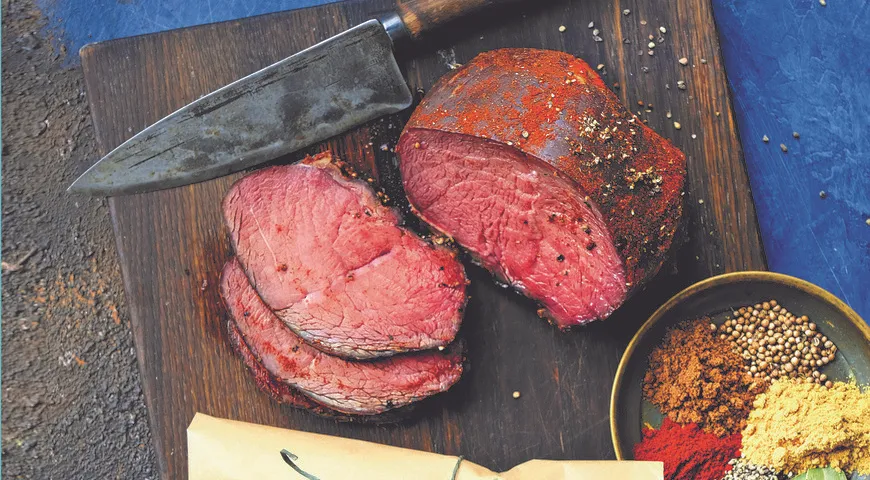
Pastrami, the love child of brined brisket and a spice market explosion, is a deli icon that deserves a place in every home kitchen. This recipe, adapted from a traditional Russian approach, marries a deeply aromatic wet brine with a two-day rest, an 11-hour low-and-slow smoke-like roast, and a final sizzling sear under high heat. The result? Slice after slice of tender, peppery, sweet-and-smoky beef that rivals any New York institution. Whether you’re planning a holiday gift, a weekend project, or simply want to elevate your sandwich game, this pastrami will become your go-to. Let’s break down every step so you can achieve pastrami perfection at home.
About This Pastrami Recipe
Pastrami originated as a preservation technique in Eastern Europe, where beef was cured, spiced, and smoked to survive long winters. This version stays true to its roots while embracing modern convenience: a wet brine infused with honey, garlic, cinnamon, cloves, and a whisper of chili creates a complex, sweet-spicy profile. The slow roasting at 60°C (140°F) mimics the gentle heat of a smoker, developing deep flavor without requiring specialized equipment. For those who love experimenting with non-toxic air fryer techniques or exploring gourmet snack pairings, this recipe offers a satisfying challenge. It’s a showstopper for Shabbat, holidays, or a charcuterie board—and it makes an unforgettable hostess gift when wrapped in kraft paper.

Ingredients
For the brine and cure:
- 1.5 kg beef brisket (preferably with a good fat cap)
- 125 g kosher salt
- 100 g white sugar
- 50 g dark brown sugar
- 40 g honey (preferably raw)
- 2 garlic cloves, finely minced
- 2 tsp ground cinnamon
- 2 tsp dry mustard powder
- 2 tsp freshly ground black pepper
- 2 whole cloves
- 2 bay leaves
- ½ tsp ground ginger
- ½ tsp freshly grated nutmeg
- ½ tsp ground chili (preferably ancho for fruitiness)
For the spice crust:
- 1.5 tbsp smoked paprika
- 1 tbsp freshly ground black pepper
- 1 tbsp ground coriander (optional, but recommended)
You’ll also need a large stainless-steel pot, a baking dish, and kitchen twine. A spacious built-in refrigerator comes in handy during the 48-hour marinating phase.
Step-by-Step Instructions
Step 1: Prepare the meat. Wash the brisket thoroughly under cold water and pat it completely dry with paper towels. Trim away any tough silver skin or excess hard fat, but leave a thin layer of fat on one side—this will baste the meat as it cooks. Place the trimmed brisket on a cutting board and set it aside while you make the brine.
Step 2: Create the aromatic brine. Finely mince the garlic cloves. In your large stainless-steel pot, combine the minced garlic with all brine ingredients—salt, sugars, honey, cinnamon, mustard, black pepper, cloves, bay leaves, ginger, nutmeg, and chili. Pour in 1.5 liters of water and bring the mixture to a boil over medium-high heat, stirring to dissolve the sugars and salt. Once boiling, remove from heat and let the brine cool completely to room temperature. For the best flavor, you can chill it in the refrigerator while you wait. (A dedicated ice maker can speed up this process.)
Step 3: Marinate the meat. Submerge the brisket in the cooled brine, ensuring it is fully covered. If needed, weigh it down with a plate or a smaller pot. Cover the container and refrigerate for exactly 48 hours. For deeper penetration, you can extend the marinating to up to one week, but 48 hours is ideal for a balanced flavor.
Step 4: Low and slow roast. After the marinade, preheat your oven to 60°C (140°F). Remove the brisket from the brine and pat it very dry with clean paper towels—any excess moisture will steam the meat instead of roasting it. Place the brisket in a baking dish, fat side up. Insert a probe thermometer if you have one. Roast for 11 hours at this low temperature. The interior should reach about 70°C (160°F). During this stage, you can prepare a Catalan sponge cake for dessert or catch up on coffee maker reviews.
Step 5: Make the spice crust and sear. Remove the brisket from the oven and let it rest for 10 minutes (keep the oven on). In a small bowl, mix the smoked paprika, black pepper, and ground coriander. Roll the warm brisket in the spice mixture, pressing gently to create an even, thick crust. Increase the oven temperature to 180°C (350°F). Return the brisket to the oven and roast for another 10–15 minutes, until the crust blisters and darkens. This final blast replicates the crunch of a smoker’s bark. For an extra-deep crust, you can finish it under the broiler for 1–2 minutes, but watch carefully.
Step 6: Rest and serve. Let the pastrami rest for at least 15 minutes before slicing. Slice it very thin against the grain—a heavy-duty food processor with a slicing disc works, but a sharp knife is tradition. Wrap the slices in kraft paper, tie with twine, and add a sprig of rosemary or a small tag. It makes a beautiful hostess gift alongside a jar of castor oil for a themed pantry basket.
Tips for Perfect Pastrami
- Patience is key: The full 48-hour brine is non-negotiable; even 36 hours will yield a less tender result. A gut-friendly lifestyle often starts with mindful meal prep—plan this dish well in advance.
- Don’t skip the dry: After brining, the meat must be bone-dry before the low roast. Use paper towels and let it air-dry on a rack in the fridge for an hour if you have time.
- Use a probe thermometer: The low oven temperature can fluctuate; a reliable refrigerant leak detector isn’t needed here, but a good oven thermometer ensures accuracy.
- Slice against the grain: This shortens the muscle fibers, making each bite melt-in-your-mouth. A planetary mixer won’t help with slicing, but it’s excellent for making buns or potato salad sides.
Variations
This pastrami base is endlessly adaptable. Swap the beef brisket for venison, lamb shoulder, or even a large turkey breast—adjust cooking times accordingly. The brine can be spiced with juniper berries, allspice, or smoked black tea for a twist. For a milder version, omit the chili and reduce black pepper. For a sweeter finish, double the honey and sprinkle brown sugar onto the crust before the final sear. Serving options include classic rye bread with mustard, on a wheatgrass juice cleanse platter, or tucked into a steamed bun with pickles.
Frequently Asked Questions
Can I use a different cut of beef?
Yes, but brisket is ideal for its fat content and connective tissue. Beef chuck or round can work if you marinate for a full week and cook at a slightly higher temperature (65°C) to break down fibers.
Do I need a smoker?
No. The low oven method (60°C) creates a similar environment, though you won’t get the same smoky flavor from wood. Adding a teaspoon of liquid smoke to the brine can compensate. For an outdoor version, a commercial convection oven also does a fine job.
How long does pastrami keep?
Store tightly wrapped in the refrigerator for up to 10 days. It also freezes beautifully for up to 3 months. Slice before freezing for easy access.
Why is my pastrami tough?
Most likely the internal temperature didn’t reach 70°C (160°F) during the low roast, or the meat was sliced with the grain. Use a probe thermometer and always slice against the grain.
Can I speed up the marinating?
You can inject the brine directly into the meat using a microwave pressure cooker on low pressure for 20 minutes, then chill immediately. This reduces the marinating time to 24 hours but alters the texture slightly.
Mastering pastrami at home is a rite of passage for any serious cook. With patience, a quality brisket, and a well-stocked spice cabinet—plus tools like a non-toxic oil sprayer for the final crust—you’ll produce a delicacy that tastes far more expensive than it is. Serve it with rye, pickles, and a spoonful of quality au jus for dipping. This is pastrami worth waiting for.







