


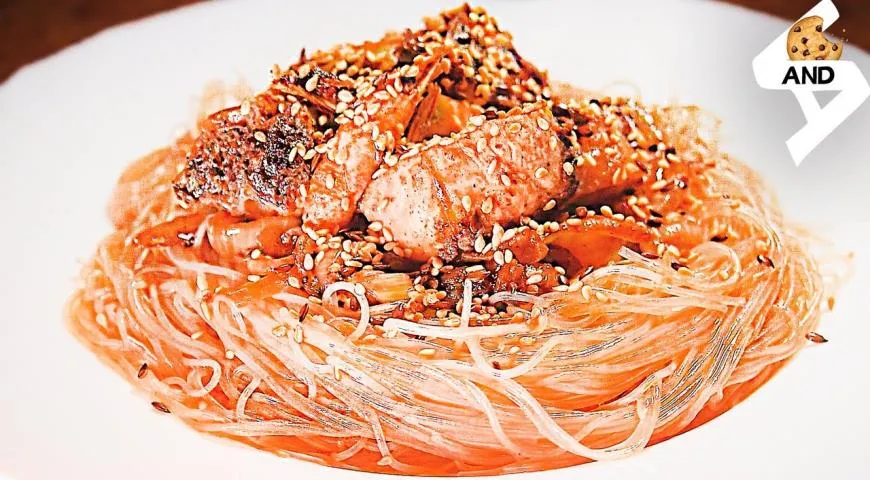
In the world of culinary alchemy, few pairings are as unexpectedly magnificent as tender sturgeon, briny shrimp, and silky glass noodles. This recipe for Funchoza with Sturgeon and Shrimp transforms humble ingredients into a restaurant-worthy centrepiece. Inspired by Russian adaptations of Asian classics, it balances delicate seafood with a vibrant, tangy-chili dressing. Whether you are hosting a dinner party or seeking a weeknight indulgence, this dish promises a symphony of textures and flavours. Let us guide you through every step, from handling the prized sturgeon to achieving the perfect noodle glide.
About the Dish
Funchoza – the Russian term for glass noodles made from mung bean starch – is a staple in many post-Soviet kitchens. This version elevates the noodle with premium sturgeon, a fish revered for its firm, meaty flesh and subtle sweetness. The addition of shrimp adds a briny counterpoint, while a quick soy-chili dressing ties everything together. The result is a dish that feels both familiar and exotic, perfect for those who appreciate the precision of a well-executed non-toxic air fryer meal but crave the depth of stovetop cooking. Marinating the seafood in lemon-infused fish seasoning brightens the profile, while pickled onions provide a sharp contrast.

Ingredients
For the seafood and marinade:
- 300 g sturgeon fillet (ask your fishmonger to remove the viziga – the spinal cord – and the bony scutes)
- 200 g raw shrimp (peeled and deveined)
- 1 tbsp fish seasoning with lemon (or a mix of dried herbs, citrus zest, and salt)
- 1 medium onion, sliced into thin rings
- 2 tbsp soy sauce (for the onion marinade)
For the noodles and dressing:
- 150 g dry glass noodles (funchoza)
- 1 litre water, plus salt for blanching
- 3 tbsp vegetable oil (neutral, like sunflower or grapeseed)
- 2 tbsp soy sauce
- 1 tbsp apple cider vinegar
- 1 tbsp spicy chili sauce (adjust to heat preference)
Using a high-performance food processor can streamline the prep, but a sharp knife and a steady hand work beautifully.
Step-by-Step Instructions
1. Prepare and Marinate the Seafood
Rinse the sturgeon under cold water. If the fish still has its scutes (the bony plates), slice them off with a sharp knife. Remove any remaining viziga – a tendon-like strip along the spine – and cut the flesh into 2 cm cubes. In a bowl, combine the sturgeon cubes with the shrimp. Sprinkle with fish seasoning and lemon, toss gently, and let marinate at room temperature for 20 minutes. This short bath tenderises and infuses the seafood with citrusy notes. For a deeper flavour, consider using a microwave pressure cooker to speed up the marination, though traditional resting works perfectly.
2. Marinate the Onions
Place the onion rings in a separate bowl and cover with 2 tablespoons of soy sauce. Toss to coat, then set aside for 15–20 minutes. The salt in the soy sauce will soften the onions and mellow their sharpness, creating a sweet-savory pickle. If you prefer a tangier result, a splash of the apple cider vinegar from the dressing can be added at this stage.
3. Cook the Glass Noodles
Bring 1 litre of water to a rolling boil in a medium pot. Add a generous pinch of salt – about 1 teaspoon – then remove the pot from the heat. Immediately add the dry glass noodles, pushing them under the hot water. Let them steep for exactly 10 minutes. Do not stir; the noodles will soften and become translucent. Drain in a colander and rinse briefly with cold water to stop the cooking. Set aside. Glass noodles can clump easily, so a light drizzle of vegetable oil and a toss with two forks helps keep them separate. Using a best oil sprayer ensures even distribution without over-greasing.
4. Sear the Seafood and Onions
Heat 1 tablespoon of vegetable oil in a large non-stick skillet over medium-high heat. Add the marinated sturgeon and shrimp, spreading them into a single layer. Cook without moving for 2 minutes, then flip and cook the other side for another 2 minutes. The sturgeon should be golden and just cooked through; the shrimp will turn pink. Remove the seafood to a plate. In the same pan, add the soy-marinated onions (reserve any leftover soy liquid). Sauté for 2–3 minutes until softened and caramelized. Return the seafood to the pan, toss once, and remove from heat.
5. Make the Dressing and Assemble
In a small bowl, whisk together the remaining 2 tablespoons of vegetable oil, 2 tablespoons of soy sauce, 1 tablespoon of apple cider vinegar, and 1 tablespoon of spicy chili sauce. Emulsify until homogeneous – a quick whisk or shake in a jar will do. Pour the dressing over the cooked noodles and toss to coat. Add the seared seafood and onions, and gently fold everything together. Serve immediately, garnished with fresh cilantro or sliced green onions if desired. For an extra-crispy finish, a quick blast in a wall oven microwave combo with air fryer can reheat the noodles with a slight crunch.
Tips for Perfect Funchoza
Sturgeon must be handled with care. Ensure that the viziga (cartilaginous cord) is completely removed, as it can be tough and unpleasant. If you cannot find sturgeon, a firm white fish like halibut or monkfish works, though the flavour will be milder. For the glass noodles, never boil them directly – always steep in just-boiled water, as boiling turns them mushy. The dressing can be doubled if you prefer a saucier dish. A non-toxic immersion blender is excellent for emulsifying larger batches of dressing. If you want to reduce oil, use a light spray from a best oil sprayer when sautéing.
Variations
This recipe lends itself to creative twists. Substitute the shrimp with scallops for a sweeter note. Add julienned bell peppers or snap peas during the onion sauté for crunch. For a vegan version, replace the seafood with king oyster mushrooms (peeled into ribbons) and extra-firm tofu, marinated in the same lemon-seasoning blend. The dressing can be dialled up with minced garlic or grated ginger. Those who enjoy intense heat can use a spicy chili crisp instead of standard sauce. Consider pairing this dish with a best sweet wine with high alcohol content – a late-harvest Riesling or an off-dry Gewürztraminer echoes the chili’s sweetness.
Frequently Asked Questions
What is viziga and why must I remove it?
Viziga is the cartilaginous spinal cord of sturgeon. It is tough and gelatinous, with a texture akin to gristle. If not removed, it can ruin the dish’s delicate mouthfeel. Most fishmongers will remove it upon request; you can also release it by slicing along the backbone.
Can I use dried glass noodles other than funchoza?
Yes, any mung bean or sweet potato starch noodle will work. Rice vermicelli is a good substitute but will cook faster – reduce the steeping time to 5–7 minutes. Always check the package directions.
Is it necessary to marinate the onions in soy sauce?
No, but the soy marinade adds depth and softens the raw bite. For a subtler flavour, omit the soy and simply sauté the onions in a little oil until caramelized. The dish will still be delicious, though less salty.
How do I prevent glass noodles from clumping?
After draining, rinse the noodles under cold water to remove excess starch. Then toss them with a teaspoon of oil using two forks. A planetary mixer with a paddle attachment can gently separate noodles if you are doing a large batch.
Can I make this dish ahead of time?
Funchoza with Sturgeon and Shrimp is best served immediately, as the noodles can become sticky upon cooling. However, you can prep all components separately – cook and marinate the seafood, blanch the noodles, make the dressing – and assemble just before serving. Refresh the noodles with a splash of hot water and reheat the seafood quickly in a hot pan or a commercial countertop convection oven for even results.
For more inspiration, explore our guides on espresso machines under $2000 for post-dinner coffee, or dive into the world of wheatgrass juicers for a healthy morning-after cleanse. This dish, with its luxurious ingredients and vibrant dressing, is a testament to how a few thoughtful techniques can elevate everyday cooking into an art form.







