


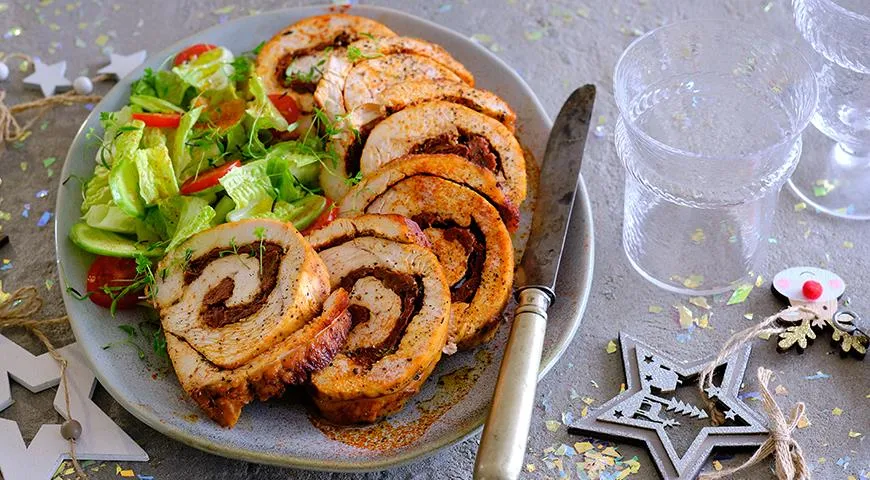
This Turkey Breast Roulade with sun-dried tomatoes and smoked paprika is an elegant yet straightforward dish that transforms a humble turkey fillet into a showstopping centerpiece. The secret lies in a gentle brine, a clever butterflying technique, and slow roasting at a low temperature. Whether you are planning a festive Christmas dinner, a Mardi Gras feast, or a sophisticated New Year's appetizer, this roulade delivers moist, flavorful meat wrapped around a tangy, umami-rich filling. The result is a beautifully bound roll that slices cleanly and impresses every guest.
About This Recipe
Inspired by classic Eastern European roulades, this version uses turkey breast fillet (often available in vacuum-sealed brine) to ensure juiciness. The brining step is optional if your turkey is already brined, but we recommend a quick aromatic soak to deepen flavor. The butterflying technique—cutting the fillet like a book and then splitting each half horizontally—creates a large, even rectangle perfect for rolling. Sun-dried tomatoes add a sweet-tart contrast, while smoked paprika and thyme lend warmth. The final sear under the grill gives a crackling crisp skin that is irresistible. For best results, use a non-toxic air fryer for the final crisping, or simply rely on your oven's grill function.

Ingredients
For the brine (if using fresh fillet):
- 1 kg turkey breast fillet (fresh or pre-brined)
- 1 litre cold water
- 60 g fine sea salt
- 30 g granulated sugar
- 2 bay leaves
- 1 teaspoon black peppercorns
For the roulade:
- 2 tablespoons smoked paprika
- 1 tablespoon dried thyme
- 100 g oil-packed sun-dried tomatoes, drained and roughly chopped
- Kitchen twine for tying
Optional: a splash of olive oil for brushing, and flaky salt for finishing.
Step-by-Step Instructions
Step 1 – Brine the turkey
Combine all brine ingredients in a large bowl or container, stirring until salt and sugar dissolve. Submerge the turkey breast fillet, cover, and refrigerate for at least 12 hours. If using a pre-brined fillet, skip to Step 2. A thorough brining ensures tender meat; using a refrigerant leak detector can help verify your fridge maintains proper temperature during this process.
Step 2 – Prepare the fillet
Remove the fillet from the brine and pat dry with paper towels. Place it on a cutting board. Holding a sharp knife perpendicular to the board, cut lengthwise through the fillet, stopping about 1.5 cm from the opposite edge—do not cut all the way through. Open the meat like a book. Now, working from the centre toward the edges, cut each half horizontally (parallel to the board) again stopping 1.5 cm from the edges. Unfold the cut pieces: one to the right, the other to the left. You will have an uneven rectangular slab. Gently flatten it with the heel of your hand.
Step 3 – Season and fill
Sprinkle the meat evenly with smoked paprika and dried thyme. Arrange the chopped sun-dried tomatoes along one long edge of the meat slab. Starting from that edge, roll the meat tightly into a log. Secure the roll at intervals with kitchen twine, tying firmly but not too tightly.
Step 4 – Slow roast in a bag
Place the roulade in a roasting bag or sleeve. Seal the bag, then make a few small slits on top for steam to escape. Roast in a preheated oven at 130°C for 2 hours. Using a wall oven microwave combo with air fryer can streamline this step if your appliance has a convection setting.
Step 5 – Grill for colour
Carefully pour out any accumulated liquid from the bag. Transfer the roulade to a baking sheet. Switch your oven to grill mode at 200°C (or use the best commercial countertop convection oven for even browning). Grill until the surface is golden and crispy, about 5–8 minutes. Let rest 10 minutes before slicing.
Chef's Tips
- Butterflying precision: Use a long, thin knife and go slowly. If you accidentally cut through, no worries—just overlap the edges slightly when rolling.
- Tying technique: Start with a loop at one end, then space ties every 2–3 cm. This keeps the roll compact.
- Juice management: The liquid from the bag can be reduced into a quick pan sauce. Add a splash of white wine or stock and simmer.
- Serving suggestion: Slice into rounds about 2 cm thick and arrange on a platter with roasted vegetables or a fresh salad.
- Equipment care: For easy cleanup, use a best oil sprayer to coat your bag lightly before sealing.
Flavor Variations
Swap the sun-dried tomatoes for roasted red peppers, artichoke hearts, or even sliced olives for a Mediterranean twist. For a spicy kick, add a teaspoon of chili flakes or harissa paste to the paprika mixture. If you prefer a cheese-filled roulade, lay slices of provolone or smoked mozzarella before rolling. To achieve an ultra-crisp skin without a grill, try finishing in a non-toxic air fryer at 200°C for 3–4 minutes. For a vegetarian version (though not turkey), the technique works beautifully with large portobello mushroom caps or eggplant slices.
Frequently Asked Questions
Do I have to brine the turkey if it is already packed in salt solution?
No. Pre-brined fillets (common in vacuum packs) are already seasoned. Simply pat dry and proceed with the butterflying step. Over-brining can make the meat too salty.
Can I prepare this roulade a day ahead?
Absolutely. After roasting, cool completely, wrap tightly in foil, and refrigerate. Reheat in a low oven (150°C) for 15–20 minutes before serving. For best results, do not grill until just before serving.
What should I serve with turkey roulade?
It pairs wonderfully with creamy mashed potatoes, steamed green beans, or a tangy cranberry sauce. A light red wine such as Pinot Noir complements the smoky paprika. Check out our guide to best sweet wine with high alcohol content for an interesting pairing alternative.
How do I know when the roulade is cooked through?
Use an instant-read thermometer inserted into the thickest part; it should read 74°C. Since we roast at a low temperature, carryover cooking will raise it slightly.
Can I use this recipe with chicken or pork?
Yes. Chicken breast or pork loin work similarly. Adjust cooking time: chicken may need only 1 hour at 130°C, while pork loin about 1.5 hours. Always check internal temperature.
Why did my roulade fall apart when slicing?
This usually happens if the roll was tied too loosely or the meat wasn't flattened enough. Ensure even thickness and use enough twine ties. For extra stability, you can wrap the roulade in plastic wrap before roasting, then remove after cooking.
What kitchen tools are essential for this recipe?
A sharp chef's knife, kitchen twine, a roasting bag, and a reliable oven. If you are investing in new equipment, consider a best espresso machine under 2000 for your morning brew alongside your cooking ventures.
Thank you for reading this recipe. If you notice any errors or have additional tips, please let us know. Source: "Gastronom" magazine, No.12, 2021. For more inspiration, explore our Catalan sponge cake recipe for a sweet finish to your meal.







