


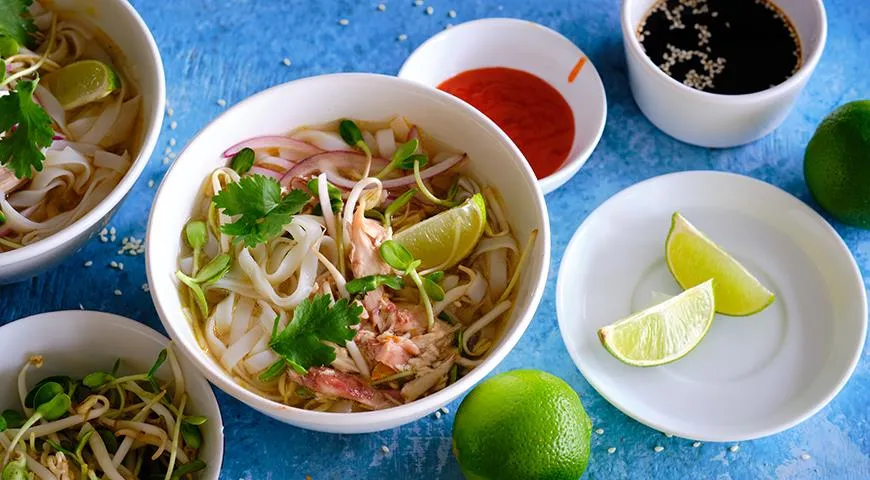
Transform leftover grilled chicken into an extraordinary broth—this recipe elevates humble bones and wings into a fragrant, restorative soup. With crisp sprouts, gentle heat from ginger, and a squeeze of lime, each bowl delivers texture and freshness. The technique of slow-simmering the carcass produces a golden, deeply savory base that rivals any restaurant preparation.
About This Soup
In Russian home cooking, nothing is wasted. When a grilled chicken yields its meat, the carcass becomes the foundation of a soulful broth. Here, we pair it with rice noodles, red onion, and mung bean sprouts for a light yet satisfying meal. The process is meditative—scrape the bones, simmer gently, and strain meticulously. For those who enjoy precision in the kitchen, an immersion blender isn’t needed here, but a fine-mesh strainer or coffee filter ensures a crystal-clear broth.

Ingredients
- 1 grilled chicken carcass (plus wings, if available)
- 1.8 litres cold drinking water
- 2 cloves garlic
- 1 onion (regular)
- 2 celery stalks
- 1 piece fresh ginger (about 3 cm)
- 1 tsp black peppercorns
- Salt to taste
- 200 g rice noodles (or ramen-style noodles)
- 1 red onion
- 100 g mung bean sprouts
- 1 lime
- Fresh cilantro (coriander) leaves
- Soy sauce and hot sauce, for serving
Step-by-Step Method
1. Prepare the aromatics. Wash the garlic, regular onion, celery, and ginger. Chop them coarsely—no need for precision, as they’ll be strained out later. Cut the carcass and wings into medium pieces, exposing the bones. This helps release collagen and flavor.
2. Build the broth. Place the bones and wings in a large pot. Pour in 1.8 litres of cold water and add a pinch of salt. Bring to a gentle boil over medium heat. Skim off any foam that rises to the surface—this step ensures clarity. Reduce the heat to low. Add the chopped aromatics and black peppercorns. Simmer uncovered for exactly 1 hour. The gentle movement should barely disturb the surface. After an hour, strain the broth through a clean kitchen towel or a coffee filter for a pristine result.
3. Prepare the noodles and toppings. Cook the rice noodles according to package instructions—either boil briefly or soak in hot water until tender. Drain and rinse under cold water to stop cooking. Peel the red onion and slice it into thin half-moons. Cut the lime into wedges.
4. Assemble and serve. Divide the noodles among deep bowls. Top each with red onion slices and a handful of mung bean sprouts. Ladle the piping-hot broth over everything—the heat will soften the sprouts and warm the onions. Garnish with fresh cilantro and a lime wedge. Serve immediately, passing soy sauce and hot sauce at the table.
Tips for Success
For an even more intense flavor, roast the bones in a convection oven at 200°C for 15 minutes before simmering. This adds a subtle smokiness that complements the grilled chicken. Always start with cold water; it draws out gelatin gradually, giving the broth body. If you prefer a heartier soup, add sliced shiitake mushrooms or bok choy during the last 5 minutes of simmering. A pressure cooker can reduce the broth time to 30 minutes, but the stovetop method yields a more delicate flavor.
Variations
Swap the rice noodles for soba or udon noodles for a Japanese twist. Replace the red onion with thinly sliced shallots. For a vegetarian version, skip the chicken bones and use a rich kombu and shiitake broth, adding smoked tofu for depth. The sprouts can be exchanged for pea shoots or microgreens—any fresh, crisp green works well.
FAQ
Can I use a leftover rotisserie chicken?
Absolutely—this recipe is designed precisely for that. The grill marks and seasoning from rotisserie chicken add wonderful complexity. Just scrape off any sticky glaze before adding to the pot.
How do I store the leftover broth?
Let the broth cool completely, then refrigerate in a sealed container for up to 4 days. You can also freeze it for 3 months—consider an ice maker for portioning into cubes.
What if I don't have mung bean sprouts?
Use any crunchy sprout—alfalfa, radish, or lentil sprouts work beautifully. Even thinly sliced cabbage can substitute in a pinch.
Is this soup gluten-free?
Yes, if you choose rice noodles and gluten-free soy sauce (tamari). Check your hot sauce label as well. For a clean pantry, opt for certified gluten-free condiments.
Can I make it spicy?
Absolutely. Add a sliced Thai bird chilli to the broth while simmering, or serve with sriracha, gochujang, or a fermented chilli paste. The lime juice also brightens the heat.
Why strain the broth through a towel?
It removes the finest sediment, resulting in a restaurant-clear broth. If you don’t have a cloth, a fine-mesh sieve lined with paper towels works nearly as well.
What other herbs can I use?
Thai basil, mint, or even dill (for a Russian touch) all harmonize with the grilled chicken. A handful of cilantro is classic, but experiment freely.
This grilled chicken soup is more than a recipe—it’s a mindful practice of transformation. Each element, from the carefully skimmed broth to the final squeeze of lime, honors the ingredients. Whether you’re cooking for a quiet weeknight or a restorative lunch, this bowl offers warmth and clarity. For more kitchen essentials, explore our guides on the best immersion blenders and food processors to streamline your prep. And if you’re feeling adventurous, try a Catalan sponge cake for dessert—balance is everything. Bon appétit!







