


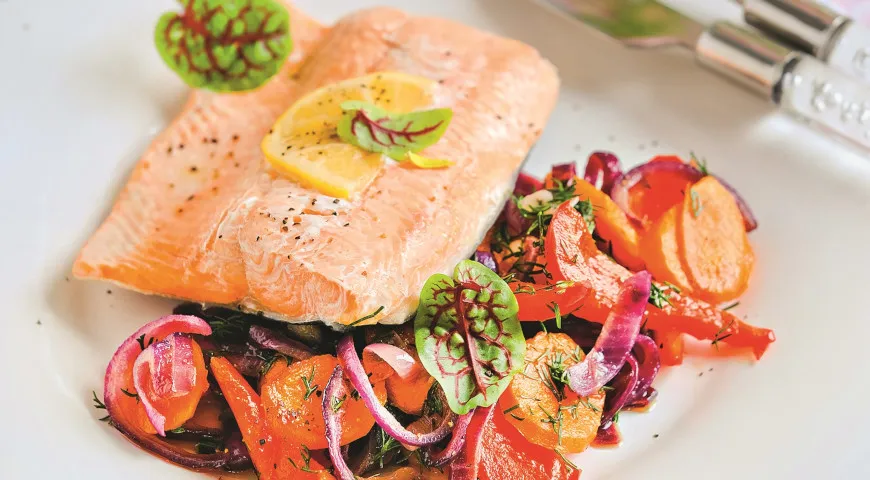
Delicate pink salmon fillets, cooked gently in a sealed bag with butter and lemon, then served over a vibrant medley of sautéed bell pepper, carrot, and red onion—this is a dish that marries Russian home cooking with modern, health-conscious techniques. The method, reminiscent of sous-vide but far more accessible, locks in moisture while the vegetables provide a sweet, savory counterpoint. Whether you are looking for a quick weeknight dinner or an impressive yet effortless meal for guests, this recipe delivers elegance without fuss.
About the Recipe
This preparation of pink salmon (gorbusha) with vegetables originates from the Russian culinary tradition of cooking fish en papillote or in a sealed bag. By simmering the fish in a pot of boiling water rather than baking or pan-frying, you achieve a supremely tender, flaky texture that never dries out. The accompanying vegetables—red bell pepper, carrot, red onion, and garlic—are lightly sautéed in olive oil to preserve their crunch and natural sweetness. A final garnish of fresh dill and lemon slices brightens the entire plate, making it a balanced, nutritious meal. For those who value efficiency in the kitchen, using a reliable immersion blender or food processor can speed up vegetable prep; our guide to the best non-toxic immersion blender offers excellent choices for pureeing sauces or soups that might accompany such a dish.

Ingredients
- 2 pink salmon fillets, about 200 g each
- 50 g unsalted butter
- 1 red bell pepper
- 1 carrot
- 2 cloves garlic
- 1 red onion
- 1 lemon
- 3 tbsp olive oil
- 3–4 sprigs fresh dill
- Salt and freshly ground black pepper to taste
Step-by-Step Instructions
- Prepare the fish. Squeeze juice from half the lemon and slice the remaining half into rounds. Rinse the salmon fillets and pat thoroughly dry with paper towels. Season with salt and pepper, then drizzle with the lemon juice. Place the fillets in an oven-safe or boil-proof bag (or a resealable freezer bag), add the butter and two lemon slices, and seal the bag tightly. Bring 2 liters of water to a boil in a large pot, lower the sealed bag into the water, cover, and cook over medium-high heat for 8 minutes.
- Sauté the vegetables. While the fish cooks, halve the bell pepper, remove seeds and membranes, and cut into strips. Peel and slice the carrot into thin rounds. Peel and cut the red onion into half-rings. Mince the garlic. Heat a large skillet with the olive oil over medium heat. Add the onion and garlic, and sauté for 5 minutes, stirring occasionally. Then add the carrot and bell pepper strips, season with salt and pepper, and continue cooking for another 10 minutes until tender-crisp.
- Assemble and serve. Carefully remove the salmon from the bag. Divide the sautéed vegetables between two plates, place a fillet on top, garnish with a lemon slice and fresh dill sprigs, and serve immediately for the best texture and flavor.
Tips for Success
- Use a high-quality food processor for nut butter or vegetable chopping to save time on slicing—though for this recipe, a sharp knife suffices.
- To avoid overcooking, check the fish at 7 minutes; it should flake easily with a fork but remain moist inside.
- Choose a heavy-bottomed pot to maintain a steady simmer—our review of the best undercounter ice maker machine won’t help here, but a reliable stovetop setup will.
- If you prefer a deeper roasted flavor, you can finish the vegetables under a broiler for 2 minutes after sautéing, but the stovetop method keeps them vibrant.
- Invest in a good best steam canner for preserving any extra cooked vegetables, though this recipe is best enjoyed fresh.
Variations
While the classic Russian version uses only bell pepper, carrot, onion, and garlic, you can adapt this dish to your pantry. Substitute zucchini or cherry tomatoes for a summery twist, or add a pinch of smoked paprika for depth. For a zesty kick, replace the lemon with best lava flavors (though lemon works perfectly). If you have a best air fryer non-toxic, you can air-fry the vegetables instead of sautéing them—toss with olive oil and cook at 180°C for 10 minutes. For a dairy-free version, omit the butter and use an extra tablespoon of olive oil; the salmon will still remain moist thanks to the sealed cooking bag. The technique also works beautifully with other firm-fleshed fish like trout or sea bass; if you try that, refer to our guide on best oil sprayer for even coating.
FAQ
Can I cook the salmon without a bag?
Yes, you can wrap the seasoned fillets in parchment paper or aluminum foil packets, then steam or poach them. The bag method ensures a foolproof seal and even cooking. For a different approach, use a best microwave pressure cooker to speed up the process—just adjust timing to 4 minutes.
What type of salmon is best for this recipe?
Pink salmon (gorbusha) is traditional, but sockeye or coho also work well. The key is to use fillets of even thickness so they cook uniformly. If you want to explore other seafood, check our review of best organic vodka for pairing ideas—though that’s more for drinks than fish!
How do I know when the fish is done?
The internal temperature should reach 52–55°C for medium, or 60°C for well-done. After 8 minutes at a gentle simmer, the flesh should be opaque and flake easily. Avoid boiling vigorously, which can toughen the fish.
Can I prepare the vegetables in advance?
Absolutely. Slice the vegetables up to a day ahead and store them in an airtight container. When ready, sauté them quickly. A best wheatgrass juicer isn’t needed here, but a good knife or mandoline helps keep slices uniform.
What side dishes pair well with this meal?
Steamed rice, boiled potatoes, or crusty bread all complement the salmon and vegetables. For a low-carb option, serve with a green salad. If you’re craving something sweet afterward, consider our selection of best chocolate covered raisins as a treat.
Can I freeze leftovers?
Yes, but note that the texture of the cooked vegetables may soften upon thawing. Store the fish and vegetables separately in airtight containers for up to 2 months. For reheating, use a gentle steam or microwave to avoid drying out the salmon. Our guide on best refrigerant leak detector won’t be necessary, but proper freezer storage is key.
Is this recipe suitable for a special diet?
It is naturally gluten-free, low-carb, and can be made dairy-free as noted. Rich in omega-3 fatty acids and vitamin-rich vegetables, it fits well into Mediterranean and balanced eating patterns. For more healthy meal ideas, explore the Catalan sponge cake recipe on our blog—though that’s a dessert!
This pink salmon with vegetables is proof that simple, high-quality ingredients prepared with care can yield a restaurant-worthy meal at home. The gentle cooking method ensures the fish stays succulent, while the vibrant vegetable medley adds color, crunch, and nutrition. Whether you’re a seasoned cook or a beginner, this recipe invites you to slow down and savor every bite. For more culinary inspiration and reliable kitchen tools, visit our reviews section.







