


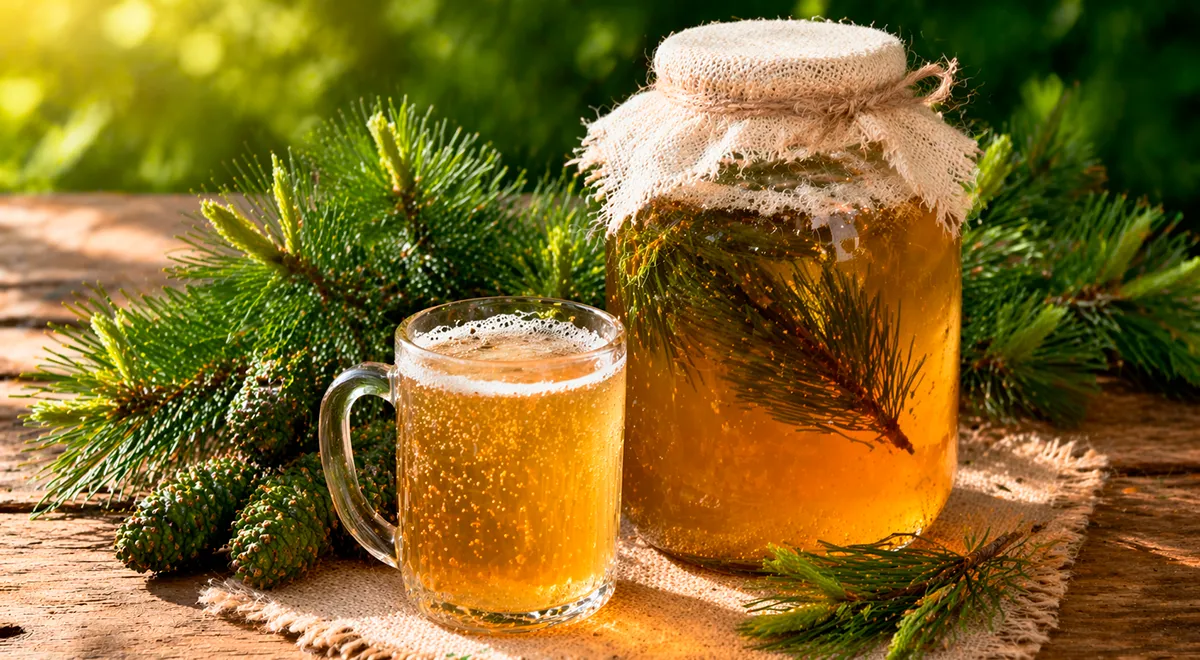
In the quiet corners of Eastern European pantries, a forgotten elixir stirs back to life. Pine needle kvass—a rustic, fermented brew infused with the resinous essence of forest evergreens—offers a bridge between ancient foraging wisdom and modern gut-health trends. This effervescent, honey-sweetened tonic captures the invigorating spirit of wild fermentation, requiring little more than fresh pine needles, water, honey, and a touch of rye sourdough starter. As we explore the non-toxic immersion blender techniques for pulverizing needles, you’ll discover a recipe that transforms humble ingredients into a probiotic powerhouse.
About This Wild Ferment
Kvass, traditionally a low-alcohol Slavic beverage made from rye bread or beets, takes an unexpected turn when pine needles become the star. Harvested from fresh, untreated pine trees, the needles impart a subtle citrus-pine aroma and a wealth of vitamin C and antioxidants. This version uses a rye-based starter to kick off fermentation, though a dash of commercial kefir or whey can substitute if you lack a sourdough culture. The result is a tangy, naturally carbonated drink that tastes like a walk through a snow-dusted forest.

Ingredients
- Water – 2.5 liters
- Honey – 130 grams
- Fresh pine needles (from untreated trees) – 200 grams, roughly packed
- Rye sourdough starter – 100 grams (or 50 ml of liquid kefir whey)
Step-by-Step Preparation
Step 1: Clean the Needles
Place the pine needles in a large bowl and rinse thoroughly under cold running water, changing the water several times to remove any dust or debris. Drain well in a colander or sieve.
Step 2: Blitz into a Paste

Transfer the clean needles to a blender or food processor. Add one glass (about 200 ml) of drinking water—remember to subtract this from the total 2.5 liters later. Pulse until you get a coarse, paste-like consistency; you don’t need a perfectly smooth puree. A glass blender jar works beautifully here, as it won’t absorb odors.
Step 3: Warm the Water and Dissolve Honey
Gently warm the remaining water (2.3 liters) to 35–37 °C—barely warm to the touch. Whisk in the honey and rye sourdough starter until fully dissolved. Pour this mixture into a clean 3-liter glass jar.
Step 4: Combine and Stir
Add the blended pine needle paste to the jar. Stir thoroughly with a wooden or silicone spoon to distribute the needles evenly through the liquid.
Step 5: Cover and Ferment

Cover the jar’s opening with a piece of cheesecloth folded 2–3 layers thick. Secure it with a rubber band or string. Place the jar in a dark spot at room temperature (20–22 °C) for 24 to 36 hours. The exact time depends on the activity of your starter and ambient warmth—in summer, fermentation may finish faster. If using a non-toxic air fryer’s warm setting, you can maintain a steady temperature, but avoid exceeding 30 °C.
Step 6: Strain and Chill

After fermentation, strain the kvass through a fine-mesh sieve lined with 2–3 layers of cheesecloth into a clean jar. Press gently to extract all liquid. Discard the solids. Seal the jar tightly and refrigerate immediately. Pine needle kvass keeps for up to three days. Serve well chilled.
Tips for the Perfect Brew
- Needle sourcing: Always use needles from pine, spruce, or fir trees that have not been sprayed with pesticides. Avoid yew, which is toxic.
- Honey alternatives: If you prefer a drier, more sour kvass, reduce honey to 100 grams or substitute with maple syrup for a different sugar profile.
- Fermentation timing: Taste after 24 hours. If you enjoy a milder tang, strain early. For a more pronounced sourness, let it go the full 36 hours.
- Carbonation boost: For extra fizz, transfer the strained kvass to a swing-top bottle and leave at room temperature for another 12–24 hours before refrigerating.
- Cleaning tools: Pine resin can cling to blender jars. A quick wipe with a non-toxic cleaning spray helps.
Variations to Explore
- Spiced pine kvass: Add a cinnamon stick, 2 cloves, and a star anise to the jar during fermentation.
- Herbal infusion: Combine pine needles with fresh mint or lemon balm for a brighter flavor.
- Berry boost: Stir in a handful of fresh or frozen cranberries after straining for a secondary fermentation with added tartness.
- Low-alcohol version: Use a smaller amount of starter (50 g) and ferment for only 18 hours for negligible alcohol.
- Non-dairy adaptation: Replace the rye sourdough starter with a wheatgrass juice base? No—stick to a vegan water kefir culture instead.
Frequently Asked Questions
What does pine needle kvass taste like?
It’s mildly tart from fermentation, with a refreshing evergreen aroma reminiscent of pine tea. The honey adds a gentle sweetness that balances the resinous notes.
Can I use dried pine needles?
Fresh needles are best because they contain live microbes and more vitamins. Dried needles will yield a weaker flavor; if you must use them, double the quantity and steep in hot water for 30 minutes before cooling and adding to the jar.
How do I know if my kvass is safe to drink?
Trust your senses. The brew should smell pleasantly tangy and woody, not rotten or moldy. If you see fuzzy mold on the surface, discard everything. Always use sterilized jars to minimize risk.
Can I make this without a sourdough starter?
Absolutely. Substitute 50 ml of live kefir whey (from strained yogurt) or 1/4 teaspoon of commercial yeast. The fermentation time may shorten if using yeast.
How long does it keep in the fridge?
Three days maximum. Because of its high water content and low acidity, pine needle kvass is best consumed fresh. For longer storage, consider freezing in ice cube trays for smoothies or sauces.
Is pine needle kvass safe during pregnancy?
While pine needles are generally safe in small amounts, it’s wise to consult your healthcare provider before consuming any wild-foraged ferments during pregnancy.
Why You Should Try This Recipe
Pine needle kvass reconnects us with the art of home canning and fermentation traditions. It’s a low-effort, high-reward project that uses ingredients you can forage or buy at farmers’ markets. The gentle fizz and forest-floor complexity make it a sophisticated alternative to sugary sodas. Plus, the abundance of antioxidants and probiotics supports gut health naturally.
If you’re new to wild ferments, start with this batch. A food processor strong enough for nut butters will handle the needles with ease. And if you want to experiment further, try adding this kvass to a spritz with organic vodka for a foraged cocktail.
For more inspiration, explore our guide to pairing ferments with sweets or the best coffee maker for your Airbnb—sometimes a morning brew needs a wild companion. Finally, remember that your refrigerator’s performance matters for storing delicate ferments.
Embrace the forest. Brew boldly.







