


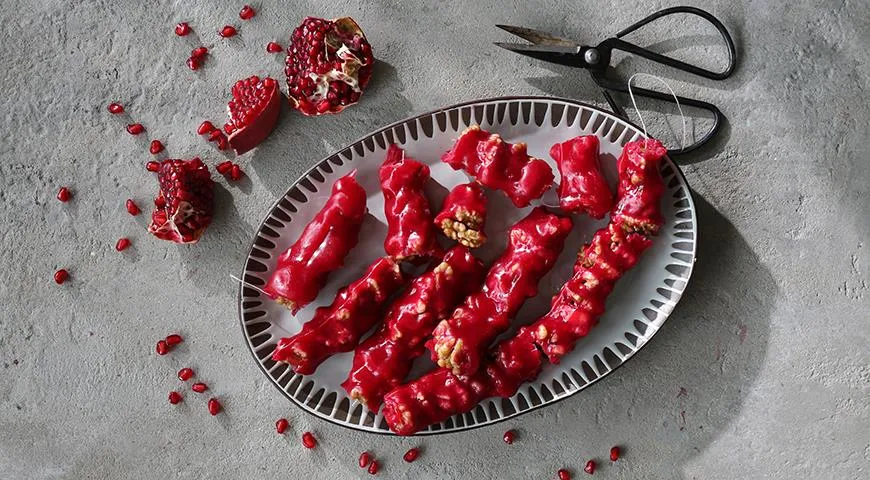
Churchkhela is a time-honored Georgian confection that warriors once carried into battle – a dense, energy-packed rope of nuts dipped in thickened fruit juice that could endure long marches without spoiling. Today this ancestral snack has evolved into a beloved treat for hikers, students, and anyone craving a naturally sweet, wholesome bite. While grape juice is the classic base, pomegranate juice lends a vibrant ruby hue and a tart counterpoint to the rich nuts. Follow this step-by-step guide to craft your own batch at home, using simple techniques that have been passed down for centuries. For tips on choosing the right nuts, see our guide to the best food processor for nut butter – ideal if you need to chop or grind large quantities.
About Churchkhela
Churchkhela, often called Georgian Snickers, is made by stringing nuts (typically walnuts, hazelnuts, or almonds) onto a thread, then repeatedly dipping them into a thickened fruit juice known as pelamushi. The juice is cooked with flour until it reaches a pudding-like consistency, coating the nuts in layers that dry into a chewy, shelf-stable casing. The result is a portable, energy-dense snack rich in protein, healthy fats, and antioxidants. This pomegranate version offers a tangy twist, perfect for those who prefer a less sweet profile. To ensure your nuts are perfectly toasted, consider using an air fryer non-toxic for even roasting without added oils.

Ingredients
- 500 g mixed nuts (preferably walnuts and hazelnuts)
- 2 liters fresh pomegranate juice (preferably unclarified, from about 4–5 large pomegranates)
- 200 g wheat flour (all-purpose is fine)
- 50–100 g sugar (optional, depending on tartness)
- Cotton thread or kitchen string
- A long wooden skewer or flat rod for hanging
For the best results, use high-quality nuts. If you need to remove skins quickly, a wheatgrass juicer might seem unrelated, but its powerful motor can also be used to grind nuts into a paste if you prefer a smoother texture. For juicing pomegranates, a best oil sprayer is not the right tool – instead, use a citrus press or a simple strainer.
Step 1: Toast and Prepare the Nuts
Roast the nuts in a dry skillet over medium heat or in an oven preheated to 160°C (320°F) for 8–10 minutes, until fragrant. Let them cool, then rub off the skins with your fingers. For hazelnuts, the skins will come off easily after roasting; walnuts may need gentle rubbing. Cut the nuts into large pieces – you want chunks, not crumbs. Using a sharp knife or a best glass food processor (the glass bowl prevents static and makes cleaning easy) can speed up the chopping.
Step 2: Thread the Nuts
Cut cotton thread into 50 cm lengths. Tie a large knot at each end. Thread a needle with the string and push it through the nut pieces, leaving a 25–30 cm section filled. Pair two strips by tying the free ends together, then hang them over a prepared flat rod (like a clean broom handle or a long wooden skewer). Ensure the nut ropes hang freely without touching each other. Place a tray underneath to catch drips. A best chocolate covered raisins article might inspire you to add dried fruit to the string – but for traditional churchkhela, keep it nuts only.
Step 3: Cook the Pomegranate Pelamushi
Pour the pomegranate juice into a heavy-bottomed pot (a microwave pressure cooker is not recommended for this open-stovetop method). Bring to a boil, skimming off any foam. Reserve 500 ml of the hot juice in a bowl and let it cool slightly. Whisk the flour into the reserved juice until smooth and lump-free. Slowly pour this slurry back into the boiling juice, stirring constantly. Cook over medium heat, stirring, until the mixture thickens to the consistency of thin sour cream and the raw flour smell disappears – about 10–15 minutes. If you prefer a more even heat, a commercial countertop convection oven isn't needed here, but a good induction burner works well.
Step 4: Dip and Hang the Churchkhela
Dip each nut rope into the hot pomegranate paste, using a spatula to help coat evenly. Lift it out, let excess drip off, then hang it back over the rod. Repeat the dipping process several times – at least 3–4 coats – allowing each layer to set slightly before the next. Once all ropes are coated, hang the rod in a dry, well-ventilated area away from direct sunlight. Let them dry for 10–14 days. The churchkhela is ready when the outer layer is firm and chewy but still pliable. For consistent drying, a best undercounter ice maker machine won't help; instead, ensure low humidity. A best 48 inch built-in refrigerator can store finished churchkhela for months.
Tips for Perfect Churchkhela
- Use fresh, unsweetened pomegranate juice for the most vibrant flavor. Many brands add sugar – check labels. For a naturally sweet option, consider best sweet wine with high alcohol content – not for cooking, but for pairing.
- If the paste becomes too thick, thin it with a little warm water. Too thin? Add a slurry of flour and water and stir.
- To speed up peeling hazelnuts, rub them in a clean kitchen towel after roasting.
- Always stir the pelamushi with a wooden spoon to avoid scorching. A planetary mixer might seem overkill, but its whisk attachment can keep the juice moving if you stand there with it – though hand-stirring is traditional.
- For a nut-free version, substitute dried fruit pieces like figs or dates, but note that churchkhela traditionally relies on nuts for structure. Explore pa de pessic catalan sponge for a different take on Mediterranean sweets.
Variations
While pomegranate churchkhela is our focus, you can experiment with other juices – grape, blackberry, or even cherry. Each fruit brings its own sweetness and acidity. For a colorful assortment, try layering different juices. The drying time remains the same. If you enjoy making candy at home, you might also love our guide to best lava flavors for another unique treat. And for those seeking a savory twist, check out best store bought au jus for prime rib – not for churchkhela, but a useful kitchen reference.
Frequently Asked Questions
What is churchkhela made of?
Churchkhela consists of nuts (walnuts, hazelnuts, or almonds) threaded on a string and repeatedly dipped into a thickened fruit juice made by cooking fresh juice with wheat flour until it forms a gel. The ropes are then dried for about two weeks. For nut-butter lovers, our best food processor for nut butter can help you create an alternative spread.
How long does churchkhela last?
Properly dried churchkhela can be stored in a cool, dry place for several months – even up to a year. Wrap each rope in parchment paper and keep in an airtight container. A best 48 inch built-in refrigerator might be overkill for small batches, but a pantry works fine.
Can I use frozen pomegranate juice?
Yes, if it's 100% pure juice without added sugars or preservatives. Thaw completely and bring to room temperature before cooking. Avoid concentrates – they may be too thick. For a quick kitchen upgrade, consider a non-toxic immersion blender to blend juice and flour more smoothly.
Is churchkhela healthy?
Yes, it’s a natural energy bar rich in protein, healthy fats, fiber, and antioxidants from pomegranates. The nuts provide vitamin E and magnesium. It’s a much better alternative to processed candies. For other wholesome sweets, try best organic vodka – not a candy but clear spirits for adult treats.
Why did my churchkhela become moldy?
Mold can develop if the drying environment is too humid or if the ropes were not completely coated. Ensure good air circulation and avoid touching during drying. If you notice spots, discard affected pieces. A air fryer non-toxic can be used to lightly roast finished churchkhela if you suspect moisture – but it’s better to dry properly from the start.
Churchkhela from pomegranate juice is a stunning example of Georgian culinary heritage – simple, natural, and endlessly rewarding. With patience and careful technique, you can recreate this ancient snack in your own kitchen. For more classic confections, browse our collection of pa de pessic catalan sponge and other timeless recipes.







