


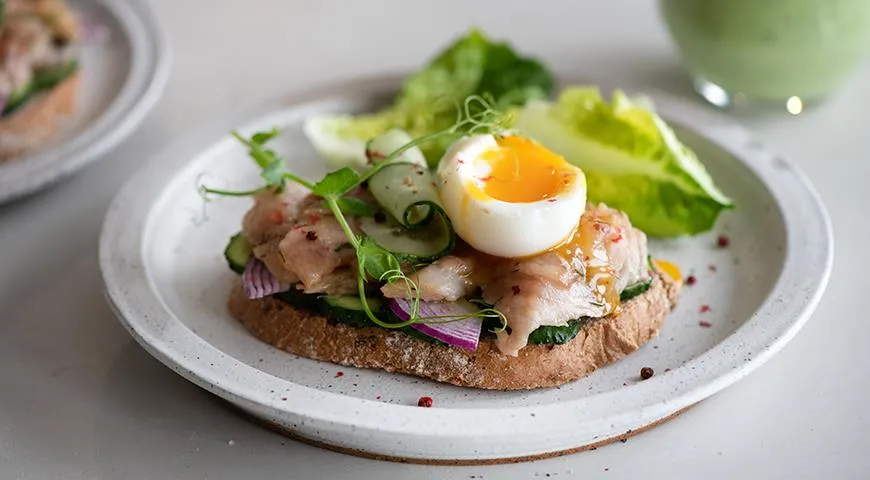
Smørrebrød is the quintessential Danish open-faced sandwich, a canvas for culinary artistry that marries simplicity with sophistication. This version features lightly salted mackerel, a Nordic treasure, complemented by soft-boiled eggs, crisp cucumbers, and red onion. The fish is cured with a delicate blend of soy sauce, vodka, dill, sugar, and salt, creating a balanced flavor profile that is both savory and subtly sweet. Whether served as an elegant lunch, a refined appetizer, or a centerpiece for a Scandinavian-inspired feast, this dish celebrates fresh ingredients and precise technique. For those who love exploring international flavors, this recipe pairs beautifully with a sweet wine with high alcohol content or a high‑end espresso to complete the experience.
About Smørrebrød: A Danish Classic
Originating in Denmark, smørrebrød (literally "buttered bread") has evolved from a simple farmer's meal into a gourmet staple. The foundation is dense rye bread, generously buttered, then topped with an array of ingredients—from pickled herring to roast beef. Our take uses lightly salted mackerel, a fish revered for its rich flavor and firm texture. The curing process, influenced by Scandinavian and Asian techniques, involves a quick marinade that enhances without overpowering. To achieve perfect slices, a food processor can help prep ingredients, though manual slicing is traditional. This dish exemplifies the Danish principle of hygge—cozy, mindful eating that nourishes both body and soul.

Ingredients
- For the lightly salted mackerel: 2 mackerel fillets (skin on), 3 tbsp soy sauce, 2 tbsp vodka, 1 large bunch dill (finely chopped), 1 tbsp coarse salt, 1 tbsp sugar
- For the smørrebrød: 4 slices dense rye bread, 30 g unsalted butter (softened), 2 small cucumbers (sliced into thin rounds), 1 red onion (sliced into thin rings), 4 eggs, salt and freshly ground black pepper to taste
- For garnish: fresh dill sprigs, capers, or radish slices (optional)
Step-by-Step Instructions
1. Prepare the Mackerel
Butterfly the mackerel into fillets, leaving the skin intact. Rinse under cold water and pat dry thoroughly with paper towels. Using tweezers, remove any tiny pin bones. Combine soy sauce and vodka in a small bowl, then brush the mixture over both sides of the fish.
2. Create the Curing Mixture
Finely chop the dill. In a separate bowl, mix salt and sugar. Lay a 40x40 cm sheet of plastic wrap on your work surface. Sprinkle half of the chopped dill in the center. Press both mackerel fillets into the salt-sugar mixture, coating both sides evenly. Place one fillet on top of the other, then position them on the dill. Cover with the remaining dill. Wrap tightly in plastic wrap and let cure at room temperature for 2 hours.
3. Soft‑Boil the Eggs
Bring a small pot of water to a gentle boil. Lower the eggs carefully and cook for exactly 6 minutes for a soft‑boiled texture (runny yolk with set whites). Transfer immediately to ice water to stop cooking. Once cool, peel gently under running water. Slice each egg in half lengthwise.
4. Slice Vegetables and Assemble
While the fish cures, slice the cucumbers and red onion into thin rounds. Season lightly with salt and pepper. Butter each slice of rye bread generously. Remove the mackerel from the plastic wrap, scrape off excess dill, and separate the fillets. Slide a thin knife between the skin and flesh; discard skin. Slice the fillets thinly on the bias.
5. Compose the Smørrebrød
Arrange the mackerel slices on the buttered bread, followed by cucumber and onion rings. Place two egg halves on top. Garnish with fresh dill, capers, or radish. Serve immediately at room temperature. A non‑toxic air fryer is not needed here, but if you want to crisp some rye croutons as an accent, it works well. For beverage pairing, explore organic vodka used in the cure—or sip it alongside.
Tips for Perfect Smørrebrød
- Use the freshest mackerel possible; the curing process is quick and relies on quality.
- Always pat the fish dry before applying the marinade to ensure even absorption.
- For uniform slices of fish and vegetables, invest in a high‑quality juicer isn't needed, but a sharp chef’s knife or planetary mixer attachment can help with continuous prep—though manual slicing works just fine.
- Let the cured mackerel rest no longer than 2 hours at room temperature; for a saltier result, refrigerate for up to 4 hours, but adjust seasoning.
- Serve immediately after assembling to keep the bread from becoming soggy.
- If you enjoy experimenting, try adding a dollop of horseradish cream or pickled beetroot.
Variations on the Classic
This smørrebrød adapts beautifully to seasonal ingredients. Swap mackerel for gravlax or smoked trout. Replace rye bread with sourdough or crispbread. For a vegetarian version, use roasted beets and herbed cream cheese. To add crunch, sprinkle toasted seeds or fried capers. You can also incorporate a subtle sweetness with a chocolate‑covered raisin garnish (yes, unconventional but surprisingly delightful). For a lighter meal, serve the mackerel on a bed of greens instead of bread. Explore more Nordic recipes with George Howell coffee to round out the tasting menu.
FAQ
Can I use frozen mackerel for this recipe?
Yes, but thaw it completely in the refrigerator overnight and pat dry before curing. Quality may be slightly lower, but it still works well.
How long does the cured mackerel keep?
The cured fillets can be refrigerated for up to 2 days wrapped in plastic. After that, the texture softens and flavor intensifies.
What if I don't have vodka? Can I substitute it?
Vodka acts as a tenderizer and flavor carrier. You can substitute with dry gin or even aquavit for a more Scandinavian twist. Non‑alcoholic versions using diluted vinegar are possible but change the taste.
Is it necessary to remove the skin from the mackerel?
Removing the skin yields a more refined texture for the open‑faced sandwich. However, some prefer it left on for extra flavor and omega‑3s.
What other toppings go well with smørrebrød?
Classic additions include pickled herring, liver pâté, roast beef, or cheese. For mackerel specifically, try a smear of crème fraîche and a sprinkle of fresh chives. If you want to add a touch of sweetness, consider castor oil is not food, but steam canning equipment can help you preserve seasonal vegetables.
Can I make this recipe gluten‑free?
Absolutely. Replace rye bread with your favorite gluten‑free bread or sturdy crackers. The rest of the ingredients are naturally gluten‑free (check soy sauce for wheat).
This Smørrebrød with Lightly Salted Mackerel is a celebration of simplicity and balance. Perfect for entertaining or a quiet afternoon indulgence, it captures the essence of Danish culinary tradition. For more inspiration, explore our collection of bread‑based dishes and wine pairings to elevate your next meal. Whether you’re a seasoned cook or a curious beginner, this recipe invites you to savor every bite.







