


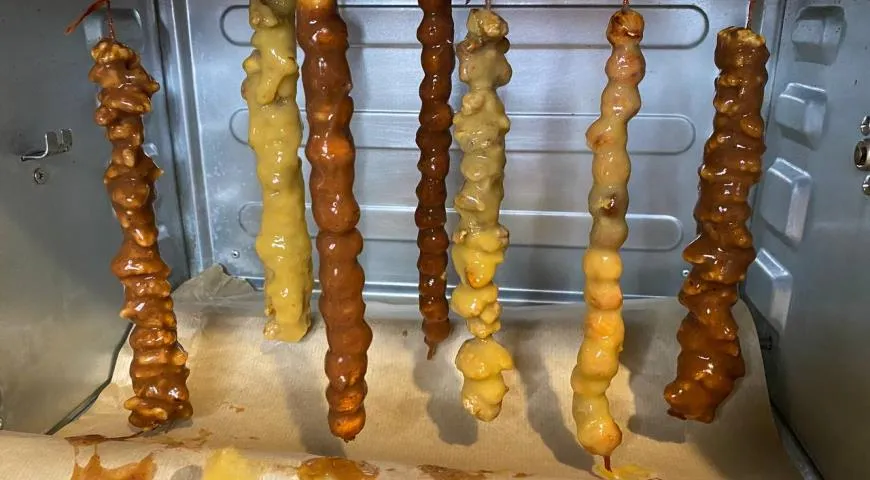
Imagine a confection that tastes like a Snickers bar, but is made entirely from fruit juice, nuts, and flour. That is the magic of Churchkhela and Pelamushi, two iconic desserts from Georgia (the country, not the state). These traditional treats have been cherished for centuries, and in this article, we will show you how to make them at home using simple, wholesome ingredients. Whether you are exploring best chocolate covered raisins as a snack or looking for a healthier alternative, Churchkhela offers a chewy, nutty, and fruity experience that is unmatched. Let’s dive into the world of Georgian sweets.
About Churchkhela and Pelamushi
Churchkhela is a traditional Georgian candy shaped like a candle, made by dipping a string of nuts (walnuts, almonds, hazelnuts, or even raisins) into thickened grape juice or fruit juice. The result is a sausage-like treat that is dried for several days. It was inscribed on the Intangible Cultural Heritage of Georgia list in 2015. Pelamushi, also called tatara, is a thick, firm jelly made from the same juice-and-flour mixture, often served as a dessert. Together, they form a duo that is sometimes humorously called “Georgian Snickers.” If you enjoy best sweet wine with high alcohol content, you will appreciate how these sweets pair with a glass of Georgian wine.

Ingredients
- 1.5 liters of pomegranate juice (high quality, store-bought)
- 1.5 liters of orange juice (high quality, store-bought)
- Approximately 250–300 grams of all-purpose flour (or cornstarch for a gluten-free version)
- Assorted nuts: walnuts, almonds, hazelnuts (total about 200–300 grams, plus extra for Pelamushi)
- Strong thread or kitchen twine
You will also need a large pot, a whisk, and some patience. For processing nuts, consider using a best food processor for nut butter to get a uniform texture for the Pelamushi.
Step-by-Step Instructions
- Prepare the juice base: Pour the pomegranate and orange juices into separate pots. Place them over low heat. Reserve about one-third of each warm juice in a bowl.
- Make the flour slurry: Into the reserved warm juice, sift the flour and whisk thoroughly until no lumps remain. Slowly pour this slurry back into the main pot of juice, stirring constantly. Bring to a gentle boil and cook for about one hour, stirring continuously, until the mixture thickens to a honey-like consistency. The flour must cook completely to avoid any raw taste.
- Thread the nuts: Using a sturdy needle, thread the nuts onto strong kitchen twine, mixing varieties as you like (walnuts, almonds, hazelnuts). Make strings about 20–30 cm long.
- Dip and hang: Dip each nut string into the thickened juice mixture, ensuring it is fully coated. Lift out and hang the strings in a warm, dry place (like near a radiator or above a stove). Let them drip briefly.
- Repeat for a thicker coating: Once the first layer has set slightly (after about 15–20 minutes), dip again and re-hang. This creates a more generous Churchkhela. The final drying takes at least three days, but you can accelerate by placing in a low oven (50°C/120°F) with the door slightly open for 3–4 hours.
- Make Pelamushi: In the remaining thickened juice, add finely chopped or ground nuts (use a best non-toxic immersion blender for a smooth puree if desired). Stir well. Pour into small molds or ramekins. Refrigerate until set—this takes about 4–6 hours. The result is a firm, jelly-like dessert.
Note: Step images are not available in this version, but follow the visual cues above. For precision, a best planetary mixer can help whip the flour mixture if making a large batch.
Tips for Perfect Churchkhela and Pelamushi
- Use high-quality juice with no added sugar or preservatives—the natural sweetness is key.
- Stir the juice-flour mixture constantly to prevent lumps and scorching. A best commercial countertop convection oven can also be used for drying, but keep the temperature low.
- Do not skip the second dip; it gives Churchkhela its characteristic thickness.
- For Pelamushi, let the mixture cool to room temperature before refrigerating to avoid condensation.
- To store Churchkhela, wrap in parchment paper and keep in a cool, dry place for up to two weeks.
Variations to Explore
While the classic uses pomegranate and orange juice, you can experiment with grape juice (most traditional in Georgia), cherry, or even apple juice. Add spices like cinnamon or cardamom to the juice before thickening. For a modern twist, coat the dried Churchkhela in melted dark chocolate—similar to a best castor oil texture? No, better to think of it as a crunchy-chocolate hybrid. You can also use a best chocolate covered raisins inspiration. Pelamushi can be layered with Greek yogurt or whipped cream for a sophisticated dessert. For gluten-free versions, replace wheat flour with cornstarch or rice flour.
Frequently Asked Questions
What is the difference between Churchkhela and Pelamushi?
Churchkhela is the dried nut string dipped repeatedly in thickened juice, while Pelamushi is the leftover thickened juice mixed with nuts and set into a jelly. Both use the same base.
Can I use store-bought juice?
Yes, but choose high-quality juice without added sugar or artificial flavors. Freshly squeezed juice works even better. If you have a best wheatgrass juicer, you can juice fruits at home.
How long does Churchkhela last?
Properly dried Churchkhela can last 2–3 weeks in a cool, dry place. Avoid refrigeration as moisture can cause spoilage.
Can I make these treats vegan?
Absolutely—the recipe contains no animal products. For a chocolate version, use dairy-free dark chocolate. Pair with best organic vodka for an adult pairing.
Why is my Churchkhela too sticky or too hard?
Stickiness means insufficient drying; hang longer or use an oven. Hardness means over-drying or too much flour. Adjust cooking time next batch. A best air fryer non-toxic can be used for gentle drying if your oven runs hot.
Can I freeze Churchkhela or Pelamushi?
Freezing Churchkhela is not recommended as texture changes. Pelamushi freezes well for up to a month; thaw in refrigerator.
What nuts are traditionally used?
Walnuts are most common, followed by almonds, hazelnuts, and sometimes raisins. You can also try pistachios. For grinding, a best food processor for nut butter is ideal.
Conclusion
Making Churchkhela and Pelamushi at home is a rewarding journey into Georgian culinary heritage. These treats are not only delicious but also a conversation starter at any gathering. With a few simple ingredients and some patience, you can recreate the magic of the Caucasus. For more dessert inspiration, check out our Catalan sponge cake recipe or browse our guides on best steam canner for preserving fruits. Enjoy your Georgian Snickers!
Additional internal resources: If you enjoy this recipe, you might also like articles on best undercounter ice maker machine (great for cold drinks to pair), total bowel release (not related but interesting), and best George Howell coffee for an afternoon pick-me-up.







