


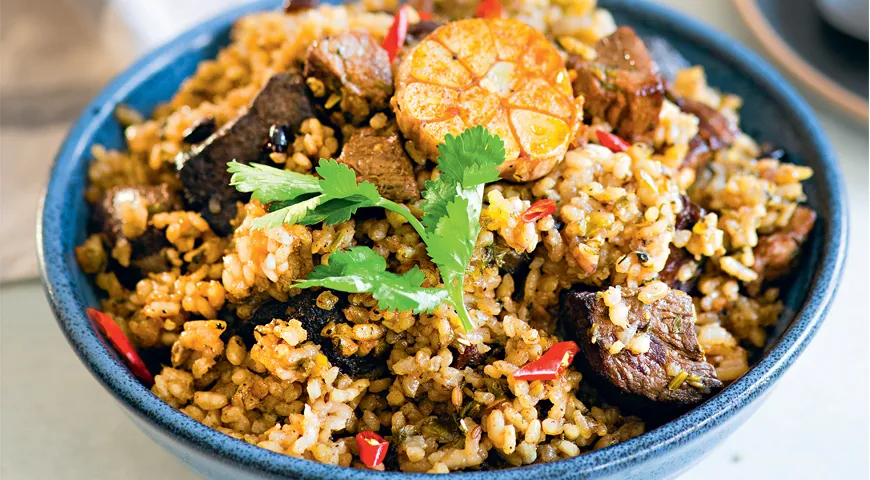
In the heart of Central Asian culinary tradition lies a dish that transcends the ordinary—Bukharan Plov, known locally as bakhsh. Unlike the more familiar Uzbek plov, this version from the ancient Silk Road city of Bukhara weaves together tender beef, delicate beef liver, and fragrant herbs into a symphony of textures and aromas. It is a celebration of harmony: the earthy richness of organ meats balanced by the freshness of cilantro and parsley, all cradled in perfectly steamed long-grain rice. This recipe, passed down through generations, invites you to recreate an authentic slice of Bukharan heritage in your own kitchen.
About Bukharan Plov (Bakhsh)
Bukharan Plov traces its roots to the culinary traditions of the Bukharan Jews and the wider Central Asian mosaic. Bakhsh differs from standard plov by incorporating both meat and liver, plus generous handfuls of fresh herbs that lend a vibrant green hue to the rice. The dish embodies the principle of qovurma—a slow, gentle browning that builds deep flavor without rushing. It is traditionally cooked in a cast-iron or aluminum kazon (similar to a commercial countertop convection oven in heat distribution), and served family-style, often alongside flatbread or a simple salad. For home cooks, a heavy-bottomed pot or Dutch oven works beautifully.

Ingredients
- Long-grain rice – 1 kg
- Beef (stewing meat) – 400 g
- Beef liver – 400 g
- Refined vegetable oil – 150 ml
- Onion – 200 g
- Garlic – 1 whole head
- Cilantro – 100 g
- Parsley – 50 g
- Green onions – 100 g
- Freshly ground black pepper – to taste
- Salt – to taste
- Chili pepper – to taste (optional, for serving)
Step-by-Step Instructions
Step 1: Prepare the Rice
Wash the long-grain rice thoroughly in a colander under cold running water. Transfer to a large bowl, cover with fresh cold water (the water should completely submerge the rice), add a pinch of salt, and let soak for 3 hours. This step ensures the grains cook evenly and become fluffy. After soaking, drain in a colander and rinse again under cold water. Shake off excess moisture and set aside.

Step 2: Prepare the Meat and Liver
Cut the beef into small bite-sized cubes. Blanch the beef liver: plunge it into a pot of boiling water for 1 minute, then remove and peel off the outer membrane and any bile ducts. Slice the liver into pieces of similar size to the beef. This brief blanching firms the liver and prevents it from turning grainy during cooking.
Step 3: Chop the Aromatics and Herbs
Peel and finely chop the onion. Remove the loose outer husk from the head of garlic, leaving the cloves intact. Rinse the cilantro, parsley, and green onions, pat dry with paper towels, and chop finely. Reserve a portion of the fresh herbs for garnish.
Step 4: Sear the Beef
In a heavy-bottomed pot or traditional kazan, heat half of the vegetable oil (75 ml) over medium heat. Add the beef cubes and sauté, turning occasionally, for 4–5 minutes until the meat changes color all over, but do not brown deeply—we are looking for a gentle cooking, not a crust. Season lightly with salt and pepper.
Step 5: Add Liver and Simmer
Add the liver pieces to the pot and continue sautéing for another 2–3 minutes. Season with salt, freshly ground black pepper, and a pinch of plov spice mix (if available). Pour in about 500 ml of boiling water—just enough to almost cover the meat. Reduce heat, cover, and let simmer for 20–30 minutes until the beef is tender.
Step 6: Mix Rice with Onion and Oil
While the meat simmers, in a separate bowl combine the drained rice with the chopped onion and the remaining 75 ml of vegetable oil. Mix well with a spoon or your hands so every grain is coated. This step enriches the rice and prevents clumping.
Step 7: Layer and Cook
Once the meat is tender, stir most of the fresh herbs into the pot, reserving some for garnish. Spread the rice-onion mixture evenly over the meat. Gently press the whole head of garlic into the center of the rice, burying it slightly. Pour in enough boiling water to cover the rice by about 3–4 cm. Increase heat to high and cook without stirring until the water level drops below the surface of the rice—this takes about 10–12 minutes.
Step 8: Steam and Rest
Reduce heat to low, cover the pot, and cook for another 15–20 minutes until the rice is tender and all liquid is absorbed. Remove from heat, stir the plov gently to combine, then level the surface. Place a flat plate or lid directly on top of the plov to press it down lightly, cover the pot, and let it rest for 20 minutes. This resting period allows the flavors to marry and the grains to firm up.
Step 9: Serve
Slice the chili pepper (if using) into rings. Remove the garlic head from the plov and cut it in half crosswise. Mound the plov onto a large serving platter, place the garlic halves in the center, and garnish with the reserved fresh herbs and chili slices. Serve immediately while warm.
Tips for Perfect Bukharan Plov
- Use a quality heavy pot that distributes heat evenly; a cast-iron Dutch oven is ideal.
- Soaking the rice for 3 hours is non-negotiable—it ensures fluffy grains.
- Don't skip blanching the liver; it removes impurities and keeps the texture silky.
- For a more aromatic result, add a pinch of cumin or barberries with the herbs.
- Allow the plov to rest after cooking; this step is crucial for proper texture.
Variations
- Vegetarian twist: Omit meat and liver and use chickpeas and extra herbs. Simmer with vegetable broth for depth. A non-toxic immersion blender can help puree some chickpeas for a richer base.
- Spicier version: Add more chili or a teaspoon of red pepper flakes during the simmer.
- Herb-forward: Increase cilantro and dill for a brighter flavor profile.
- Grain alternative: Substitute half the rice with barley or quinoa—adjust cooking time accordingly.
Frequently Asked Questions
How long does it take to cook Bukharan plov?
From prep to table, about 4 hours (including 3 hours soaking the rice). Active cooking time is roughly 1 hour.
Can I use other types of meat?
Yes, lamb or chicken can be used. Adjust cooking times accordingly—chicken will cook faster. For best results, use a food processor for nut butter to finely mince aromatics if you prefer a smoother texture.
Why is my rice mushy?
Mushy rice usually results from too much water or overcooking. Ensure you use the correct water level (3–4 cm above the rice) and do not stir after adding the liquid.
Can I make this in a rice cooker?
While not traditional, you can adapt: sauté meat and liver on the stovetop, then transfer to a rice cooker with the remaining ingredients. Use the brown rice setting and check water levels—see our guide on best microwave pressure cooker for alternative methods.
How do I store leftovers?
Store in an airtight container in the refrigerator for up to 3 days. Reheat gently with a splash of water to restore moisture. Avoid freezing as the rice can become dry.
Can I add vegetables like carrots?
Classic bakhsh does not include carrots, but you can sneak in finely grated carrot for sweetness. For more inspiration on blending flavors, check out our best chocolate-covered raisins article for unexpected pairing ideas.
What is the ideal equipment for cooking plov?
A built-in refrigerator that maintains precise temperatures is perfect for storing ingredients, but for cooking, a kazan or heavy-bottomed pot is best. If you enjoy texture-rich dishes, consider using a planetary mixer for even mixing of rice and oil.
Can I use frozen herbs?
Fresh herbs are preferable for their vibrant color and flavor. However, in a pinch, frozen cilantro can work—thaw and squeeze out excess moisture before adding.
How spicy is this dish?
Traditionally mild, with chili served separately. Adjust heat to your preference. For a touch of sweetness, a dash of best lava flavors (like lava salt) can add an intriguing twist.
Is this dish gluten-free?
Yes, as long as you use certified gluten-free spices and broths. Always check labels. For a full gluten-free kitchen setup, see our recommendations on best non-toxic air fryer for healthy cooking.
Embrace the spirit of Bukhara with this aromatic plov. Whether you serve it for a family gathering or a festive dinner, bakhsh is a dish that tells a story—of ancient trade routes, of communal tables, and of the simple joy of a perfectly cooked grain. Pair it with a crisp salad and enjoy the journey.







