


Welcome to the world of soul‑warming Eastern European comfort food, where humble ingredients transform into a deeply satisfying meal. This Rassolnik with Tomato Paste and Pearl Barley is a classic Russian soup renowned for its tangy, savory broth and tender barley. Traditionally made with pickles, pearl barley, and a rich chicken stock, this version adds tomato paste for an extra layer of umami and color. Whether you’re new to Slavic cuisine or a seasoned home cook, this recipe will guide you to a bowl of pure, rustic perfection.
About Rassolnik – A Tangy Russian Classic
Rassolnik (рассольник) traces its roots to medieval Russian kitchens, where pickled cucumbers and their brine were used to add acidity to soups. Over centuries, it evolved into a beloved family staple. The name itself comes from the Russian word “rassol” (brine), highlighting the key ingredient: salted or pickled cucumbers. In modern versions, the addition of pearl barley makes the soup hearty and nutritious, while tomato paste deepens the flavor profile. This dish is often served with a dollop of sour cream and fresh herbs, but here we keep it true to its origins.

Ingredients
- 70 g pearl barley
- 700 g chicken drumsticks
- 3 L drinking water
- 1 bay leaf
- 4 black peppercorns
- 100 g onion
- 200 g carrots
- 100 g celery root
- 200 g salted cucumbers
- 2 tbsp (34 ml) vegetable oil
- 50 g tomato paste
- 2 sprigs parsley
- Freshly ground black pepper to taste
- Salt
Step‑by‑Step Instructions
-
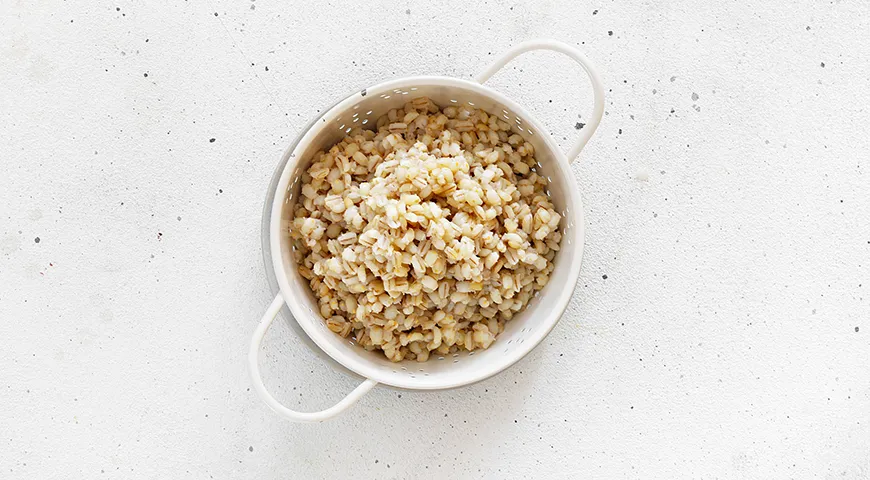
Prepare the pearl barley. Rinse the barley thoroughly under cold water. Place it in a small saucepan or bowl, pour in 1 L of hot water, and let it soak for 2 hours.
Sponsored
-
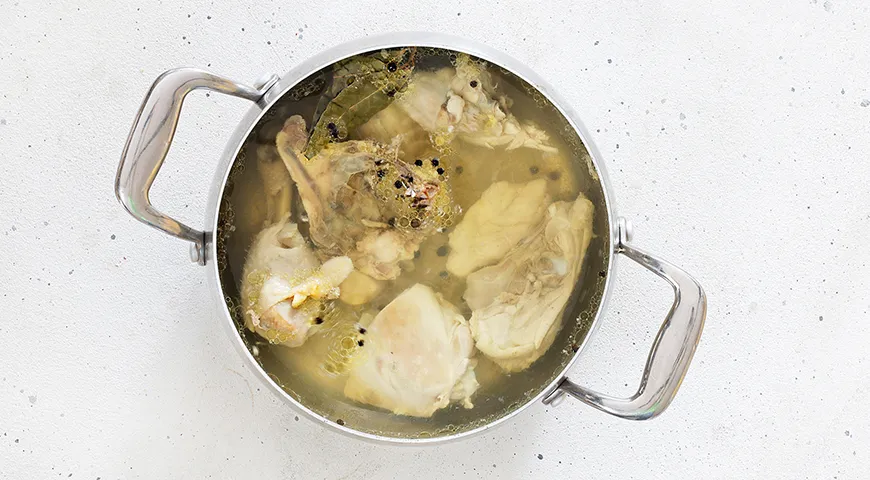
Make the chicken broth. Wash the chicken drumsticks and place them in a large pot. Cover with cold water (about 3 L). Bring to a boil over high heat, then carefully skim off the foam with a slotted spoon. Reduce the heat to low, add the bay leaf and peppercorns, and simmer for 50 minutes.
-
Strain the broth and cook the barley. Once the broth is ready, strain it through a fine‑mesh sieve. Remove the chicken meat from the bones and set aside. Drain the soaked barley and transfer it to a clean saucepan. Add fresh water, bring to a boil, and cook for 30 minutes. Drain the barley again and set it aside.
-
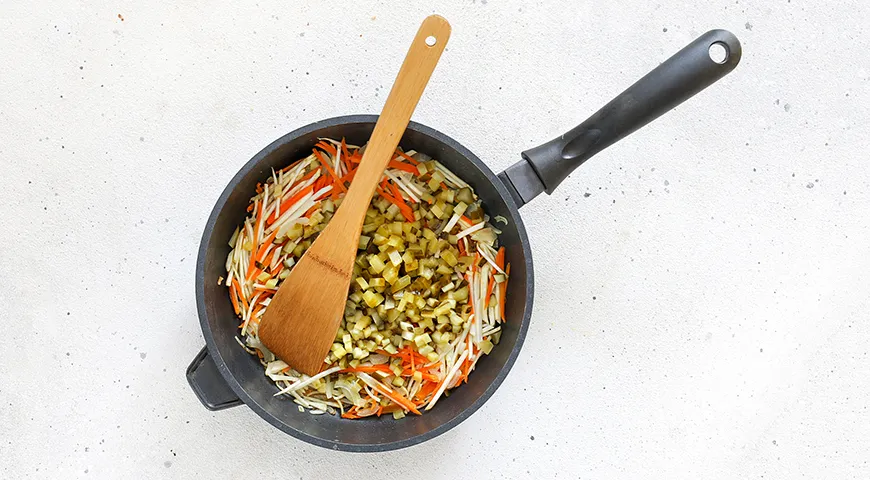
Sauté the vegetables. Peel and julienne the onion, carrots, and celery root. Dice the salted cucumbers into small cubes. Heat the vegetable oil in a skillet over medium heat. Add the onion, carrots, and celery; cook, stirring, for 5 minutes. Stir in the cucumbers and tomato paste. Reduce the heat to low and simmer for another 5 minutes.
-
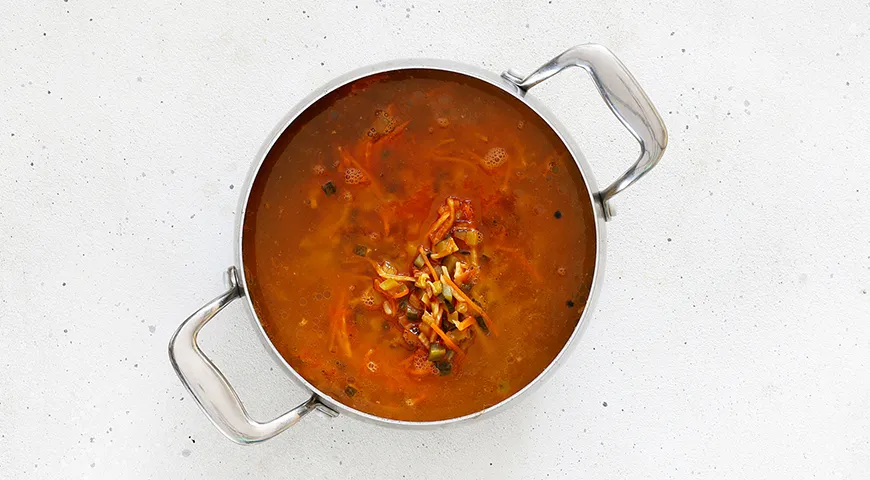
Finish the soup. Bring the strained chicken broth to a boil. Add the cooked pearl barley and simmer for 10 minutes. Then add the sautéed vegetables and pour in the strained pickle brine (about 200 ml or to taste). Season with salt and freshly ground black pepper. Cook on low heat for another 10 minutes.
Sponsored

Tips for the Perfect Rassolnik
- Let it rest. Like many Russian soups, rassolnik benefits from sitting for 15–30 minutes after cooking. The flavors meld beautifully. If time allows, prepare it a day ahead—it tastes even better.
- Choose the right pickles. Use genuine salted (fermented) cucumbers, not sweet pickles. Their brine is the heart of the tangy flavor. If you can’t find them, substitute with kosher dill pickles and a splash of vinegar.
- Don’t skip the celery root. Celery root (celeriac) adds an earthy, aromatic note that can’t be replicated. Finely julienned it blends seamlessly into the soup.
- Adjust the brine. Start with half the pickle liquid and taste before adding more. Some brines are saltier than others.
- For a non‑toxic kitchen experience, consider using a high‑quality non‑toxic immersion blender to purée part of the soup for a creamier texture, or an air fryer to roast the chicken before making broth for extra depth.
Variations to Explore
- Meaty twists. Replace chicken drumsticks with beef shanks or pork ribs for a heartier stock. Adjust cooking time accordingly.
- Vegetarian version. Omit the chicken and use a robust vegetable broth. Add mushrooms for umami. The best food processor for nut butter can also make a creamy cashew or sunflower seed paste to enrich the broth.
- Grain swaps. Pearl barley is classic, but hulled barley, brown rice, or even quinoa work. Cook them separately and add at the end.
- Spice it up. A pinch of smoked paprika or a bay leaf extra can transform the flavor. For an intense broth, try using a microwave pressure cooker to speed up the process.
Frequently Asked Questions
What is the origin of rassolnik?
Rassolnik hails from Russia and dates back to at least the 16th century. It was initially a simple peasant soup made with leftover brine and grains. Over time it became a refined dish served in aristocratic homes, often with added meat and vegetables. Today it remains a beloved comfort food.
Can I use canned pickles for this recipe?
Yes, but choose whole dill pickles rather than sweet gherkins. Drain them and taste the brine—if it’s too vinegary, dilute with water. For the best results, seek out naturally fermented pickles available at specialty or Eastern European markets.
How long does rassolnik keep in the refrigerator?
Stored in an airtight container, rassolnik stays fresh for up to 4 days. The flavors actually improve on the second day. Reheat gently on the stovetop or in a microwave. If the soup thickens, add a splash of water or broth.
Can I freeze rassolnik?
Yes, but with a caveat: the pearl barley may soften further upon thawing. For best results, cook the soup without the barley, freeze the broth and vegetables, then add freshly cooked barley when reheating. Use a steam canner if you plan to preserve it long‑term.
What can I use instead of celery root?
If celeriac is unavailable, substitute with an equal amount of celery stalks (finely chopped) plus a pinch of celery seed. Alternatively, use parsnip or a turnip for a slightly different but still delicious flavor profile.
Why is my rassolnik too salty?
Pickle brine varies in saltiness. Always add it gradually and taste as you go. If you overshoot, balance the salt by adding a cut raw potato to the soup and simmer for 10 minutes—it absorbs excess salt. Remove the potato before serving.
Final Thoughts
This Rassolnik with Tomato Paste and Pearl Barley is more than a recipe—it’s a journey into the heart of Russian home cooking. The interplay of tangy pickles, sweet carrots, and earthy barley creates a symphony of flavors that warms both body and soul. For kitchen enthusiasts, using reliable tools like a planetary mixer for kneading accompanying bread, or a wheatgrass juicer for fresh juice on the side, can elevate the experience. Serve with crusty rye bread and a sprinkle of fresh parsley for a meal that feels like a hug in a bowl.
Whether you follow the steps exactly or adapt with your own creative twists, we hope this soup brings you as much joy as it has to generations of Russian families. Приятного аппетита! (Bon appétit!)
For more hearty soup inspiration, explore our Catalan sponge cake recipe for a sweet finish, or check out our guide to the best 48‑inch refrigerator for storing leftovers. And if you’re a fan of pickled flavors, discover our review of the best castor oil (not for cooking!) or the best chocolate‑covered raisins for a quirky contrast.
For the perfect kitchen setup, don’t miss our roundups of the best commercial countertop convection oven and the best espresso machine under $2000. Happy cooking!







