


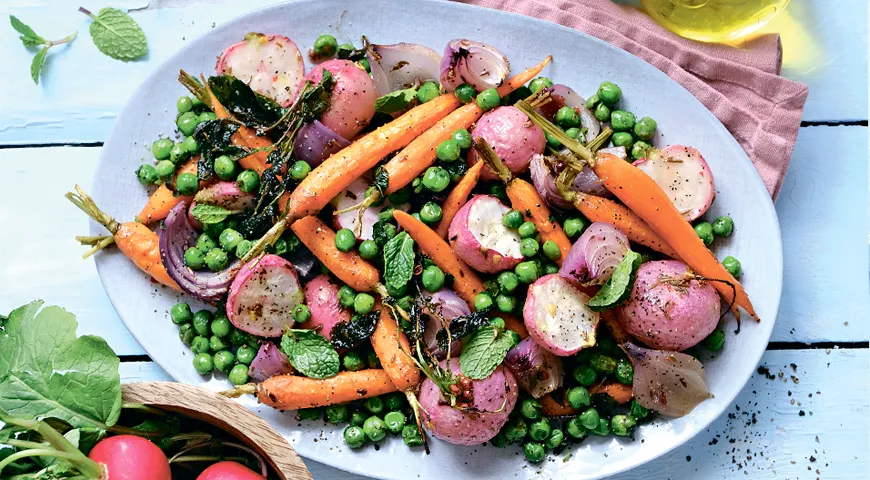
Spring's bounty deserves a preparation that honors its freshness—and this recipe for glazed vegetables does exactly that. Tender radishes, sweet young carrots, and vibrant green peas are gently cooked until they glisten, then dressed in a bright mint vinaigrette. It's a dish that sings of the season, perfect as a side or a light main. The key lies in the gentle glazing technique: a brief sauté followed by a simmer in a touch of water, which coaxes out natural sugars and creates a delicate, almost caramelized finish. For the best results, use a high-quality skillet that distributes heat evenly, and consider pairing with a sweet, high-alcohol wine to balance the earthiness of the vegetables.
About This Recipe
This recipe is a celebration of early spring produce, when radishes are crisp, carrots are tender, and the first peas appear. The glazing method—developed in French cuisine—transforms humble root vegetables into something elegant. A touch of powdered sugar enhances their natural sweetness without overwhelming, while the mint dressing adds a refreshing herbal note. This dish pairs beautifully with grilled fish or roast chicken, and it can also be served at room temperature for a picnic. To keep your vegetables at their peak, store them in a reliable refrigerator that maintains consistent humidity. For a more complex flavor, you might blend the dressing with a non-toxic immersion blender to create a silky emulsion.

Ingredients
- 240–250 g radishes (preferably small, tender ones)
- 150 g young carrots (peeled or scrubbed)
- 100 g frozen green peas (thawed)
- 1 red onion (peeled, quartered)
- 4 tbsp olive oil (divided)
- 1 tsp powdered sugar (superfine)
- 2 tbsp white wine vinegar
- 4–5 sprigs fresh mint (plus extra for garnish)
- Salt and freshly ground black pepper to taste
Step-by-Step Instructions
This simple technique yields a dish that looks and tastes like it took hours. Follow these steps for perfectly glazed spring vegetables.
Step 1: Prepare the Vegetables
Wash and thoroughly dry the radishes and carrots. Cut large radishes in half, leave small ones whole—this ensures even cooking. Peel the red onion and cut into quarters. Thaw the frozen peas if using. Set everything aside.
Tip: For uniform slicing, a glass food processor bowl can help, but hand cutting is fine for this rustic dish.
Step 2: Sauté the Onion
In a large skillet, heat 2 tablespoons of olive oil over low heat. Add the quartered onion and cook, stirring occasionally, for 10 minutes—this softens its pungency and develops sweetness. Use a best oil sprayer to evenly coat the pan if you prefer less oil.
Step 3: Glaze the Radishes and Carrots
Increase heat to medium. Add the radishes and carrots to the skillet. Season with salt, black pepper, and ½ teaspoon of powdered sugar. Cook for 5 minutes, stirring occasionally, until the vegetables begin to caramelize slightly. Pour in 75 ml hot water and bring to a boil. Cover and reduce heat to a simmer for 4 minutes. The liquid will create a gentle steam bath.
Step 4: Add the Peas
Stir in the thawed peas. Continue cooking, uncovered, for 4 minutes, until the water has completely evaporated and the vegetables are tender but still vibrant. The glazing should be glossy, not wet. If you want to speed up the process, a microwave pressure cooker can cook the peas in under a minute.
Step 5: Make the Mint Dressing
While the vegetables rest, prepare the dressing. In a small bowl, whisk together the remaining 2 tablespoons of olive oil, white wine vinegar, 1 tablespoon water, and ½ teaspoon powdered sugar. Finely chop the mint leaves (discard stems) and stir into the dressing. For a smoother texture, use a food processor designed for nut butters to grind the mint into a paste, then whisk with the liquids.
Step 6: Serve
Arrange the glazed vegetables on a platter or individual plates. Drizzle with the mint dressing and garnish with fresh mint leaves. Serve warm or at room temperature. The dressing also pairs wonderfully with other spring salads—try tossing it with crisp greens for a side.
Tips for Perfect Glazed Vegetables
- Choose the right pan: A heavy-bottomed skillet (like a commercial-style countertop convection oven can also be used for a dry-roasted version) ensures even heat and prevents burning.
- Don't skip drying−moisture inhibits browning. Pat vegetables with a clean towel before cooking.
- Adjust sweetness: If your carrots are exceptionally sweet, you can omit the powdered sugar. For a deeper flavor, use a chocolate-covered raisin as an unexpected garnish (optional).
- Make ahead: The vegetables can be cooked a day in advance and reheated gently. Store in an undercounter ice maker—no, that's for ice! Actually, store them in an airtight container in the fridge.
Variations
Once you master this basic technique, the possibilities are endless. Substitute the mint with basil or tarragon for a different herbaceous note. Add a pinch of cumin or fennel seeds when sautéing the onion. For a vegan protein boost, toss in some toasted almonds or pine nuts right before serving. The glazed vegetables also make a fantastic topping for crostini or a bed for roasted fish. If you're feeling adventurous, try pairing the dish with a best organic vodka cocktail—a cucumber mint vodka lemonade complements the freshness perfectly.
Frequently Asked Questions
Can I use fresh peas instead of frozen?
Yes, absolutely! Fresh peas will cook in the same time—just blanch them first in boiling water for 1 minute, then add to the skillet as directed. For canning your own pea harvest, a best steam canner ensures safe preservation.
What if I don't have white wine vinegar?
Substitute with apple cider vinegar or even champagne vinegar. For a richer acid profile, a dash of store-bought au jus can add depth, though it will darken the dressing.
How do I store leftovers?
Refrigerate in an airtight container for up to 2 days. Reheat gently in a skillet with a splash of water. Avoid microwaving, as it can make the vegetables rubbery. A best espresso machine isn't for storage, but you can pair your leftovers with a freshly brewed coffee for a light lunch.
Can I prepare the dressing ahead?
Yes, but add the mint just before serving to keep its color and punch. Whisk it again before drizzling. For a restaurant-quality touch, use a best George Howell coffee as a flavor contrast—its fruity notes play well with mint.
What can I serve this vegetable dish with?
It pairs beautifully with grilled fish, seared chicken, or even a simple omelet. For a plant-based meal, serve over quinoa or with crusty bread. A glass of sweet wine with high alcohol content cuts through the earthy sweetness of the glaze.
Is there a way to make this dish more luxurious?
Absolutely! Finish with a drizzle of truffle oil, a sprinkle of flaky sea salt, and a few edible flowers. For a decadent twist, add a poached egg on top—the yolk enriches the mint dressing wonderfully.







