


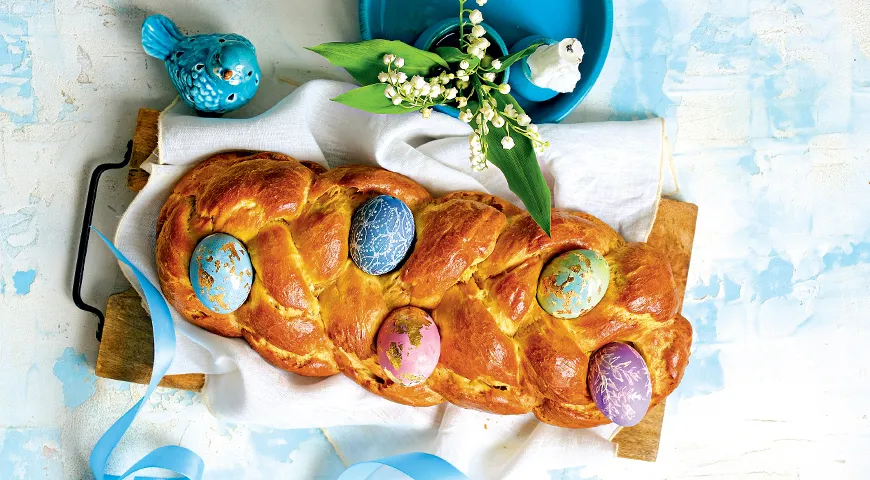
Easter morning demands a centerpiece that is as stunning as it is symbolic—a braided brioche studded with colorful dyed eggs, golden and tender, redolent of butter and tradition. This Russian-inspired recipe transforms a simple enriched dough into an edible work of art. The secret lies in the patience: a slow, cool fermentation that develops deep flavor, and a final proof that gives the brioche its signature airy crumb. Whether you are hosting a festive brunch or looking for a showstopping gift, this braided beauty delivers on every level.
About This Recipe
Brioche is the crown jewel of enriched doughs, thanks to its generous butter content and eggy richness. In this version, the dough is woven into a three-strand braid, cradling hard-boiled eggs that are first baked plain, then replaced with vibrant dyed eggs after baking—a clever technique that keeps the eggs tender and the dough intact. The result is a loaf that tastes of brioche classicism while nodding to Slavic Easter traditions. For the best results, use a high-quality planetary mixer to handle the lengthy kneading; the dough is sticky and requires thorough development to achieve that silky, extensible texture.

Ingredients
Here is what you will need for one stunning braid:
- 350 g all-purpose or bread flour
- 20 ml warm milk (about 37°C)
- 4 large eggs + 5 hard-boiled eggs for decorating
- 200 g unsalted butter, cold, cut into small cubes
- 40 g granulated sugar
- 8 g fine sea salt
- 7 g active dry yeast (or 20 g fresh yeast)
For finishing: melted butter for brushing, and natural or food‑grade dye for coloring the boiled eggs.
Step-by-Step Instructions
1. Activate the Yeast
In a small bowl, combine the yeast, sugar, and warm milk. Stir gently and let stand for 15–20 minutes until foamy. This proofs your yeast and ensures a vigorous rise.
2. Form the Dough
In the bowl of your planetary mixer fitted with the dough hook, add the eggs, flour, and salt. Pour in the yeast mixture and start mixing on low speed. After 5 minutes, the dough will become smooth and cohesive. It will still be quite sticky—resist the urge to add extra flour.
3. Incorporate the Butter
With the mixer running on medium‑low, add the cold butter cubes a few at a time. Continue kneading for 20–25 minutes. The dough will transform, becoming glossy and elastic, and will pull away from the sides of the bowl. It is now ready for its first rise.
4. First Rise
Transfer the dough to a lightly oiled bowl (use an oil sprayer for even coverage). Cover tightly with plastic wrap and let rise in a warm, draft‑free spot for 45–60 minutes, until doubled.
5. Cold Fermentation
Punch down the dough, re‑cover, and refrigerate for at least 2 hours. This slow chill firms the butter, making the dough easy to shape, and deepens the flavor. For longer storage, you can chill overnight.
6. Shape the Braid
Turn the chilled dough onto a lightly floured surface. Divide it into three equal pieces. Roll each piece into a 40‑cm rope. Place the ropes side by side and braid them loosely. Transfer the braid to a parchment‑lined baking sheet.
7. Nest the Eggs
Press five plain hard‑boiled (undyed) eggs gently into the dough crevices, spacing them evenly along the braid. Cover loosely with a clean kitchen towel and let proof in a warm place for 2 hours, until puffy.
8. Bake
Preheat your commercial countertop convection oven to 190°C (or a standard oven with a convection setting). Bake on the middle rack for 35 minutes, rotating halfway. The brioche should be deep golden brown and sound hollow when tapped.
9. Embellish
Transfer the loaf to a wooden board. While still warm, gently remove the baked plain eggs and replace them with your beautifully dyed eggs. Brush the entire loaf with melted butter and cover with a clean towel to keep it soft and glossy.
Tips for Perfect Brioche
- Use cold butter to prevent the dough from warming up during kneading. If your kitchen is warm, chill the mixing bowl beforehand.
- Don’t skip the cold fermentation—it gives the brioche its signature tenderness and makes shaping a breeze.
- For extra shine, brush the proofed dough with an egg wash (1 egg + 1 tablespoon milk) before baking.
- If you are short on time, an air fryer can bake smaller brioche rolls in about 15 minutes at 170°C.
- Store leftover brioche in an airtight container at room temperature for up to 2 days; reheat briefly in a wall oven microwave combo on low power.
Variations
This recipe is remarkably versatile. Swap the wheat flour for a blend of spelt and white flour for a nuttier taste. Add lemon zest or vanilla bean seeds to the dough for a fragrant twist. For a savory version, reduce the sugar to 20 g and sprinkle the braid with flaky sea salt and za’atar before baking. If you love experimenting with textures, try incorporating a spoonful of homemade nut butter into the dough for extra richness.
Pair this brioche with a glass of sweet dessert wine for an indulgent brunch, or serve alongside a selection of chocolate‑covered raisins for a festive touch. For a complete Easter table, consider baking a Catalan sponge cake as a lighter alternative.
FAQ
Can I make the dough ahead of time?
Yes. After the first rise, you can refrigerate the dough for up to 24 hours. The cold fermentation actually improves the flavor and workability. Just bring it back to slightly pliable before shaping—no need to fully warm up.
How do I dye the eggs naturally?
Boil eggs with onion skins for deep amber, red cabbage for blue‑purple, or turmeric for golden yellow. For vibrant Easter colors, use food‑grade dyes. Hard‑boil the eggs first, then dye them while they are still warm for better color adhesion.
My brioche didn’t rise much. What went wrong?
Check your yeast freshness. If it didn’t foam in step 1, discard and start over. Also ensure your refrigerator isn’t too cold during the cold fermentation; the dough should be chilled but not frozen solid.
Can I freeze the baked brioche?
Absolutely. Let the brioche cool completely, wrap tightly in plastic and foil, and freeze for up to 2 months. Thaw at room temperature, then refresh in a preheated oven at 180°C for 5 minutes. Remove the dyed eggs before freezing, as they may crack.
What should I serve with this brioche?
It pairs wonderfully with a steaming mug of George Howell coffee or a classic espresso from a quality espresso machine. For a festive spread, add sliced ham, fresh berries, and a glass of chilled organic vodka if you enjoy a traditional Eastern European toast.
Store any leftover brioche in a cool, dry place. If your kitchen is warm, keep it in the refrigerator to prevent spoilage. For a quick breakfast, slice and toast lightly—the butter will melt into the crumb. And if you are setting up a coffee bar for guests, a reliable coffee maker will ensure everyone gets their caffeine fix.







