


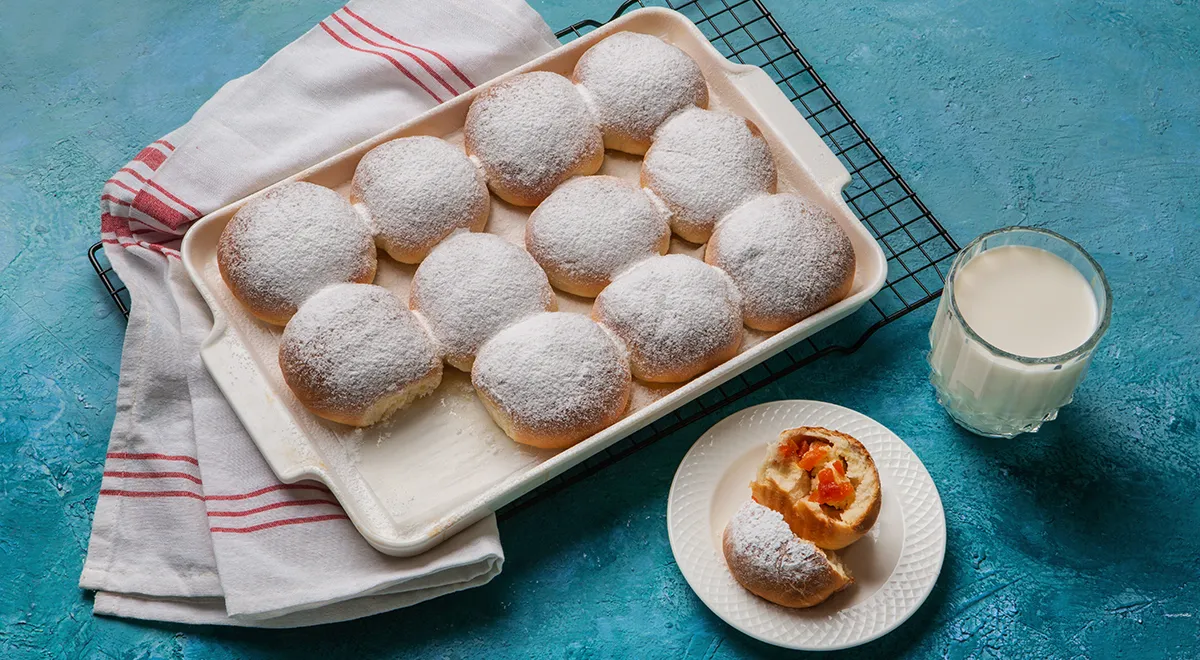
There is something deeply comforting about homemade yeast buns, especially when they are filled with the natural sweetness of dried apricots. This Russian recipe, passed down through generations, yields incredibly soft, fluffy buns with a tangy-sweet filling. The key lies in a careful planetary mixer or gentle hand-kneading, plus a classic sponge starter. Whether you are a seasoned baker or a curious beginner, these buns are a delightful project that rewards you with a golden tray of irresistible pastries.
About This Recipe
Dried apricot buns are a staple in Russian home baking, often enjoyed with tea or coffee. The dough uses kefir, which adds a slight tang and ensures a tender crumb. The dried apricots are soaked and sweetened, creating a jammy pocket in every bite. This recipe yields approximately 18-20 buns, perfect for sharing. For the best results, use high-quality dried fruit and fresh yeast. If you prefer a different filling, see the variations below.

Ingredients
- 500 g wheat flour (plus extra for dusting)
- 65 g granulated sugar (plus 20 g for sponge)
- 250 g kefir (3.2% fat)
- 95 g unsalted butter
- 50 ml water
- 1 large egg
- 7 g salt
- 250 g dried apricots
- 30 g granulated sugar (for filling)
Step-by-Step Instructions
Step 1: Prepare the Sponge
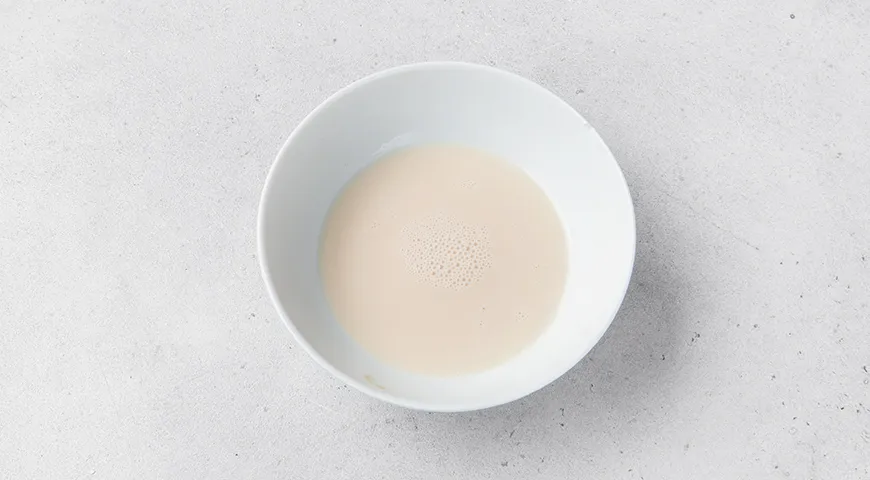
In a small bowl, dissolve the yeast (from the dry yeast packet) and 20 g sugar in warm water (34-37°C). Let it sit in a warm place for 10-15 minutes until a frothy foam forms on top. If no foam appears, the yeast may be inactive – start again with fresh yeast. This sponge is the foundation of your buns’ airy texture.
Step 2: Mix the Wet Ingredients
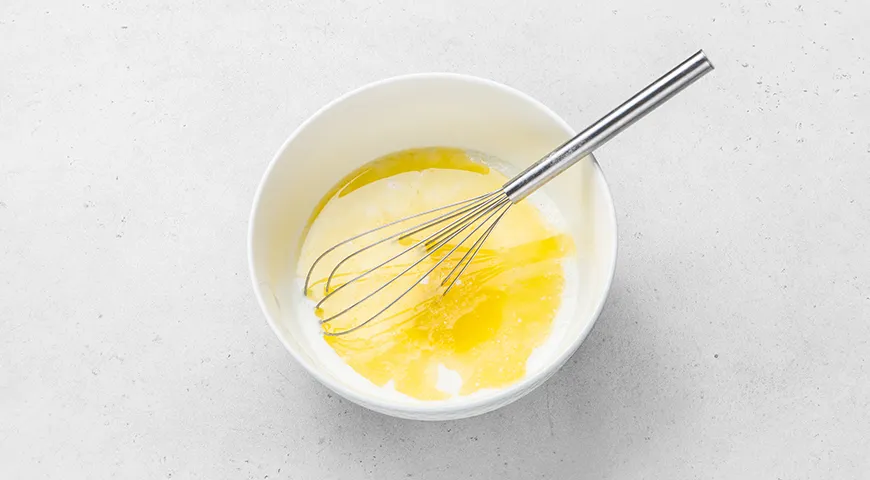
Melt the butter and let it cool. Gently warm the kefir to 30°C (do not overheat). In a large bowl, combine the warm kefir, remaining 45 g sugar, salt, egg, and cooled melted butter. Whisk until smooth.
Step 3: Form the Dough
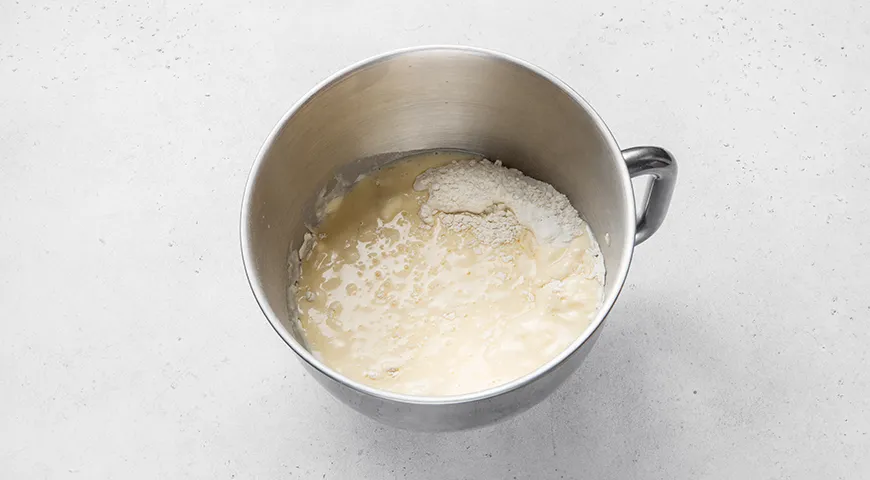
Sift 450 g of flour into a deep bowl. Make a well in the center and pour in the sponge and the kefir mixture. Using a wooden spoon or spatula, mix from the bottom upward. If the dough seems too thin after a few minutes, add another 30-50 g of flour. You may need to add an additional 20-30 g during kneading, depending on your flour’s absorption. Do not add too much—the dough will become more manageable after rising.
Step 4: Knead the Dough
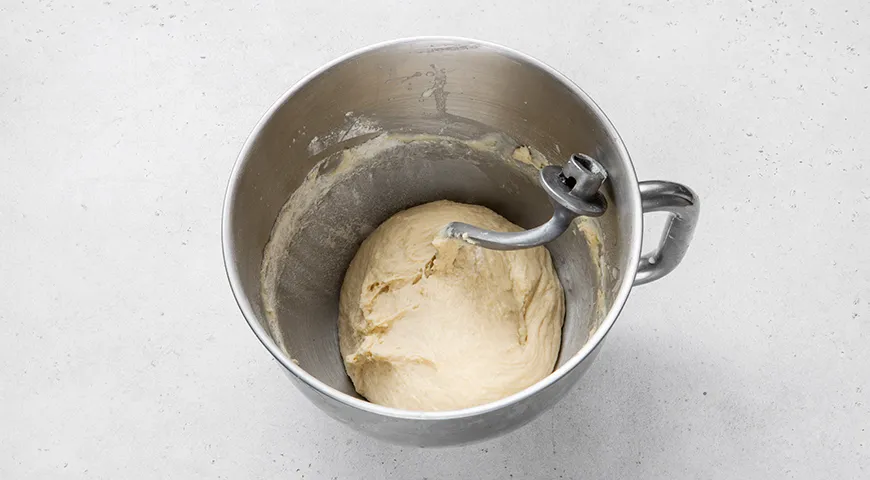
Turn the dough onto a lightly floured surface and knead by hand for 10-15 minutes, lifting from the bottom upward. Alternatively, use a stand mixer with a dough hook on medium speed for 5-7 minutes. The dough should become smooth, elastic, and slightly tacky. If using a mixer, check for a soft, supple texture.
Step 5: First Rise
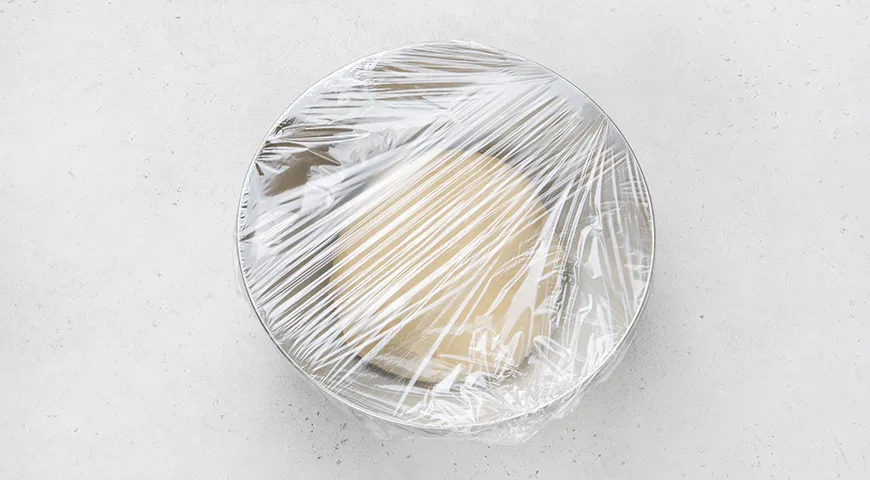
Lightly grease a deep bowl with vegetable oil. Place the dough inside, cover with a damp kitchen towel, and set in a warm, draft-free spot. Let it rise for 40-60 minutes until doubled in size. Gently punch down the dough, folding the edges inward to form a ball. Cover again and let it rise a second time for another 40-60 minutes.
Step 6: Prepare the Filling
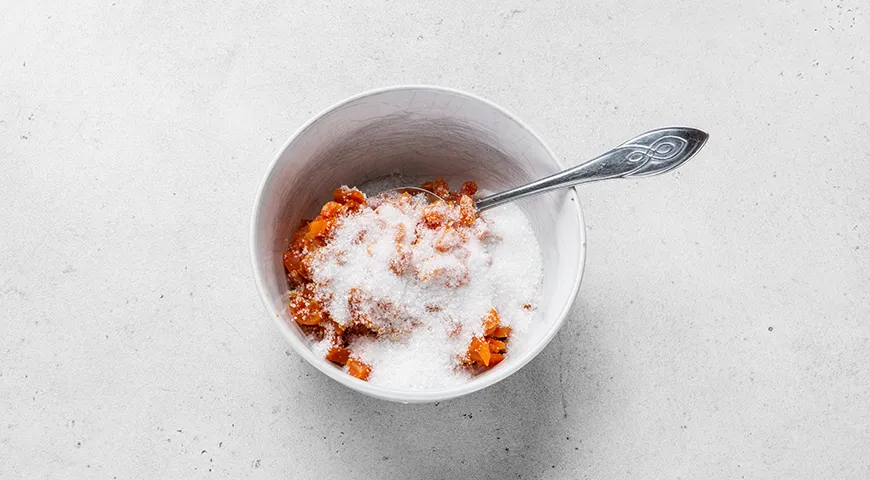
While the dough rises the second time, soak the dried apricots in warm or hot water for 20-30 minutes until plump. Drain and pat dry. Dice the apricots into small cubes and toss with 30 g sugar. Set aside.
Step 7: Shape the Buns
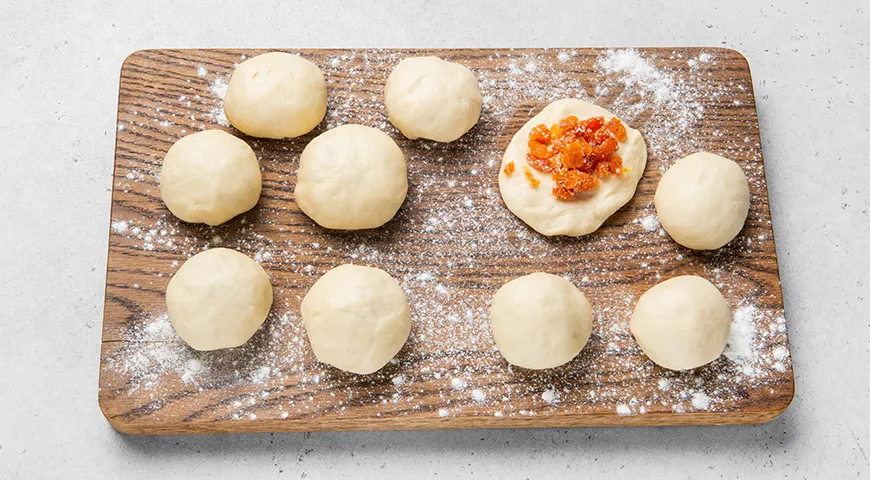
Transfer the risen dough to a lightly floured surface. Divide into 18-20 equal pieces. Roll each piece into a ball, then flatten into a small disc. Place about 1 tablespoon of the apricot filling in the center. Gather the edges toward the center and pinch to seal, forming a small bundle with a little tail on top.
Step 8: Second Rise and Bake
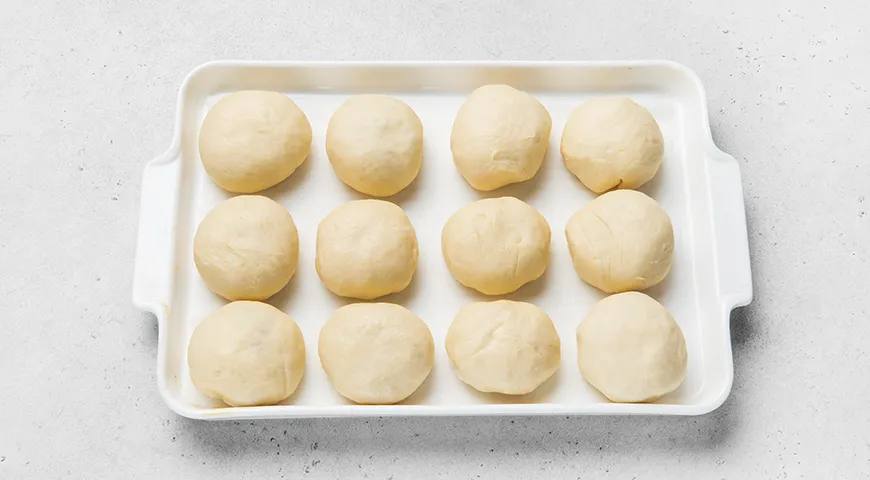
Preheat the oven to 180°C. Grease a large rectangular or round baking dish with vegetable oil or use a non-aerosol oil sprayer. Arrange the buns close together but with a little space between them (they will expand). Bake for 35-40 minutes until golden brown on top.
Step 9: Cool and Serve
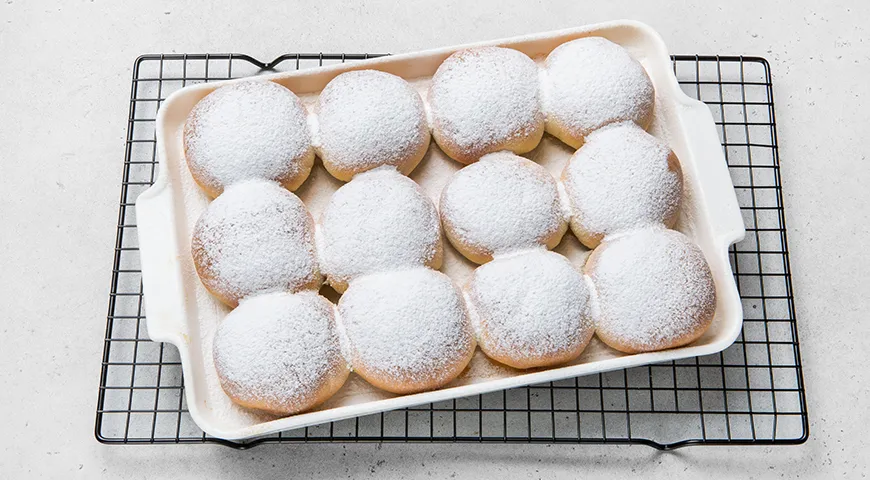
Remove from oven and let the buns cool in the pan for 10 minutes, then transfer to a wire rack. Dust with powdered sugar if desired. Serve warm or at room temperature. These buns are best enjoyed fresh, but they freeze well for up to a month.
Tips for Success
- Use a kitchen thermometer to ensure liquids are at the correct temperature – too hot will kill yeast, too cold will slow activation.
- For a richer dough, substitute 50 g of kefir with whole milk or cream.
- If you don't have kefir, buttermilk or plain yogurt thinned with water works well.
- To achieve a shiny crust, brush the buns with beaten egg before baking.
- Let leftover buns be revived in a non-toxic air fryer at 160°C for 3-4 minutes.
Variations
Experiment with different fillings: chopped dried plums, poppy seeds with honey, or a mixture of raisins and chopped walnuts. For a festive version, add a pinch of cinnamon or cardamom to the apricot filling. You can also shape the buns as braids or knots. If you enjoy savory-sweet combinations, try adding crumbled feta cheese alongside the apricots. For a gluten-free alternative, use a high-quality gluten-free flour blend, but note that texture will differ. Check out our Catalan sponge recipe for another delightful baked good.
Frequently Asked Questions
Can I use instant yeast instead of dry active yeast?
Yes, reduce the amount to 7 g of instant yeast and mix it directly with the flour. Skip the sponge step and combine all ingredients at once. The rise times may be slightly shorter – watch the dough carefully.
How should I store the baked buns?
Store in an airtight container at room temperature for up to 3 days. For longer storage, freeze the buns in a freezer-safe bag. Thaw at room temperature and reheat in a microwave pressure cooker or oven.
Can I make the dough in advance?
Absolutely. After the first rise, punch down the dough, cover tightly, and refrigerate for up to 24 hours. The next day, let it come to room temperature for about 30 minutes before shaping. The cold fermentation adds extra flavor.
My dough didn’t rise. What went wrong?
Possible causes: expired yeast, liquid too hot (above 50°C kills yeast), or a cold environment. Always proof the yeast first. If your kitchen is cool, preheat the oven to 50°C, turn it off, and place the covered bowl inside with the door ajar.
Can I replace the butter with oil?
Yes, use 80 g of a neutral vegetable oil like sunflower or canola. The buns will be slightly less rich but still soft. For a dairy-free version, also substitute kefir with a plant-based yogurt and water mixture.
Final Thoughts
These sweet yeast buns with dried apricots are a labor of love that pays off in every tender, fruity bite. Whether you are baking for a holiday table or a cozy weekend treat, this recipe is sure to become a favorite. For more baking inspiration, explore our collection of top-rated dried fruit products and kitchen tools to make your next bake even easier. Enjoy!







