


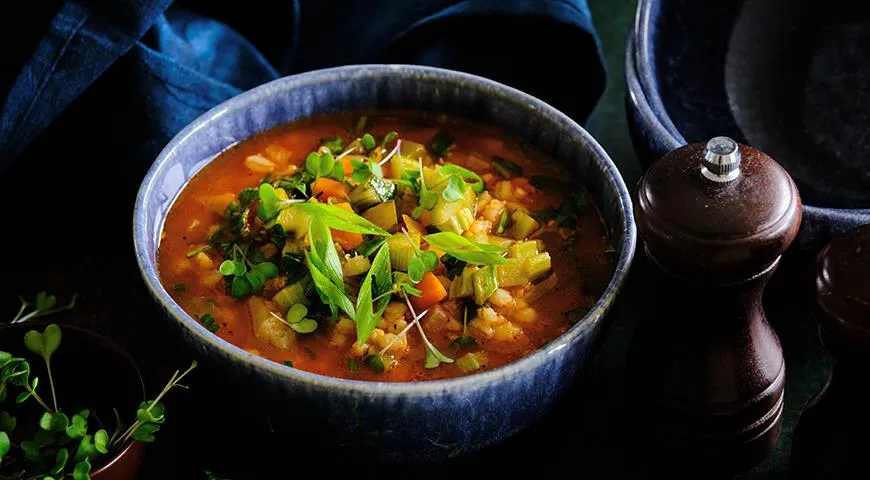
Welcome to the heart of Russian culinary tradition, reimagined for the modern plant-based kitchen. Vegan Rassolnik is a soulful soup that marries the tang of pickled cucumbers with the hearty chew of pearl barley—a dish born from peasant ingenuity and now elevated into a nourishing, immune-boosting meal. With its fragrant broth and vibrant green herbs, this soup embodies comfort and vitality. In this article, we'll guide you through every step, share expert tips, and explore variations that make this recipe your own. Whether you're an experienced vegan cook or just beginning your journey, this Rassolnik will become a staple in your repertoire.
About Vegan Rassolnik
Rassolnik is a classic Russian soup whose name derives from rassol (brine), highlighting its signature sourness. Traditionally made with meat or offal, this vegan version retains all the depth of flavor by relying on pearl barley, aromatic vegetables, and a generous splash of pickle brine. The barley is first dry-toasted to release a nutty aroma—a technique that transforms the grain from humble to sublime. Paired with carrots, celery, and garlic, the soup builds layers of umami without any animal products. It's a testament to the power of whole foods and simple techniques. For those interested in exploring more Russian-inspired plant-based dishes, our collection of Catalan sponge cake might seem distant, but it shares the same philosophy: big flavor from minimal ingredients.

Ingredients
- 2 medium salted cucumbers (pickles)
- 2 medium carrots
- 1 large onion
- 2 cloves garlic
- 2 stalks celery
- 100 g pearl barley
- 3–4 tbsp vegetable oil (sunflower or olive)
- 2 tbsp tomato sauce (or 1 tbsp tomato paste)
- 1.5 L cold water
- Salt and freshly ground black pepper to taste
- Pickle brine (from the jar) to taste (about 100–150 ml)
- Fresh herbs: parsley, basil, green onion (optional but highly recommended)
For the best results, use high-quality salted cucumbers—preferably barrel-fermented or from a trusted deli. If you need to chop vegetables quickly, a glass food processor makes short work of dicing. The tomato sauce adds color and acidity; we recommend a smooth, unsweetened variety. To brighten the soup, the final garnish of fresh herbs is essential; a oil sprayer can help drizzle a finishing oil with precision.
Step-by-Step Instructions
- Toast the pearl barley. Place the barley in a dry saucepan over medium heat. Stir frequently for 10 minutes until the grains become fragrant and lightly golden. Add 2 cups (500 ml) boiling water, a pinch of salt, and bring to a boil. Cover, reduce heat to low, and simmer for 20 minutes until the water is fully absorbed. Set aside.
- Prepare the vegetables. Peel and finely dice the onion, garlic, and carrots. Dice the celery into small cubes. Peel the salted cucumbers, cut them lengthwise into quarters, then slice crosswise into 7–8 mm pieces. Tip: For uniform dicing, consider using a food processor for nut butter—though intended for nuts, its sharp blades handle vegetables with ease.
- Sauté the aromatics. In a heavy-bottomed pot, heat 3–4 tablespoons of oil over high heat. Add the onion and sauté for 3–4 minutes until translucent. Add the carrots and celery, and cook for 5 minutes, stirring occasionally. Then add the garlic and diced cucumbers, and cook for 1 more minute to release their flavors.
- Build the broth. Stir in the tomato sauce, mixing well. Pour in 1.5 liters of cold water, bring to a boil, and let it cook for 5 minutes. Add the cooked pearl barley, season with black pepper, and simmer covered on low heat for 10 minutes.
- Finish with brine and herbs. Pour in as much pickle brine as you like—starting with 100 ml and tasting—then bring to a final boil. Remove from heat. Stir in a generous handful of chopped parsley, basil, and green onion. Cover and let the soup rest for 5–10 minutes to meld the flavors. Serve hot.
This gentle finishing step allows the herbs to infuse the broth without overcooking. If you prefer a smoother texture, an immersion blender can partially purée the soup for a creamier consistency—though it's wonderful chunky as well.
Tips for Perfect Vegan Rassolnik
- Toast the barley thoroughly. Don't skip the dry-toasting step—it deepens the flavor and prevents the grains from becoming mushy.
- Control the salt. Salted cucumbers and brine vary widely in saltiness. Always taste the soup before adding extra salt, and adjust brine gradually.
- Use cold water. Starting with cold water when adding to the sautéed vegetables ensures an even, gradual heat extraction of flavors.
- Let it rest. The soup tastes even better the next day. For meal prep, store it in an airtight container in the fridge. Reheat gently on the stove or in a microwave pressure cooker for speed.
- Serve with rye bread. The earthy sourness of dark rye complements the tangy broth perfectly. Try toasting it with a bit of garlic oil.
Variations to Explore
- Barley alternatives: Substitute pearl barley with buckwheat groats or brown rice—each brings a different texture. If using buckwheat, reduce cooking time to 15 minutes.
- Add greens: Stir in a handful of spinach or kale during the last 2 minutes of cooking for extra nutrients.
- Make it creamy: Puree a portion of the soup (cucumbers and all) with an immersion blender to create a velvety base while keeping some barley intact.
- Spice it up: Add a pinch of smoked paprika or a bay leaf during simmering for deeper notes. For heat, finish with freshly ground black pepper or a drizzle of chili oil.
- Summer version: Replace the tomato sauce with fresh grated tomato and serve the soup slightly warm or at room temperature with plenty of fresh dill. A air fryer can be used to roast the vegetables beforehand for a smoky twist.
Frequently Asked Questions
Can I use fresh cucumbers instead of salted ones?
Fresh cucumbers will not provide the signature tang or depth of flavor. If you must substitute, quick-pickle thinly sliced cucumbers in vinegar, sugar, and salt for at least 30 minutes before adding. However, for authentic Rassolnik, salted cucumbers are essential.
How do I make this soup gluten-free?
Pearl barley contains gluten. Replace it with certified gluten-free grains such as quinoa, millet, or brown rice. Adjust cooking times accordingly (quinoa cooks in about 15 minutes).
Can I freeze Vegan Rassolnik?
Yes, but note that barley may soften upon thawing. For best results, freeze the soup without the fresh herbs. Thaw overnight in the refrigerator, reheat, then stir in chopped herbs just before serving. Use a ice maker for quick cooling before freezing.
What should I serve with Rassolnik?
Rye bread or pumpernickel is classic. For a complete meal, serve with a side of sweet wine—its fruitiness balances the sourness. A dollop of vegan sour cream or cashew cream adds richness.
How can I adjust the sourness to my taste?
The sour level comes from both the cucumbers and the brine. Start with less brine, taste, then add more. If the soup becomes too sour, add a pinch of sugar or a splash of unsweetened plant milk to mellow it.
Is this recipe suitable for an immune-boosting diet?
Absolutely. Pearl barley provides beta-glucans, garlic and onions offer allicin and quercetin, and herbs are packed with antioxidants. The fermented cucumbers contribute probiotics if they are traditionally fermented. For more immune-supporting recipes, explore our guide to best chocolate covered raisins—a sweet treat with antioxidant benefits.
Vegan Rassolnik is more than a soup; it's a bridge between heritage and health, proving that plant-based eating can be deeply satisfying. We hope this recipe becomes a cherished part of your cooking. For further inspiration, browse our collection of organic vodka pairings or explore other grain-based soups. Happy cooking!







