


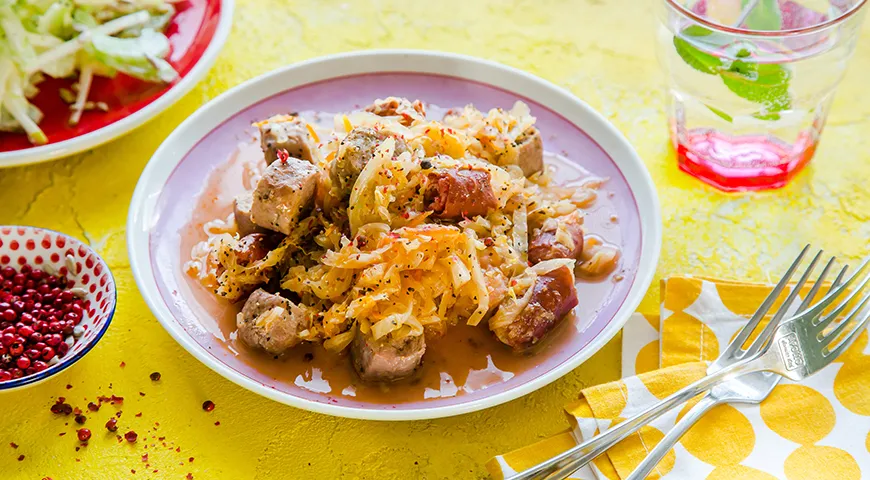
Few dishes embody the soul of Polish home cooking quite like bigos. This slow-simmered hunter’s stew, traditionally made with sauerkraut, fresh cabbage, and an array of meats, becomes truly transcendent when enriched with smoky bacon and juicy fresh sausages. Our take on bigos with sausages and bacon stays faithful to the classic, allowing the gentle heat to coax out deep, layered flavours over two and a half hours. The result is a dish of profound comfort—tangy, savoury, and impossibly tender.
About Bigos
Bigos is often called Poland’s national dish, and for good reason. Its roots stretch back to the Middle Ages, when hunters would combine leftover game with fermented cabbage and cook it over an open fire. Over centuries, it evolved into a stew that welcomes countless variations, but the soul remains the same: slowly braised cabbage, meat, and spices. In this version, we use 300 g of sauerkraut for tang and 300 g of fresh cabbage for sweetness, along with 200 g of smoked bacon (or guanciale-like smoked belly) and 4 fresh sausages (such as kielbasa or kupaty). The magic happens in the long, gentle simmer, as the starches from the cabbage meld with the rendered fat to create a velvety, aromatic base.

Ingredients
- 300 g sauerkraut (well-drained, rinsed if very sour)
- 300 g fresh white cabbage
- 2 large onions (about 400 g total), thinly sliced into feathers
- 200 g smoked bacon (or guanciale-style belly), cut into 2 cm cubes
- 100 ml clarified apple juice (unsweetened), mixed with 100 ml cold water
- 1 tbsp sweet smoked paprika (6 g)
- 1 tsp caraway seeds (3 g)
- Salt and freshly ground black pepper, to taste
- 4 fresh raw sausages (kupaty or kielbasa)
Step-by-Step Guide
Step 1: Render the Bacon and Sauté Onions
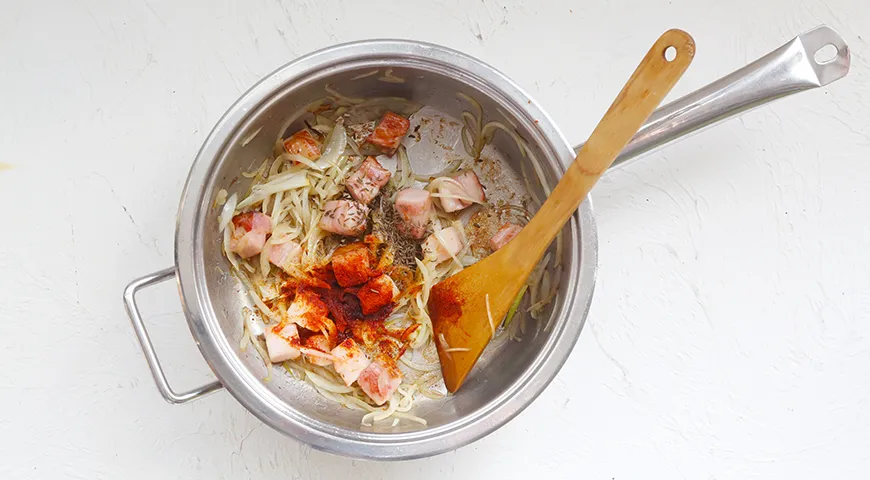
Place a cast-iron Dutch oven or heavy-bottomed saucepan over medium heat. Add the bacon cubes and cook for 5 minutes, stirring occasionally, until they release their fat and begin to crisp. Add the sliced onions and continue to sauté for 7 minutes, until golden and softened. Sprinkle with the paprika and caraway seeds, stir well, and remove from heat.
Step 2: Prepare the Cabbage
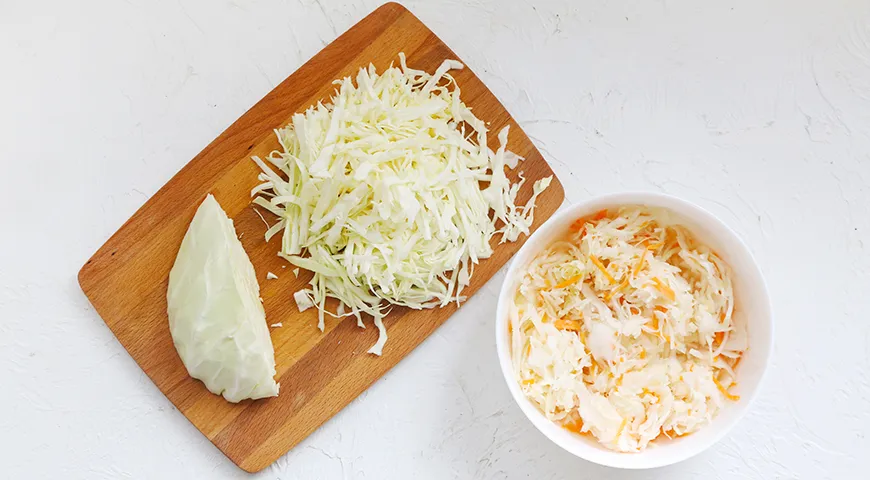
Meanwhile, squeeze the sauerkraut to remove excess brine (if it tastes overwhelmingly sour, rinse briefly under cold water). Cut the sauerkraut crosswise into shorter strands. Core the fresh cabbage and shred it as thinly as possible, then cut those shreds into pieces roughly the same length as the sauerkraut. This ensures even cooking.
Step 3: Combine and Simmer
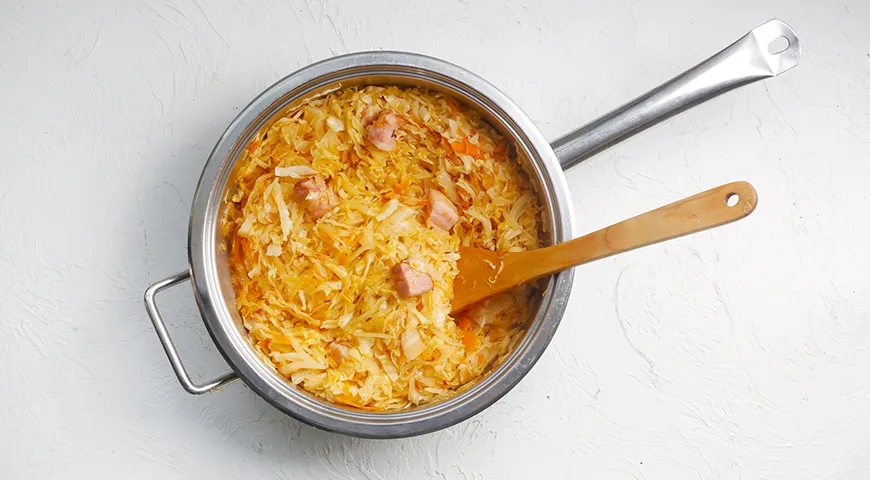
Return the pot to medium heat. Add both cabbages to the bacon-onion mixture and stir well. Pour in the diluted apple juice—this subtle sweetness balances the sauerkraut’s acidity. Bring the liquid to a gentle boil, stirring occasionally.
Step 4: Slow-Cook the Base
Reduce the heat to medium-low, cover the pot tightly, and let the stew simmer for 2 to 2.5 hours, stirring every 30 minutes or so. The cabbage should become meltingly tender, and the flavours will marry beautifully. Resist the urge to rush—this low-and-slow process is the heart of a great bigos.
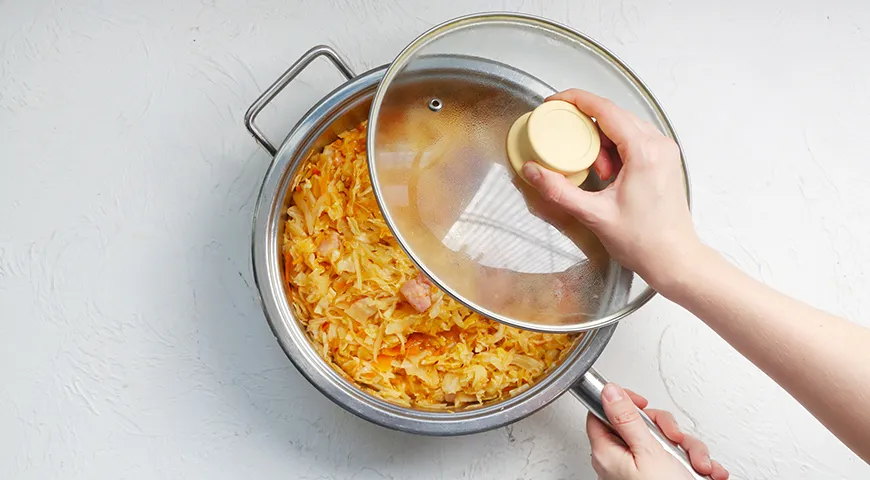
Step 5: Sear the Sausages
While the stew cooks, prick the sausages all over with a toothpick or fork to prevent them from bursting. Heat a dry skillet over medium-high heat and sear the sausages until nicely browned on all sides and cooked through, turning frequently. This takes about 8–10 minutes.

Step 6: Marry and Serve
Nestle the browned sausages into the cabbage stew, partially burying them. Cover and let them warm together for 10 minutes. Then, using kitchen scissors, cut the sausages into bite-sized chunks right in the pot and stir them through the bigos. Taste for seasoning, adding salt and pepper if needed. Serve immediately.

Tips for Perfect Bigos
- Use a heavy pot: A cast-iron Dutch oven or seasoned cast iron distributes heat evenly and holds it for long braising. While castor oil isn’t for cooking, the principle of seasoning cast iron applies—keep your pot well-seasoned for best results.
- Don’t skip the apple juice— it rounds out the sourness without adding overt sweetness. Use a juicer if you have fresh apples, but bottled clarified juice works perfectly.
- Patience is key: Bigos improves with time—even overnight. If you can, make it a day ahead and reheat gently.
- Control consistency: If the stew looks dry during simmering, add a splash of water or broth. Use an oil sprayer to lightly mist the surface if you want to add a glossy sheen.
- Sausage selection: Raw pork sausages work best. For a smoky twist, use kielbasa. A planetary mixer helps if you’re making your own sausages at home.
Variations and Pairings
Bigos is endlessly adaptable. Replace the bacon with smoked pancetta or even air-fried duck bacon for a lighter finish. Add dried plums or mushrooms for a sweet-earth dimension. For a one-pot meal, serve bigos with crusty rye bread and a dollop of sour cream. A chilled sweet white wine with high alcohol content—like a late-harvest Riesling—cuts through the richness beautifully.
Frequently Asked Questions
Can I make bigos in a slow cooker?
Absolutely. After browning the bacon and onions on the stovetop, transfer everything to a slow cooker. Cook on low for 6–8 hours. Add the seared sausages during the last 30 minutes. A microwave pressure cooker can also speed things up, but the depth of flavour improves with long, unattended simmering.
Is bigos gluten-free?
Yes, this recipe contains no gluten, provided the sausages are gluten-free. Always check labels. If you need to thicken the stew slightly, avoid flour; instead, mash some of the cooked cabbage against the pot side.
How do I store and reheat leftovers?
Bigos tastes even better the next day. Cool completely and refrigerate in an airtight container for up to 5 days. Reheat gently on the stovetop or in a wall oven microwave combo with air fryer—the air-fryer setting can re-crisp the sausages nicely.
Can I freeze bigos?
Definitely. Portion into freezer-safe containers and freeze for up to 3 months. Thaw overnight in the refrigerator and reheat slowly. The texture of the cabbage may soften further, but the flavour remains superb.
What if the stew is too sour?
If your sauerkraut is very acidic, rinse it before adding. You can also stir in a teaspoon of brown sugar or a splash of apple juice. A best organic vodka can be used to deglaze the pot after browning the meats, adding a subtle rye note that balances acidity.
Can I use a food processor to shred the cabbage?
Yes, a glass food processor makes quick work of the fresh cabbage, but be careful not to over-process—thin shreds, not mush. Alternatively, use a mandoline.
Bigos with sausages and bacon is more than a recipe—it’s a tradition that warms both kitchen and soul. Serve it with good bread and a sense of heritage, and every spoonful will transport you to a Polish hearth.







