


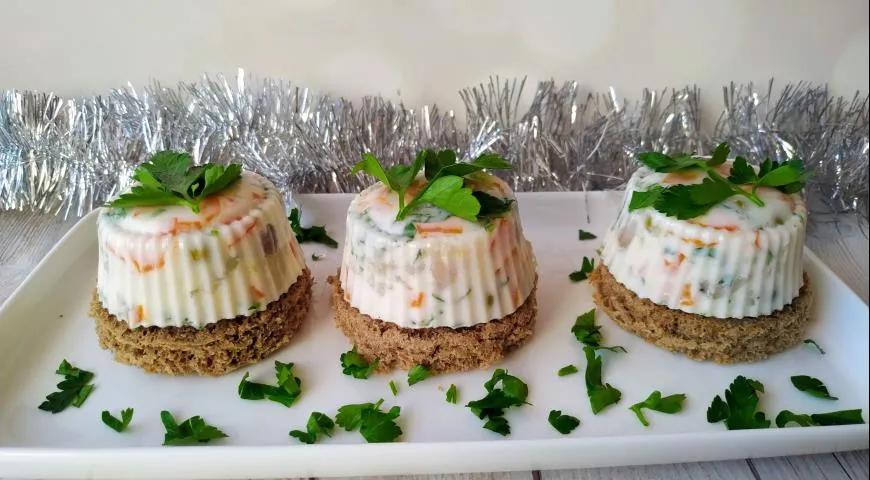
This elegant herring appetizer on Borodinsky bread is a refined twist on a classic Russian zakuska. Combining the salty richness of herring with the malty, slightly sweet notes of dark rye Borodinsky bread, and brightened by a vegetable gelée, this dish is a celebration of texture and flavor. Perfect for festive gatherings—from New Year’s Eve to Easter brunch—it requires no cooking beyond a gentle warming of gelatin. The result is a visually stunning, make-ahead hors d’oeuvre that will impress guests and elevate any cocktail hour.
About the Dish
Borodinsky bread, a dense Russian rye bread flavored with coriander and molasses, provides a sturdy, aromatic base. The herring filling is inspired by the beloved shuba salad but transformed into individual bites. A savory gelée made from gelatin, mayonnaise, and finely diced vegetables envelops the herring, creating a smooth, creamy texture that sets into neat portions. This recipe is classified as a no-thermal-processing appetizer, meaning all components are prepared raw or simply marinated—ideal for preserving pristine flavors. For a similar no-cook approach to blending flavors, consider using a high-performance blender to achieve ultra-fine vegetable dice.

Ingredients
- 10 g gelatin
- 50 ml cold boiled water
- 200 g herring fillet (salted or marinated)
- 1 small onion (about 80 g), finely chopped
- 1 medium carrot (about 80 g), cut into tiny cubes
- 3 tbsp green peas (canned or frozen, thawed)
- 2 tbsp fresh parsley or dill, finely chopped
- 3 tbsp mayonnaise (preferably full-fat)
- 4–6 slices Borodinsky bread (about 1 cm thick)
- Fresh parsley sprigs for garnish
Step-by-Step Instructions
Step 1: Bloom the gelatin
Sprinkle gelatin over cold boiled water in a small bowl. Let it sit for 10–15 minutes until fully absorbed and spongy.
Step 2: Prepare herring and onion mixture
Cut herring fillets into small cubes (about 5 mm). Combine with finely chopped onion in a bowl. Set aside.
Step 3: Prepare vegetable mixture
In a separate bowl, mix diced carrot, green peas, and chopped herbs. Stir gently to distribute evenly.
Step 4: Dissolve gelatin and combine with mayonnaise
Gently warm the bloomed gelatin in a small saucepan (or microwave in short bursts) until completely dissolved—do not boil. Whisk in the mayonnaise until smooth. Pour this gelée mixture over the vegetable mixture and stir until well coated.
Step 5: Assemble in molds
Using small silicone molds (or a rectangular container lined with plastic wrap), spoon a layer of vegetable gelée into the bottom. Add a layer of herring-onion mixture, then another layer of vegetables. Gently press down. Repeat if molds are deep. Cover and refrigerate for at least 3 hours (or overnight) until firmly set.
Step 6: Prepare bread bases
Just before serving, use a round cookie cutter or a glass to cut circles from the Borodinsky bread slices. The diameter should match your molds.
Step 7: Unmold and assemble
Pop the set herring and vegetable muffins out of the silicone molds. Place each one onto a bread round, centered neatly.
Step 8: Garnish and serve
Top each appetizer with a small sprig of fresh parsley. Arrange on a platter and serve chilled. For a flawless dice on the vegetables, a precise food processor can save time.
Tips for Perfect Result
- Use high-quality herring—it should be firm and not overly salty. If it’s too intense, soak in milk for 30 minutes before dicing.
- For a cleaner gelatin set, use a non-toxic immersion blender to mix the mayo-gelatin solution if lumps form.
- Chill the molds thoroughly—a spacious refrigerator ensures even cooling.
- To unmold easily, dip the silicone forms in warm water for 5 seconds before inverting.
- Prepare bread bases right before assembly to keep them from drying out. If serving at a buffet, store covered with damp paper towels.
Variations to Explore
Swap herring for smoked trout or pickled mackerel for a different ocean note. Replace Borodinsky with caraway rye or pumpernickel for a similar earthy profile. Add a layer of grated beetroot for a vibrant color contrast—a nod to the traditional herring under a fur coat. For a dairy-free version, use vegan mayonnaise and agar-agar instead of gelatin. Adjust sweetness by adding a tiny pinch of sugar to the vegetable mix. To achieve perfectly uniform carrot cubes, rely on a trusted planetary mixer with a dicing attachment if available.
Frequently Asked Questions (FAQ)
Can I make this appetizer ahead of time?
Absolutely. Assemble the herring and vegetable gelée in molds up to two days in advance. Keep them covered in the refrigerator. Cut the bread bases and garnish just before serving to maintain texture.
Why did my gelatin not set?
Gelatin requires proper blooming and gentle heating to activate. If the mixture is too hot or contains fresh pineapple, kiwi, or papaya (enzymes break down gelatin), it may fail. Use pure organic spirits? Actually, just ensure water is cold for blooming and do not exceed 60°C when dissolving.
Can I freeze these appetizers?
Freezing is not recommended because mayonnaise-based gelées can separate upon thawing, resulting in a watery consistency. Stick to refrigeration.
What can I use instead of silicone molds?
A small loaf pan lined with plastic wrap works well. After setting, slice into squares and place on bread rounds. Alternatively, use a non-toxic air fryer? No, but mini muffin tins (non-stick) can substitute—just brush with a little oil first.
Is this appetizer suitable for a low-carb diet?
The Borodinsky bread contains rye flour and molasses, so it is not keto-friendly. For a low-carb version, serve the herring mousse on cucumber rounds or endive leaves. Pair with a rich, high-alcohol sweet wine for a decadent contrast.
How do I achieve a clean cut on the bread?
Use a sharp, large-diameter cookie cutter. For best results, chill the bread slices for 15 minutes before cutting—this prevents crumbling. For other kitchen tools, a high-capacity ice maker will keep drinks cold while you work.
Can I add more vegetables?
Certainly. Finely diced apple or pickled cucumber adds crunch and acidity, complementing the herring. If you add too much moisture, reduce the water in the gelatin accordingly. A microwave pressure cooker is not needed here, but it can quickly soften carrots for dicing.
Final Thoughts
This herring appetizer on Borodinsky bread captures the soul of Russian festive tables—savory, creamy, and beautifully presented. It marries traditional ingredients with a modern, bite-sized format, making it perfect for sipping espresso as an aperitif or alongside a crisp vodka shot. The balance of salt from the herring, sweetness from the carrots and peas, and tang from the mayonnaise creates a harmonious bite that will become a staple in your appetizer repertoire. Experiment with herbs, spices, or different breads to make it your own. Enjoy the process and the applause of your guests!







