


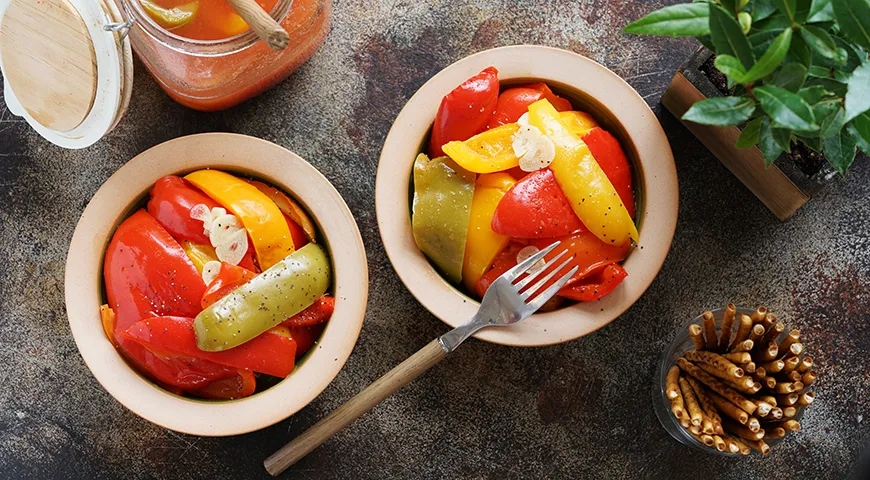
There is a quiet, soulful joy in preserving the summer's bounty for the colder months. This recipe for peppers in tomato juice (perets v tomatnom soke na zimu) is a cherished Russian tradition that balances the sweet heat of bell peppers with the bright acidity of homemade tomato juice. The result is a versatile, shelf-stable condiment that elevates winter meals—from hearty stews to simple sandwiches. With a food processor or immersion blender, you can quickly transform fresh tomatoes into a silky puree, then simmer with plump pepper slices, garlic, and a touch of vinegar. This isn't just a recipe; it's a celebration of patience, technique, and the profound satisfaction of opening a jar of summer six months later.
About This Recipe
Born from the necessity to preserve the harvest, this Eastern European preserve has become a beloved pantry staple. The interplay of naturally sweet red peppers and concentrated tomato juice creates a sauce that is thicker and more complex than canned tomatoes alone. Unlike many pickled peppers, this version steers clear of heavy brine, allowing the vegetables to shine. The key is a perfectly smooth tomato base, achieved by straining the puree through a sieve or cheesecloth—a step that removes seeds and skins for an elegant finish. For those who prefer a truly hands-off approach, a high-performance food processor can handle the initial chopping, but the straining remains essential. This preserve is a testament to the beauty of simple ingredients transformed through mindful technique.

Ingredients
- 1.2 kg ripe tomatoes
- 1 kg sweet red bell peppers
- 50 ml refined vegetable oil (e.g., sunflower or canola)
- 30 ml white vinegar (9%)
- 2 cloves garlic
- 1.5 tbsp (about 20 g) granulated sugar
- 2 tsp (about 10 g) salt
- Freshly ground black pepper to taste
Step-by-Step Instructions
-
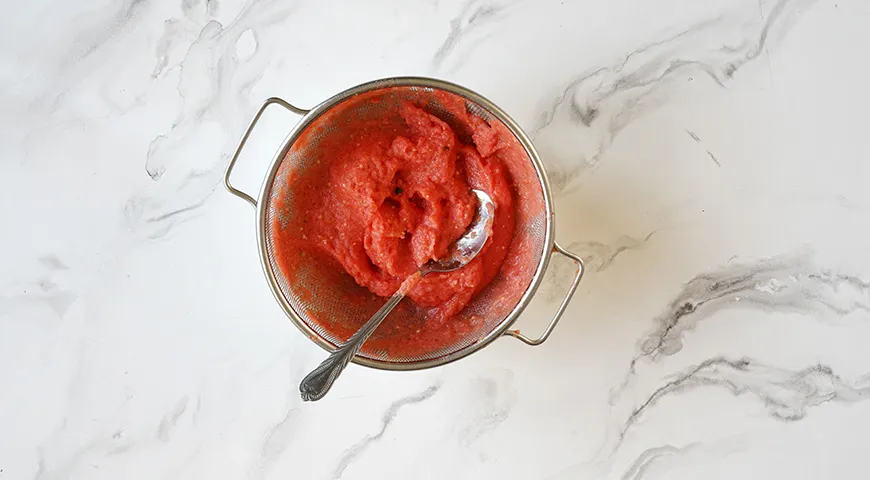
Prepare the tomato juice. Wash all vegetables thoroughly. Roughly chop the tomatoes, discarding any tough stem ends. Using an immersion blender or food processor, puree the tomatoes until smooth. Pass the puree through a fine-mesh sieve or a double layer of cheesecloth to remove seeds and skins. This yields a silky, seedless juice that forms the backbone of the preserve.
-
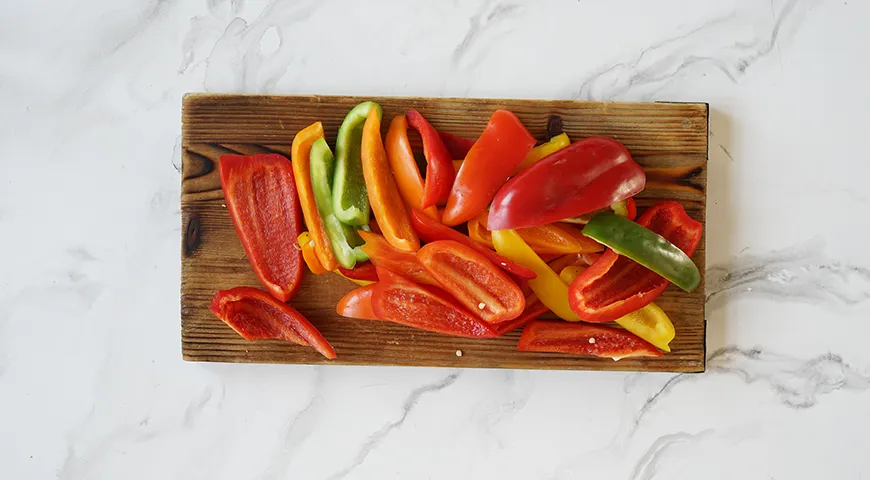
Cut the peppers and garlic. Halve the bell peppers lengthwise, removing seeds, membranes, and stems. Slice each half into even strips—about 1.5 cm wide—for uniform cooking. Peel the garlic cloves and slice them thinly. A sharp knife is your best friend here, but a planetary mixer isn't needed; manual prep keeps the textures intact.
-
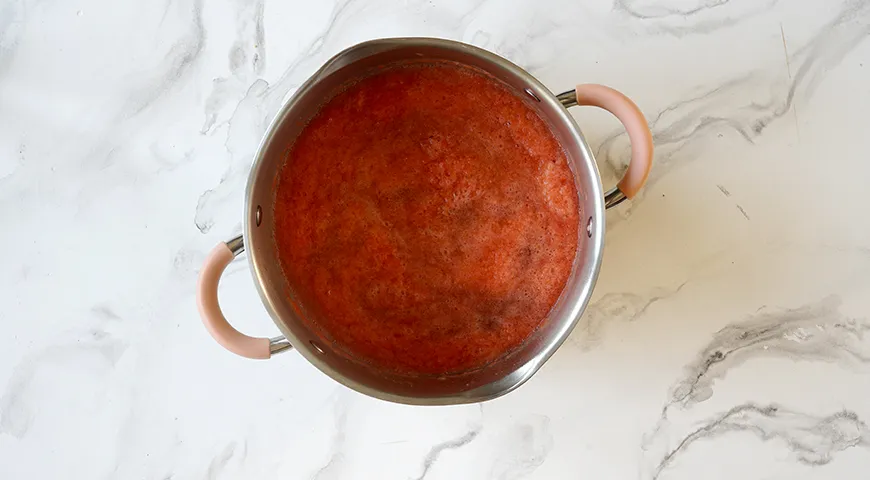
Simmer the tomato base. Pour the strained tomato juice into a heavy-bottomed pot (stainless steel or enameled cast iron works beautifully). Bring to a boil over medium-high heat. Stir in the sugar and salt, then reduce the heat to low. Let the juice simmer gently for 7–10 minutes, stirring occasionally, to concentrate its flavor and deepen the colour.
-
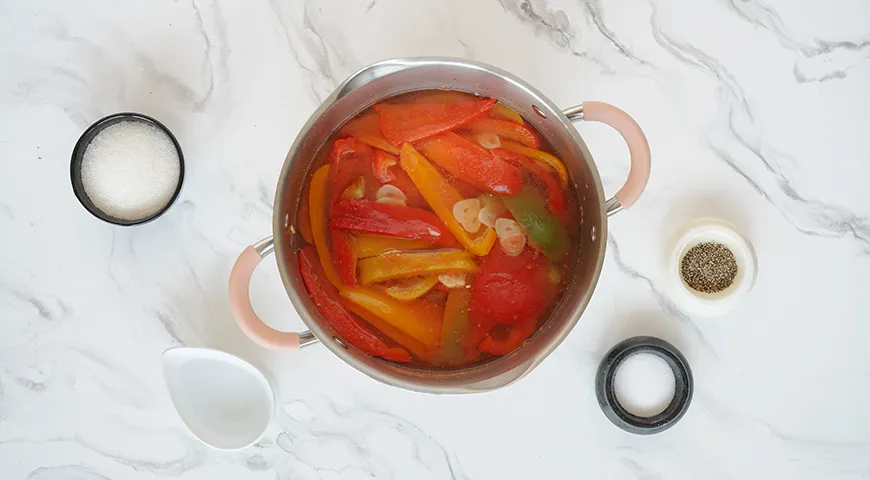
Cook peppers in seasoned juice. Add the sliced peppers and garlic to the boiling tomato juice. Return to a boil, then lower the heat and simmer for exactly 10 minutes. Taste and adjust seasoning with freshly ground black pepper, additional salt, or a pinch of sugar. Pour in the vegetable oil and vinegar; stir well and cook for another 2 minutes. The peppers should be tender but still offer a slight bite—overcooking ruins the texture.
-
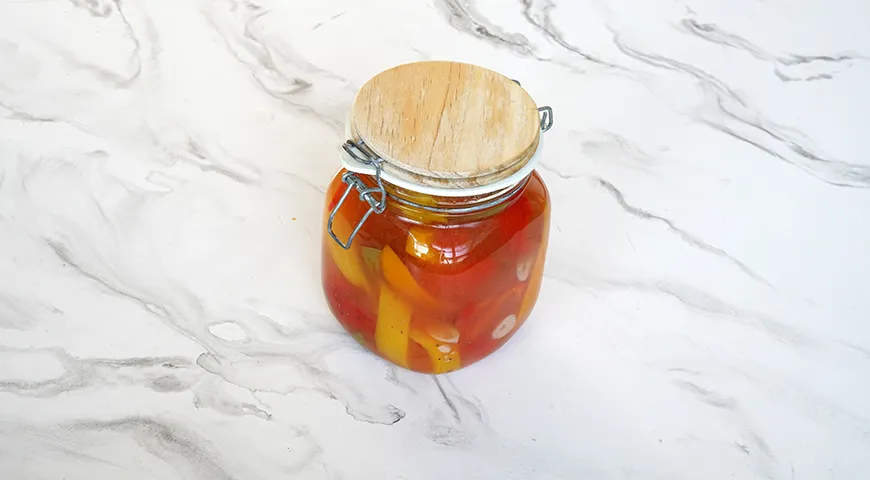
Jar and seal. While the mixture is still boiling hot, ladle it into sterilized glass jars, leaving about 1 cm headspace. Wipe the rims clean, then seal with sterilized lids. Allow the jars to cool completely at room temperature. A steam canner can provide extra safety for long-term storage, but for winter use, this hot-pack method is reliable. Store in a cool, dark place.
Tips for Perfect Preservation
Use the ripest, most flavourful tomatoes you can find—Roma or San Marzano varieties yield thick juice with less water. For the peppers, red bells offer sweetness, but yellow or orange also work; avoid green as they can be bitter. Sterilize jars in boiling water for 10 minutes or in a microwave pressure cooker if short on time. Always test seals after cooling: the lid should not flex when pressed. If you prefer a smoother texture, blend the cooked peppers with an extraction juicer before jarring, but chunks are traditional.
Variations
Add a bay leaf or two during simmering for an herbal note. For heat, include a dried chili pepper or a teaspoon of red pepper flakes. Swap the white vinegar for apple cider vinegar for a fruitier tang. Want a thicker sauce? Simmer the tomato juice for 15 minutes before adding peppers. In colder months, this preserve can be used as a pizza sauce base or stirred into rice for instant flavour—just like the vibrant influence of smoky lava flavors in a dish. For a richer umami, add 1 tablespoon of tomato paste along with the oil.
FAQ
Can I use canned tomatoes instead of fresh?
Absolutely. Choose high-quality whole peeled tomatoes (preferably Italian San Marzano) and puree them. Strain as directed to remove seeds. This shortcut is excellent when fresh tomatoes are out of season.
How long does this preserve last?
Properly sealed and stored in a cool, dark pantry, it remains safe for up to one year. Refrigerate after opening and consume within 2 weeks. Always check for signs of spoilage before use.
Can I reduce the salt or sugar?
Yes, but they serve as preservatives. For a low-sodium version, use 1 tsp salt; for reduced sugar, omit entirely—though you may need to add a pinch to balance acidity. The vinegar is non-negotiable for safe canning.
What if I don't have a food processor or blender?
You can finely grate the tomatoes or chop them by hand, then press through a sieve. A manual oil sprayer won't help here, but a simple potato masher works for crushing. Expect a chunkier texture.
Can I double the recipe?
Yes, but use a pot large enough to allow simmering without overflowing. Adjust cooking time minimally—the peppers should still cook just 10 minutes. A large refrigerator isn't required if you have adequate pantry space.
Why did my peppers become mushy?
Overcooking is the usual culprit. Keep the simmer to 10 minutes after adding peppers, and avoid boiling vigorously. The residual heat in the jars will continue softening them slightly.
What dishes pair best with this preserve?
Serve alongside grilled meats, fold into scrambled eggs, or spoon over creamy polenta. Its acidity cuts through rich dishes like a sweet wine with high alcohol content might complement a cheese plate. Also try with Catalan sponge cake for an unexpected sweet-savory twist.
Can I use a pressure cooker to sterilize the jars?
Yes, a pressure canner is recommended for low-acid foods, but since this recipe contains vinegar (acid), water bath canning for 15 minutes is sufficient. For efficiency, a undercounter ice maker is unrelated. Stick to boiling water bath or steam canning.
Embrace the rhythm of canning: the pop of sealed lids, the steam rising, the promise of winter meals enriched by summer's warmth. This pepper and tomato preserve is not just a recipe—it's a ritual that connects you to generations of home cooks. Prep your non-toxic air fryer for other preserves, or simply enjoy this timeless classic.







