


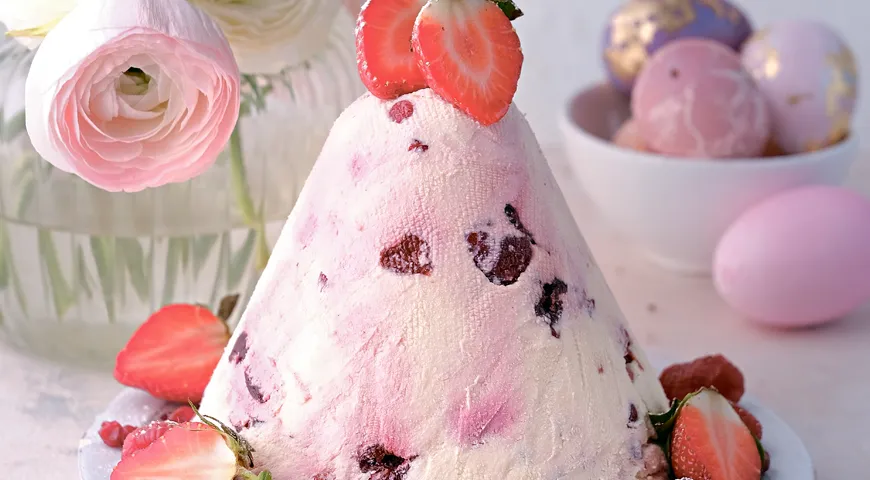
Few desserts capture the soul of a Russian Easter celebration quite like Paskha. This creamy, rich cheese pyramid is traditionally made with tvorog (farmer’s cheese) and often studded with dried fruits or nuts. But this berry-infused version—Ягодная творожная пасха—brings a bright, tangy freshness that feels both timeless and utterly modern. It’s the kind of dessert that impresses at brunch, holiday tables, or any occasion when you want something elegant yet deceptively simple to prepare. And because it’s made without a lick of gelatin, the texture remains lusciously soft, almost mousse-like.
About Berry Paskha
Paskha is one of the three traditional Easter dishes in Russian cuisine, alongside kulich (sweet bread) and dyed eggs. The word itself means “Easter” in Russian. The traditional version uses only quark cheese, butter, sugar, and sometimes sour cream, then pressed into a wooden mold that forms a truncated pyramid shape—symbolizing Christ’s tomb. This berry variation replaces the usual raisins and candied peel with a trio of frozen strawberries, cherries, and cranberries. The result is a dessert that balances sweet creaminess with lively fruit notes, perfect for spring entertaining.

Ingredients
- 500 g full-fat cottage cheese (tvorog or farmer’s cheese)
- 150 g frozen strawberries
- 30 g frozen cherries
- 70 g frozen cranberries
- 50 g unsalted butter, softened
- 100 ml heavy cream (33–35% fat)
- 1 large egg
- 100 g granulated sugar
- Fresh strawberries and raspberries, for garnish
Step-by-Step Instructions
Step 1: Prepare the Custard Base
In a small saucepan, combine the sugar and egg. Pour in the heavy cream. Whisk gently until smooth, then place over low heat. Stir continuously until the mixture comes to a gentle boil—this should take about 4–5 minutes. Do not rush; the slow heating ensures the egg doesn’t scramble. The custard will begin to thicken slightly. Remove from heat and allow to cool to room temperature while you prepare the cheese.
Step 2: Thicken the Custard
Return the saucepan to very low heat. Cook, whisking constantly, until the mixture noticeably thickens and coats the back of a spoon—about 2–3 minutes more. Take care not to let it scorch. Pour into a clean bowl and let cool completely.
Step 3: Blend Cheese and Butter
In a large bowl, combine the cottage cheese and softened butter. Use an immersion blender or a non-toxic immersion blender to puree until absolutely smooth—no lumps allowed. This step is crucial for the velvety texture of the final Paskha.
Step 4: Combine Custard with Cheese
Pour the cooled custard into the cheese mixture. Blend again with the immersion blender until fully incorporated and silky. Now fold in the frozen berries. They will slightly release their juices, giving the Paskha a beautiful marbled look.
Step 5: Line the Mold and Fill
Moisten a piece of cheesecloth (or a clean kitchen towel) with water and wring it out well. Line a traditional Paskha mold or a small colander with the damp cloth. Spoon the berry-cheese mixture into the mold, pressing gently to eliminate air pockets. Fold the overhanging cloth over the top, then place a small plate or weight directly on the surface (a jar filled with water works well).
Step 6: Drain and Chill
Set the mold over a bowl deep enough to catch the whey that will drain out. Transfer to the refrigerator and let it rest for at least 10 hours, preferably overnight. The weight will press excess liquid out, creating a firm, sliceable texture.
Step 7: Unmold and Garnish
Carefully remove the cloth from the Paskha. Invert onto a serving plate and peel away the cheesecloth. The pyramid should hold its shape beautifully. Decorate the top and sides with fresh strawberries and raspberries just before serving.
Tips for Perfect Berry Paskha
- Use full-fat tvorog (at least 9%) for the creamiest result—low-fat versions will not drain properly and may taste watery.
- If you don’t have a traditional Paskha mold, a clean unglazed terracotta flower pot with drainage holes works wonderfully. Line it with cheesecloth and follow the same draining method.
- For an even smoother texture, press the cheese mixture through a fine-mesh sieve before blending. This removes any remaining curd grains.
- Frozen berries are ideal because they blanch slightly during folding, releasing just enough juice to streak the Paskha without turning it mushy.
- Don’t skip the weight. The gentle pressing is what gives Paskha its characteristic dense, sliceable consistency.
Variations
- Vanilla Bean Paskha: Scrape the seeds from 1 vanilla bean into the custard while heating.
- Citrus Paskha: Add the zest of 1 lemon and 1 orange to the cheese mixture for a bright, fragrant twist.
- Chocolate Berry Paskha: Melt 30 g dark chocolate and swirl into the mixture just before folding in the berries.
- Nutty Paskha: Fold in 50 g toasted chopped pistachios or almonds along with the berries.
FAQ
Can I use fresh berries instead of frozen?
Yes, but fresh berries are less juicy. To get the same marbled effect, add 1–2 tablespoons of berry juice or briefly cook the fresh berries with 1 tablespoon sugar to soften them.
How long does Paskha keep in the refrigerator?
Stored in an airtight container, it will keep for up to 3 days. The flavor actually improves after a day. However, garnish with fresh berries only right before serving, as they can weep moisture into the cheese.
Do I need a special mold?
No. A fine-mesh strainer or colander lined with cheesecloth works perfectly. The shape won’t be as geometric, but the taste will be identical. For a traditional look, you can also use a new, clean flower pot as mentioned above.
Can I make this recipe dairy‑free?
Traditionally Paskha relies on dairy, but you can substitute coconut cream for the heavy cream and a good vegan cream cheese for the cottage cheese. The texture will be denser. Use a planetary mixer to help incorporate the fats smoothly.
Why did my Paskha turn out too soft?
If the mixture was not weighted enough or drained for too short a time, it will stay soft. Next time increase the weight (use a small plate plus a 400 g can of tomatoes) and extend draining to 12 hours. Also ensure your cottage cheese was well-drained before using—pat it dry with paper towels if it seems wet.
Can I freeze Paskha?
Freezing changes the texture, making it more crumbly. It’s best enjoyed fresh. However, you can freeze the drained Paskha (without garnish) for up to 1 month. Thaw overnight in the fridge and garnish before serving.
Why This Dessert Deserves a Place on Your Easter Table
Beyond its stunning appearance—a creamy white pyramid blushing with ruby berry streaks—this Paskha is a celebration of technique and simplicity. The custard base is a classic zavarnaya massa (choux-style cream) that stabilizes the cheese without any gelatin. Using an immersion blender ensures the silkiest texture possible. If you’re looking to invest in a tool that can handle this and many other tasks, a high-quality immersion blender from Walfos’s food processor reviews can be invaluable. Pair this Paskha with a sweet dessert wine or a cup of splendidly roasted coffee for a perfect finish to your Easter feast.
For those who enjoy exploring traditional Slavic desserts, you might also love a classic Catalan sponge cake that pairs beautifully with fresh fruit. And if you’re planning a larger holiday spread, don’t miss our guide to the best store-bought au jus for prime rib—because a memorable meal deserves attention even to the smallest details.







