


The Capitoline Museums in Rome are one of the great cultural attractions of the Italian capital. Located in a legendary location, occupying historic buildings and divided into different rooms, they offer collections of unique and particular works of art and objects, which make this space an essential place to learn about the history of Rome. If you are planning to spend a few hours there on your trip, below we tell you how to visit the Capitoline Museums , with practical information and useful tips to help you plan your visit.
Piazza del Campidoglio
Of all the squares in Rome, this is one of the most interesting. Not so much for its beauty or monumentality, but for its location, no less than on the Capitoline Hill . This was a sacred place since ancient times and where, among other things, the great Temple of Jupiter was built, the most important of its time. Parades to celebrate the victories of the Empire on the battlefield came to this place.

During the Middle Ages, the sacred character of buildings evolved in favour of constructions with political and governmental functions, especially with the construction of the Palazzo Senatorio in the 12th century, currently the seat of the City Hall.
It was not until the Renaissance that it was given a facelift with a thorough reform , promoted by Pope Paul III and developed by the great genius Michelangelo . Among his plans were the following improvements:
- Reorient the square towards St. Peter's Basilica, as the new political centre of the city.
- Redesign the Palazzo dei Conservatori, removing medieval elements
- Build a new one, the Palazzo Nuovo.
- Redecorate the Palazzo Senatorio (Senate Palace) with a double staircase.
- Place the equestrian statue of Marcus Aurelius (the one we see today is a copy of the original, which is on display in the Capitoline Museums).
- To design the staircase leading to the square called “Cordonata”, equipping it with a pompous balustrade that today is the base of important marble statues.
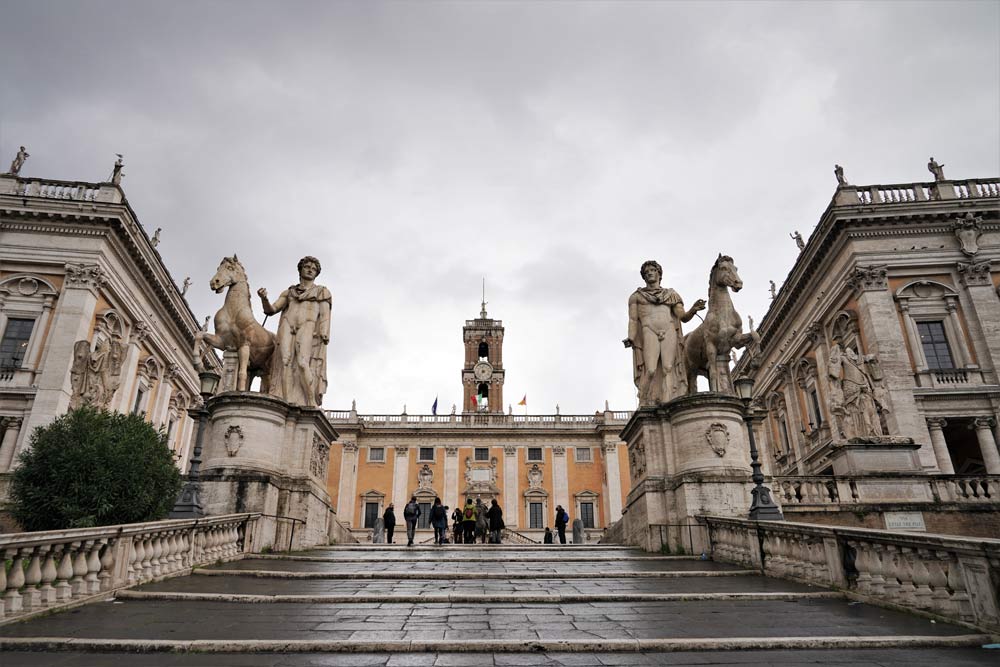
Today, Piazza del Campidoglio is of great importance in the city. In fact, it is the only Renaissance square preserved in all of Rome and is home to the City Hall, the Palazzo Senatorio. The Capitoline Museums , which is what this topic is all about, are housed in the other two palaces (the Palazzo Nuovo and the Palazzo dei Conservatori ), linked by an underground gallery, the Galleria Lapidaria . In addition, this geographical point is used as a km0 on all roads in Italy, as was the case in ancient times in the Roman Empire.
Keep your eyes peeled as you walk through it, in the right-hand corner of the Palazzo Senatorio you will see the sculpture of the mythical Capitoline Wolf , protagonist of the legend of Romulus and Remus and the founding of Rome. Remember that this is only a copy, the original is on display in the Capitoline Museums, which you will visit later.

Visit Piazza del Campidoglio
The best way to begin the visit is to enter the square via the elegant staircase designed by Michelangelo , called “ La Cordonata ”. In the foreground, flanked by two lions and a little further up, stands the statue of Cola di Rienzo , exactly on the spot where this character, capable of proclaiming a new form of government in 14th century Rome inspired by the Roman Republic, which he called “ The Good State ”, was executed. The ramp culminates in the gigantic sculptures of Castor and Pollux , the two brothers who were heroes in antiquity, standing next to their mounts.
However, before starting the climb up La Cordonata, on the left side we will see another staircase, the Aracoeli Staircase , with its famous 24 steps, which gives access to the Basilica of Santa Maria in Aracoeli , a church that, during the Middle Ages, became the centre of civil and religious life in the city. Its façade is not particularly striking, but its interior is truly surprising. Among other treasures, the Bufalini Chapel stands out , first on the right, decorated with frescoes by Pinturicchio.
Once in the square, the first thing that will catch our attention will be the equestrian statue of the Emperor Marcus Aurelius , 3 metres high, with a gesture that, according to some historians, showed mercy towards a barbarian chieftain prostrate before the horse. This is a copy of the original, protected within the walls of the Capitoline Museums.

Opposite is the Palazzo Senatorio , the seat of the town hall, on the left corner of which is a small-scale copy of the statue of the Capitoline Wolf, the symbol of Rome par excellence. If you go around the other corner you will reach an excellent viewing point over the Forum .
Finally, to the right of the square is the Palazzo dei Conservatori and to the left the Palazzo Nuovo , connected by an underground gallery, the Galleria Lapidaria, and which houses the Capitoline Museums, which we will explain below.
Capitoline Museums
This is the oldest museum in the world . It was founded in 1471, when Pope Sixtus IV donated an important collection of bronzes to the city (one of them was the Capitoline Wolf). Other popes contributed with new donations in the following years (in some cases to remove pagan sculptures from the Vatican), until it was opened to the public in 1735 .
Later, under Benedict XIV, the Pinacoteca Capitolina was inaugurated , housing the private collections of the Sacchetti and Pius families. This fact is the origin of the term "museums", in the plural.
Over the years, they were enriched with new donations, until they became the most important museum in Rome (not counting the Vatican Museums ), as it is also the place where the main archaeological finds produced in the city are collected .
During your visit you will be able to admire its wonderful collections on Ancient Rome, as well as the palaces themselves, built on remains from ancient and medieval times and connected to each other by underground galleries.
Must-sees of the Capitoline Museums
Perhaps the most important work is the equestrian statue of Marcus Aurelius . It is on display in the Roman Garden, behind the Palazzo dei Conservatori. But there are other pieces that are not far behind and are equally world-renowned:
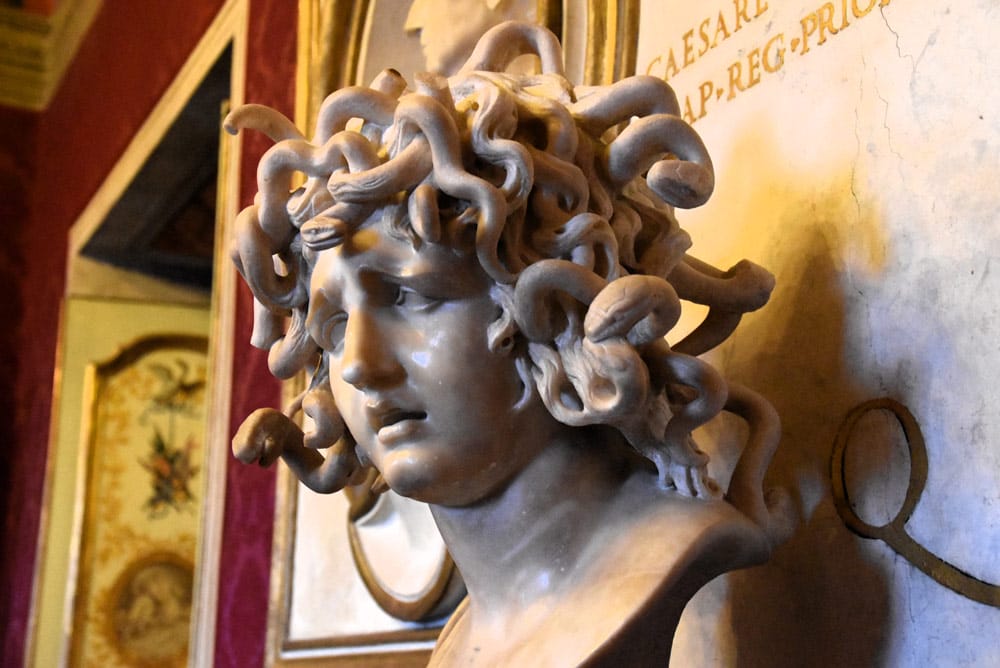
– In the Palazzo dei Conservatori we can see the Capitoline Wolf , symbol of the Eternal City, Bernini’s bust of Medusa , the Thornarius from the 1st century BC, or the colossal fragments of the statue of Constantine (head, foot, hand, knee…). From the back we can access the remains of the Temple of Jupiter which, although only the foundations remain, are exciting for anyone interested in the history of Rome.
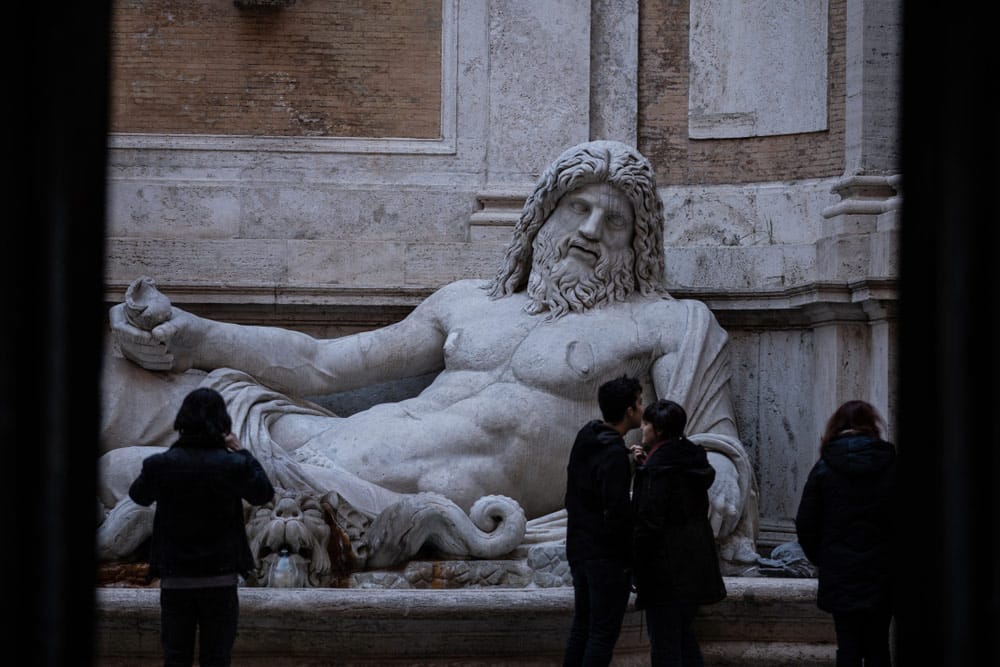
– In the Palazzo Nuovo we have the enormous statue of Marforio , the Discobolus , the Dying Gaul , the statue of the Capitoline Venus , the Red Faun , the Mosaico delle Colombe , the last two rescued from Hadrian's Villa in Tivoli, and many more.
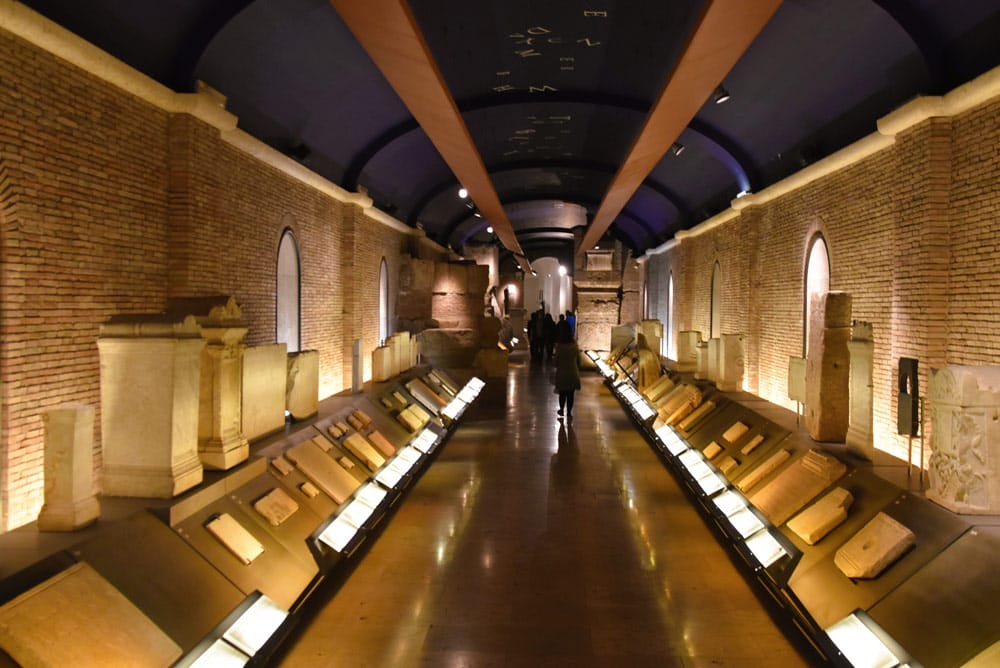
– The Galleria Lapidaria , which connects the two buildings and leads to the ancient Tabularium with beautiful views of the Forum, houses a very interesting collection of epigraphs (marble inscriptions from the Roman period).
How to get there
To get to Piazza del Campidoglio you can do so by:
- Metro : Circo Massimo stop (line B), although it is 1.5 km away.
- Tram : Venezia stop on line 8.
- Bus : lines 30, 44, 44F, 81, 83, 85, 87, 130F, 160, 160F, 170, 175, 628, 781 and C3.
Schedule
These are the opening hours of the Capitoline Museums in Rome:
- Every day from 09:30 to 19:30.
- On December 24 and 31 from 09:30 to 14:00. The ticket office closes one hour earlier in all cases.
- Closed on January 1, May 1 and December 25.
Entrance to the Capitoline Museums
The ticket office is located in the Capitol Square, on the ground floor of the Palais des Conservatives. You can always buy your ticket online in advance to avoid queues . The price is:
- Regular entry : €13.50.
- Reduced entry : €11.50. EU citizens under 26 and teachers. If you have the Roma Pass and choose other monuments, you can enter for free.
- 50% reduced rate : every Wednesday during the last two hours of opening.
- Free : first Sunday of every month, children under six years old, primary school groups, disabled people and their companions, etc.
- Individual audio guide also in Spanish: €7.
Holders of the OMNIA Rome & Vatican Card have access to the Capitoline Museums, as one of the 2 attractions to choose from, in addition to all the sites in the Vatican. ... well as all the sites in the Vatican. Holders of the OMNIA Rome & Vatican Card have access to the Capitoline Museums, as well as all the sites in the Vatican. Holders of the OMNIA Rome & Vatican Card have access to the Capitoline Museums, as well as all the attractions in the Vatican. Holders of the OMNIA Rome & Vatican Card have access to the Capitoline Museums, as well as all the attractions in the Vatican. Holders of the OMNIA Rome & Vatican Card have access to the Capitoline Museums, as well as all the attractions in the Vatican. Holders of the OMNIA Rome & Vatican Card have access to the
* Rates may increase on days of special events or temporary exhibitions.

Tips for visiting the Capitoline Museums
To plan your visit to the Capitoline Museums, take a look at these recommendations that will surely come in handy:
– The entrance is via Piazza del Campidoglio, through the Palazzo dei Conservatori , the one on the right when looking at the town hall.
– The visit can take about two hours to see all the rooms at your leisure. Obviously, you can do it faster or slower, depending on how interested or entertained you are. But you will see that you won’t regret it.
– Museums offer a free cloakroom service for bags, backpacks, umbrellas, etc. Strollers can be brought inside the museum.
– It also has a café and a bookstore , a wonder for art lovers. Both can be accessed from the square without having to go into the museums and pay the entrance fee.
– During your visit you will have to follow some rules , for example it is not permitted to take photos with a flash or tripod, use video cameras, enter with umbrellas, or bulky bags or backpacks, or eat, drink or smoke.
– We recommend that before you go you take a look at their website , where the history of the Museums and the description of each of the works on display are very detailed, all in Spanish.
Interesting facts about the Capitoline Museums
Finally, let us give you some curious and surprising facts about these Museums and their surroundings:
– It is said that the renovation of the square was commissioned by Pope Paul III because he was ashamed of the state of the famous hill (at that time called Colle Caprino, or in other words, goat hill, because it was used as pasture for goats).
– The image of the equestrian statue of Marcus Aurelius appears on the Italian passport and is also the image on the Italian €0.50 coin , designed by Roberto Mauri.
– This statue was one of the few of its time that remained on public view during the Middle Ages , because it was mistakenly believed to be of the pro-Christian emperor Constantine.
– Furthermore, many of these imperial equestrian statues “died” after being melted down , as the bronze they were made of was reused to make coins or to sculpt new statues. In fact, this statue is the only one made of bronze of a Roman emperor from the pre-Christian era that has survived to this day.
– The layout of the square’s ground also appears in the Italian passport .
This concludes our virtual visit to the Capitoline Museums in Rome . We hope that you have noted down all our recommendations and that you can enjoy a great visit, surrounded by unique pieces in the world, in the Capitoline Museums.







